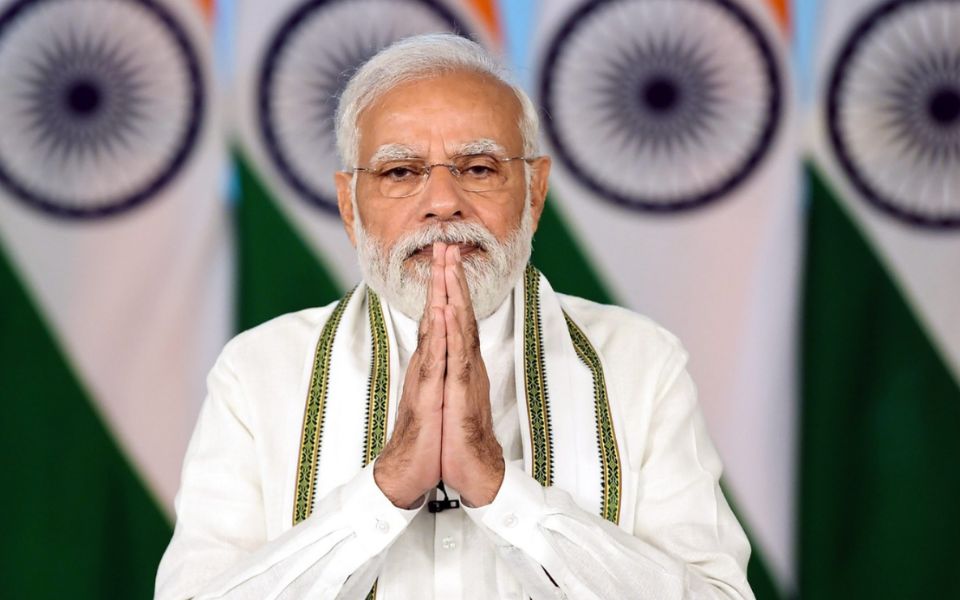
Madhabi Puri Buch to hang boots as Sebi Chief after eventful three-year tenure
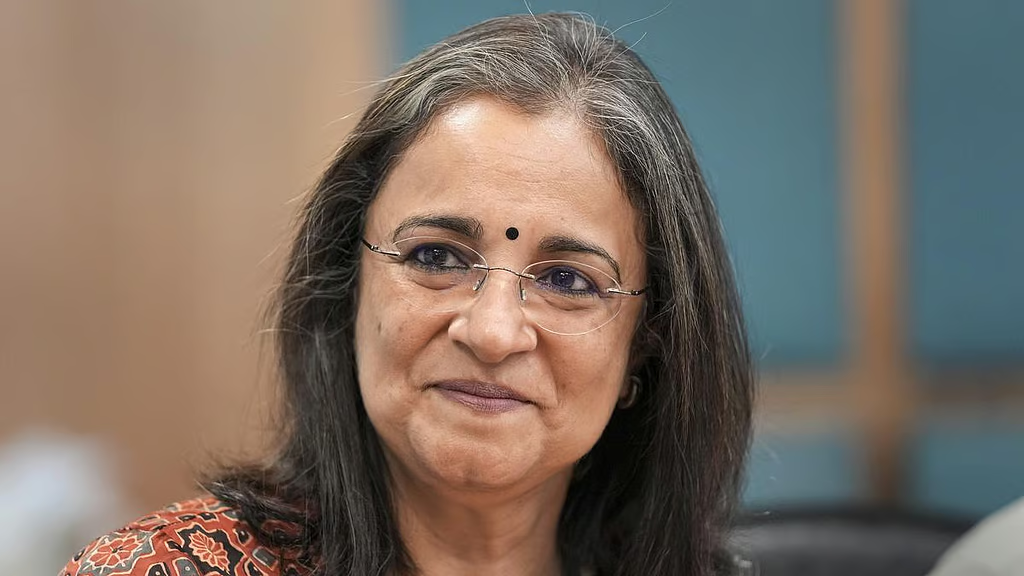
New Delhi (PTI): India's first woman Sebi Chief Madhabi Puri Buch, who faced conflict of interest allegations by the US-based short-seller Hindenburg and also political heat thereafter, would complete her three-year tenure on Friday and will be succeeded by Finance Secretary Tuhin Kanta Pandey.
Before her appointment as Sebi chief, veteran investment banker who has also work with country's leading private sector lender ICICI Bank, joined Sebi's board as a whole-time member in April 2017 and was later elevated as a chairperson in March 2022.
She succeeded former IAS officer Ajay Tyagi, who held the top position for five years, from March 1, 2017, to February 28, 2022.
Buch's stint at Sebi Chief has been marked by both significant strides and notable challenges. Taking charge on March 2, 2022, Buch made history as the first woman to lead the market regulator, as well as the first private-sector individual to hold the position.
Although, Buch in her tenure made significant strides in areas like faster settlements in equities, enhanced FPI disclosures and increasing mutual fund penetration through Rs 250 SIP, the last year of her tenure saw heightened controversy, when she battled a series of allegations by Hindenburg and the Congress party, while simultaneously dealing with in-house employee protests against "toxic work culture".
In August last year, Buch faced pressure to resign after the Hindenburg Research accused her of having conflict of interest that prevented a thorough examination of manipulation and fraud claims at the Adani Group.
Hindenburg accused Buch and her husband, Dhaval Buch, of investing in offshore entities that were allegedly part of a fund structure in which Vinod Adani -- the elder brother of Adani group founder chairman Gautam Adani -- also had investments.
Buchs had denied the allegation saying the investments were made before she joined the regulator and she had complied with all disclosure requirements.
Hindenburg earlier this month announced shutting down its business.
The government, on its part, did not publicly say if it had sought an explanation from Buch. She was summoned by Parliament's Public Accounts Committee (PAC) in October 2024 as part of its review of financial regulators. However, she skipped the meeting citing personal reasons.
Despite the controversy, Buch has built an extraordinary career spanning various top positions at leading companies, most notably at ICICI Bank, ICICI Securities, and ICICI Web Trade Ltd. Her tenure at these institutions played a significant role in shaping India's banking and financial services sector.
Born in 1966 and raised in Mumbai, Buch developed a deep interest in mathematics and finance, which laid the groundwork for her future career. She pursued an MBA from the prestigious Indian Institute of Management (IIM) Ahmedabad, further strengthening her academic foundation.
Buch's career in the financial sector began in 1989 when she joined ICICI Bank, where her skills and dedication quickly propelled her through the ranks, setting the stage for her remarkable journey in India's corporate world.
Over a span of 12 years at ICICI Bank, Buch served in several key roles such as Head of Marketing and Sales from 1997 to 2002, Head of Product Development from 2002 to 2003 and Head of Operations from 2004 to 2006.
In 2006, Buch was promoted to Executive Director at ICICI Bank, a position she held until 2009, during a transformative period for both the bank and the wider financial industry.
After leaving ICICI Bank, Buch's leadership journey continued with her appointment as the Chief Executive Officer of ICICI Securities in 2009. During her tenure, she led the firm with distinction until 2011.
Following her time at ICICI Securities, Buch broadened her career horizons with an international role as the Head of Business Development at Greater Pacific Capital in Singapore from 2011 to 2013.
She also served as a Non-Executive Director at Idea Cellular from 2011 to 2017, where her expertise guided the company through a rapidly evolving telecommunications landscape.
Buch's influence, however, extends beyond the corporate world. She has held non-executive director roles in several organizations, including Max Healthcare, Zensar Technologies, Innoven Capital, and Gabelhorn Investments.
Upon her return to India, Buch took on non-executive director positions in companies. Her broad and diverse experience led to her appointment as a Whole Time Member (WTM) of Sebi in 2017, where she managed important portfolios such as surveillance and mutual funds.
Her close collaboration with then-Sebi Chairperson Ajay Tyagi further solidified her influence within India's regulatory landscape.
Let the Truth be known. If you read VB and like VB, please be a VB Supporter and Help us deliver the Truth to one and all.
Rupee falls 28 paise to 94.77 against US dollar in early trade
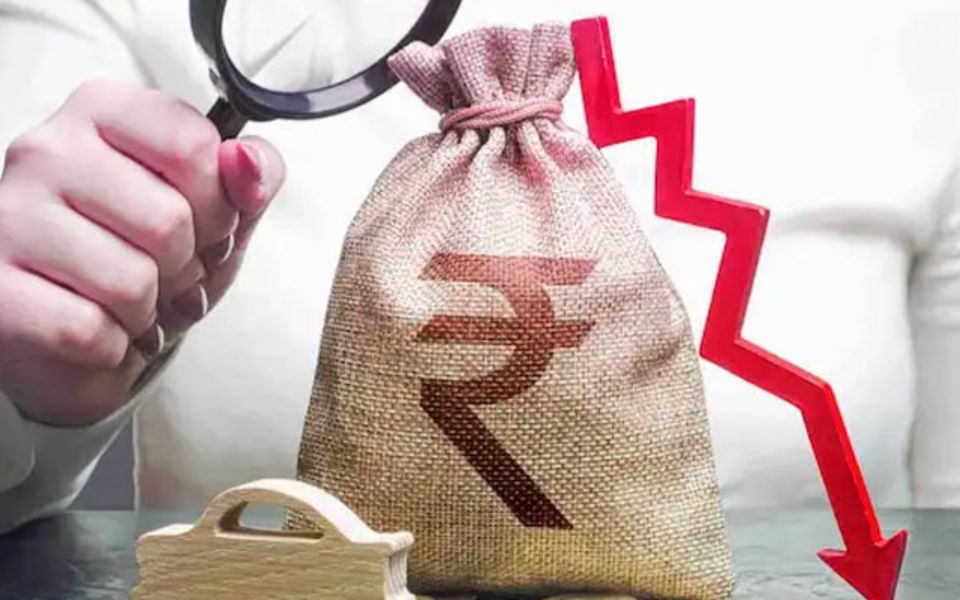
Mumbai (PTI): The rupee depreciated 28 paise to 94.77 against the US dollar in early trade on Thursday as market sentiment took a dramatic turn after reports emerged that the US and Iran are discussing a 14-point Memorandum of Understanding (MOU) aimed at reducing tensions and reopening negotiations.
Forex traders said Brent oil prices, which had fallen to USD 98 on the US-Iran peace deal, edged slightly higher to USD 101 per barrel after investors weighed the prospects for a Middle East peace deal.
Moreover, factors such as unabated foreign capital outflows amid rising geopolitical uncertainties further dented investor sentiment.
At the interbank foreign exchange market, the rupee opened at 94.77 against the US dollar, registering a fall of 28 paise over its previous close.
On Wednesday, the rupee appreciated 69 paise to close at 94.49 against the US dollar.
"Markets are currently focused on the critical 48-hour window during which the US expects Tehran’s formal response through Pakistani mediators," said CR Forex Advisors MD Amit Pabari.
US President Donald Trump on Wednesday threatened Iran with more bombing if it doesn't reopen the Strait of Hormuz, amid a report that the warring sides were nearing an agreement to end the war.
US media outlet Axios reported, quoting US officials and two other sources, that the US and Iran were getting close to a one-page memorandum of understanding to end the war and set a framework for more detailed nuclear negotiations.
The US expects Iranian responses on several key points over the next 48 hours, Axios reported, adding that nothing has been agreed yet. This was the closest the parties had been to an agreement since the war began.
Meanwhile, the dollar index, which gauges the greenback's strength against a basket of six currencies, was trading at 98.01, down 0.01 per cent.
Brent crude, the global oil benchmark, was trading higher by 0.65 per cent at USD 101.83 per barrel in futures trade.
On the domestic equity market front, the 30-share benchmark index Sensex declined 160.24 points to 77,798.28 in early trade, while the Nifty was down 30.25 points to 24,300.70.
Foreign Institutional Investors offloaded equities worth Rs 5,834.90 crore on Wednesday, according to exchange data.
On the domestic macroeconomic front, the country's goods and services exports rose 4.6 per cent to an all-time high of USD 863.11 billion during 2025-26, up from USD 825.26 billion in 2024-25, despite global economic uncertainties, according to revised commerce ministry data.
Merchandise exports grew 0.93 per cent to USD 441.78 billion in the last fiscal year from USD 437.70 billion in 2024-25, the data showed.