Magsaysay award winner Assam oncologist says award is for all who contributed to cancer care
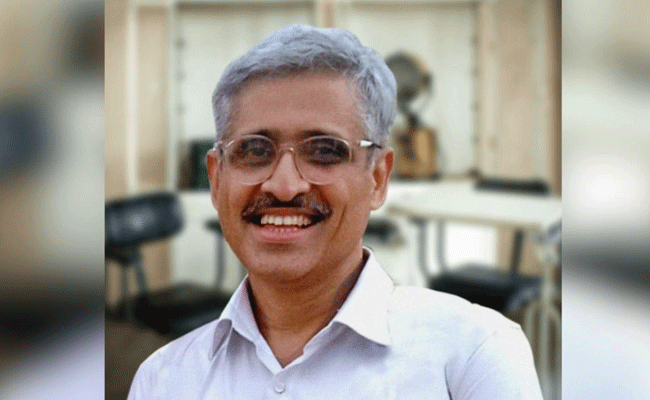
Silchar (PTI) : Renowned oncologist and Assam's first Magsaysay award winner Dr Ravi Kannan on Thursday said the prestigious award is not about him, but for all those who have contributed to cancer care in the community.
He said the award belongs to all the people who have joined hands to make the lives of those suffering from cancer better.
''The award is not about myself but about many people including 450 colleagues of the Cachar Cancer Hospital and Research Centre, whose contribution is immense, and the not-for-profit society that set it up," Kannan told reporters after being announced as the distinguished recipient of the 'Hero For Holistic Healthcare' award on the 65th anniversary of the Ramon Magsaysay Award Foundation.
"The award belongs to many people, the hospital and the community who have joined hands to make lives better for those suffering from cancer and I am just one of the many faces involved in this effort," the director of hospital said.
Assam Chief Minister's Office in a post on 'X' said, "Chief Minister Himanta Biswa Sarma extends his warm congratulations to Dr Ravi Kannan R on being bestowed with the prestigious Ramon Magsaysay Award 2023. Dr Kannan has played an impactful role in transforming cancer care in Assam, especially in rural areas. He is also a Padmashree recipient."
Kannan said they are now focusing on ''decentralising cancer care by setting up smaller hospitals in different parts of the state and even in Tripura so that people do not have to travel far to reach a hospital for treatment''.
He said satellite clinics have been started in Karimganj, Hailakandi and Dima Hasao district, he said.
''We have to go near people and focus on prevention, treatment and cancer care. We need a lot of support for infrastructure and equipment, which are one-time investments, but what we need most is human resources which is a recurring requirement'', the oncologist said.
Both state and central governments have always supported us and with government health schemes like Atal Amrit Abhyan and others, poor people are getting better treatment, he said.
"We are a society-run centre but whenever we ask for any support, the government never says no," he said.
Kannan said he wants to tell each and every patient that cancer is curable like any other disease. "I don't want to see a single person dying without dignity because he or she has cancer," he said.
Assam and other parts of the Northeast are more prone to cancer due to lifestyle of people as they consume a lot of tobacco, betel nuts and alcohol and they do not exercise much and follow proper diet, he said.
Son of an Indian Air Force personnel, Kannan hails from Chennai where he earlier worked as a surgeon in Adyar Cancer Institute before moving to Silchar with his wife in 2007 to start the Cachar Cancer Hospital.
Since 1958, the Ramon Magsaysay Award, dubbed as the Asian Nobel Prize, has been bestowed upon over three hundred outstanding individuals and organizations whose selfless service has offered their societies and the world successful solutions to some of the most challenging problems of human development.
Let the Truth be known. If you read VB and like VB, please be a VB Supporter and Help us deliver the Truth to one and all.
Bhojshala complex registered as 'mosque' in old revenue records: Muslim side to MP HC
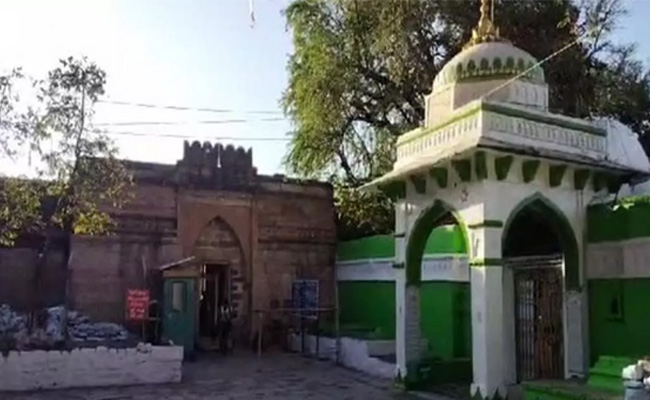
Indore (PTI): The disputed Bhojshala Temple-Kamal Maula Mosque complex has historically been registered as a 'mosque' in revenue records and available sources don't clearly mention any Saraswati temple established by then-king Raja Bhoj, the Muslim side has told the Madhya Pradesh High Court.
The Hindu community considers Bhojshala a temple dedicated to Goddess Saraswati, while the Muslim side calls the 11th-century monument Kamal Maula Mosque. The disputed complex located in Dhar district is protected by the Archaeological Survey of India (ASI).
During the hearing before the HC's Indore bench of Justices Vijay Kumar Shukla and Justice Alok Awasthi on Wednesday, Qazi Moinuddin questioned two PILs filed as intervenors in the Bhojshala case by an organisation named Hindu Front for Justice, one Kuldeep Tiwari and another individual.
Moinuddin claims to be a descendant of Sufi saint Maulana Kamaluddin Chishti and the 'Sajjadanashin' (spiritual head, guru, or successor of a Sufi shrine, khanqah, or religious site).
The PILs state that Bhojshala is actually a Saraswati temple and only Hindus should be granted the right to worship at the disputed complex.
Moinuddin's lawyer, Noor Ahmed Sheikh, claimed in the court that his client's ancestors, who are descendants of Maulana Kamaluddin Chishti, have historically held titles to the complex, and the site was also recorded as a "mosque" in government revenue records.
He contended that those associated with the management of the Kamal Maula Mosque, located within the complex, have been in "continuous and peaceful occupation" of the site for a long time.
Citing Muslim law, Sheikh argued that in the case of religious property, particularly a mosque or its related properties, officials such as the Sajjadanashin and Mutawalli (person entrusted with management, maintenance, and administration of a Waqf), and their descendants, not only have the right to intervene, but also have the right to manage and use such a structure.
Citing provisions of the Ancient Monuments Preservation Act 1904, the Muslim side's lawyer said the term "in-charge of the property" is used in this law, which makes it clear that the person or party who has been in charge of a property for a long time has rights over it.
During the hearing, Touseef Warsi, the lawyer representing the Maulana Kamaluddin Welfare Society of Dhar, claimed that Hindu parties in both PILs had made "misleading representations" regarding historical facts before the high court.
He further claimed that available historical sources do not clearly mention the existence of a Saraswati temple established by Raja Bhoj, the legendary king of the Parmar dynasty who ruled Dhar from 1010 to 1055.
The ASI, a central government agency, has adopted three different positions in the lawsuits filed regarding the Bhojshala dispute, changing its answers from time to time, and this situation raises serious questions about judicial scrutiny of the complex, Warsi submitted.
He raised objections regarding the ASI's process of scientific survey of the Bhojshala complex, carried out on the HC order in 2024, and the method of videography and requested the court to examine these objections.
The hearing in the Bhojshala case will continue on Thursday.
The HC has been regularly hearing four petitions and one writ appeal since April 6, contesting the religious nature of the monument.