Maharashtra Assembly will have two pair of brothers as MLAs in next term
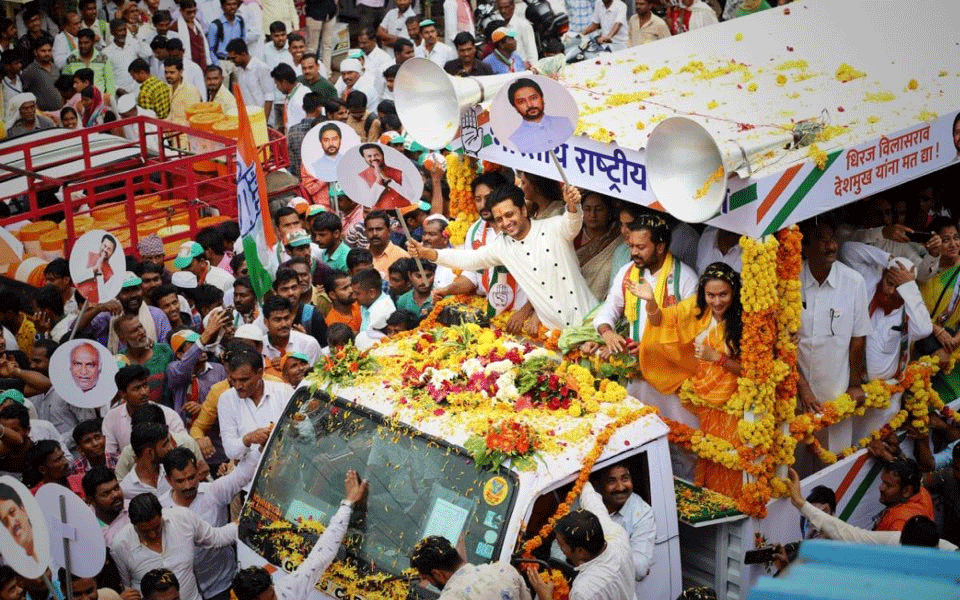
Mumbai: It is all in the family for a couple of newly-elected MLAs in Maharashtra as two pairs of brothers have made it to the legislative Assembly this time around.
Late Congress leader Vilasrao Deshmukh's sons, Dhiraj and Amit, have emerged victorious from Latur Rural and Latur City assembly constituencies, respectively.
Whereas in Solapur district, NCP's Baban Shinde and his brother Sanjay have won from Madha and Karmala Assembly seats, respectively.
While Baban retained his Madha seat, defeating Shiv Sena's Sanjay Kokate by a margin of 68,245 votes, his younger brother Sanjay contested as an NCP-backed Independent in Karmala, defeating Sena rebel Narayan Patil by a margin of 5,494 votes.
Vilasrao Deshmukh's sons will carry forward his legacy from their home turf, Latur. Vilasrao Deshmukh, who was chief minister between 1999-2003 and 2004-2008, nurtured his home district in central Maharashtra during his decades-long political career.
For Dhiraj Deshmukh, it was a maiden win by a handsome margin of 1.21 lakh votes, while Amit Deshmukh, a seasoned player in the field, retained his Latur City seat for a third consecutive term.
Among the Shinde brothers, Baban has been elected from Madha for a sixth term. Sanjay Shinde was the NCP candidate from the Madha Lok Sabha constituency where he was defeated by Ranjit Nimbalkar, who switched over to the BJP from the Congress, in May this year.
In the past, there have been father-son duos in the Lower House like Chhagan Bhujbal and his son Pankaj, and Ganesh Naik and his son Sandeep (all NCP).
The polling in Maharashtra was held on October 21 and results were announced three days later.
Let the Truth be known. If you read VB and like VB, please be a VB Supporter and Help us deliver the Truth to one and all.
4 workers die after being buried under coal slurry in Jharkhand's Dhanbad
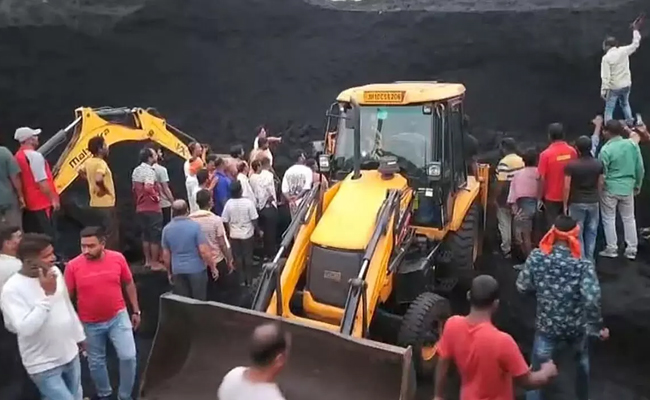
Dhanbad (Jharkhand) (PTI): At least four workers died after being buried under coal slurry in Jharkhand's Dhanbad district on Saturday, a police official said.
The incident took place at Moonidih coal washery in the command area of Bharat Coking Coal Limited (BCCL).
"Bodies of all four workers were dug out of debris during a rescue operation," Putki police station in-charge Waqar Hussain told PTI.
The incident took place when coal slurry was being loaded into trucks by workers, during which a large chunk of slurry fell and trapped several workers underneath, officials said.
The deceased have been identified as Manik Bauri, Dinesh Bauri, Deepak Bauri, and Hemlal Gope.
Meanwhile, the family members of the deceased and local villagers placed the bodies in front of the washery gate and began a protest.
They demanded compensation, jobs for dependents and action against those responsible for the incident.
Police and administration officials are trying to pacify the protesters, an official said.