Maharashtra civic polls: BJP takes lead in Pune bastion of Ajit and Sharad Pawar
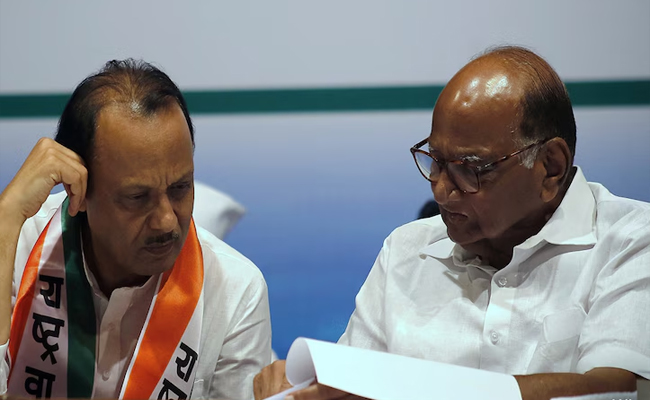
Pune (PTI): The BJP has surged ahead of the NCP-NCP (SP) combine, headed by Deputy Chief Minister Ajit Pawar and his uncle Sharad Pawar, in Pune and Pimpri Chinchwad corporations, according to trends and results of the civic elections so far on Friday.
The BJP has won 29 electoral wards and is leading in 43 others in Pune, as per the data shared by the election department of the civic body.
The Nationalist Congress Party and the NCP (Sharadchandra Pawar) are a distant second, winning three and two seats, respectively, so far, in the 165-member Pune civic body. The trends show the NCP is leading in seven wards, and the NCP (SP) in one ward.
In the 128-member Pimpri-Chinchwad civic body, the BJP is leading in 81 seats, while the NCP is ahead in 36.
Despite being an ally of the BJP in the ruling Mahayuti, the NCP contested civic elections in Pune and Pimpri Chinchwad in alliance with the NCP (SP), two years after the bitter break-up.
The Congress has won three seats and is leading in nine in PMC, as per the data.
The Shiv Sena (UBT), which contested the polls in alliance with the Congress, yet to open its account, similar to Shiv Sena, headed by Deputy CM Eknath Shinde, which contested the elections without allying with BJP.
The BJP had single-handedly held power in the previous five-year terms from 2017 to 2022 in Pune and PCMC civic bodies, after which the Administrator had control of the civic body.
The BJP is also leading in the Kolhapur, Satara, Solapur, and Sangli civic bodies in the western Maharashtra region.
The poll campaign in Pune and Pimpri Chinchwad was marked by sharp exchanges between Deputy CM Ajit Pawar and the BJP.
Ajit Pawar had targeted the local BJP leadership over the alleged irregularities in the functioning of the two civic bodies.
In the 102-member Solapur municipal corporation, the BJP is leading in 60 electoral wards, according to trends available till noon.
In the 81-member Kolhapur civic body, Mahayuti partners- the BJP, Shiv Sena, and the NCP- are leading in 25 seats, while the opposition Maha Vikas Aghadi is ahead in 21 civic wards.
Elections to the 29 municipal corporations were held on January 15 after a gap of several years, with terms of most of them having ended between 2020 and 2023.
Let the Truth be known. If you read VB and like VB, please be a VB Supporter and Help us deliver the Truth to one and all.
Health Minister Dinesh Gundu Rao criticizes Centre for steep hike in commercial LPG price
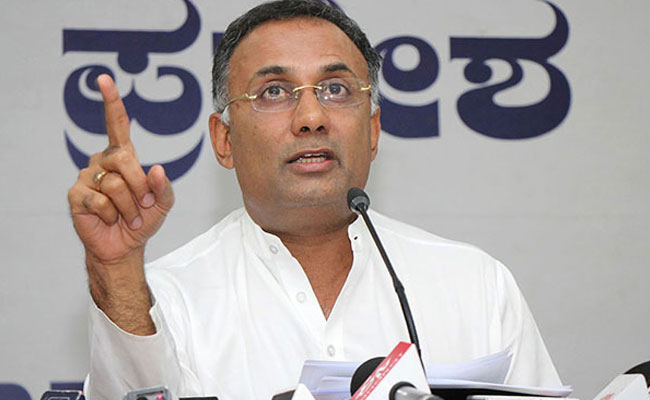
Bengaluru: Karnataka Health Minister Dinesh Gundu Rao has slammed the BJP government in the Centre for the hike in the price of commercial LPG, saying the sudden rise of the fuel rate by Rs 993 a cylinder has hit the common man hard.
Critically commenting that this was expected of the Centre after elections to five states, Rao posted in Kannada on his ‘X’ account on Saturday that the people have been shown only the trailer and, the real struggle is yet to begin.
“Since there is no election in any state, there will certainly be major hikes in the rates of petrol, diesel and domestic LPG in barely a few days,” he has predicted.
The minister has further tweeted, “The rate of commercial LPG has gone up to Rs 3,152 per cylinder, which will hit the hotel industry greatly. Ironically, the direct impact of the hike will be on customers of hotel.”
He pointed out that, earlier, the price used to be hiked by approximately Rs 50 and Rs 100 a cylinder. “This time, the rate has been shot up by Rs 993. What do we call this except daylight robbery? Can this be the ‘Acche Din’ that the BJP has been promising?” Rao asked mockingly.
He also questioned the cause for BJP members’ silence for the rate hike, reminding that the party always ‘threw a tantrum’ when a non-BJP government does so even at a minor level. “Does this reflect their fear of ‘Vishwaguru’ Modi? Is it the party’s sheer disregard for the welfare of the people?” he has questioned.
ಊಹಿಸಿದಂತೆಯೇ ಪಂಚರಾಜ್ಯ ಚುನಾವಣೆ ಬಳಿಕ ಕೇಂದ್ರ ಸರ್ಕಾರ ಬೆಲೆಯೇರಿಕೆಯ ಛಾಟಿ ಬೀಸಲು ಪ್ರಾರಂಭಿಸಿದೆ. ಕಮರ್ಷಿಯಲ್ ಸಿಲಿಂಡರ್ ಬೆಲೆಯನ್ನು ಏಕಾಏಕಿ ₹993 ಏರಿಸುವ ಮೂಲಕ ಮರ್ಮಘಾತ ನೀಡಿದೆ. ಚುನಾವಣೆ ಮುಗಿದ ಕೂಡಲೇ ಬೆಲೆಯೇರಿಕೆ ನಿರೀಕ್ಷಿತವಾಗಿತ್ತು. ಆದರೆ ಒಂದೇ ಭಾರಿ ₹993 ಹೆಚ್ಚಳ ಮಾಡಿರುವುದು ಅನಿರೀಕ್ಷಿತದ ಜೊತೆಗೆ ಆಘಾತ ತಂದಿದೆ.…
— Dinesh Gundu Rao/ದಿನೇಶ್ ಗುಂಡೂರಾವ್ (@dineshgrao) May 2, 2026