Maharashtra FDA cancels Johnson & Johnson's baby powder manufacturing licence
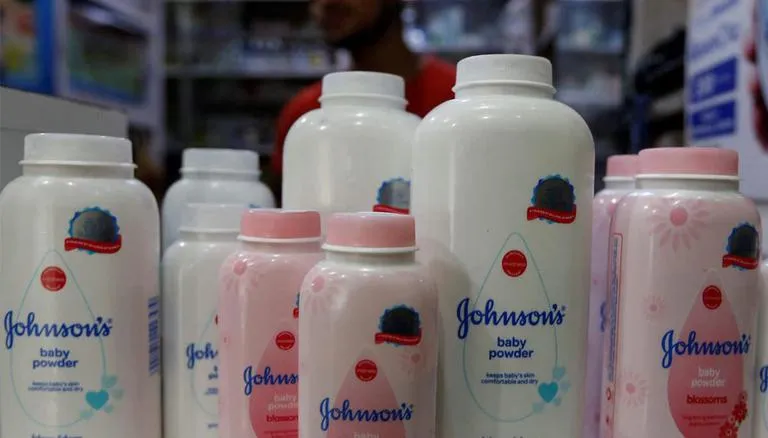
Mumbai, Sep 17: Maharashtra's Food and Drugs Administration (FDA) on Friday cancelled the baby powder manufacturing licence of Johnson & Johnson Pvt Ltd "in the interest of public health at large".
In a release, the state government agency said the company's product, Johnson's Baby Powder, may affect the skin of newborn babies.
Samples of the powder for babies did not conform to standard pH value during a laboratory test, the regulator said.
The release said the action was taken after Kolkata-based Central Drugs Laboratory's conclusive report that concludes "the sample does not conform to IS 5339:2004 with respect to the test for pH".
According to the release, FDA had drawn samples of Johnson's Baby Powder from Pune and Nashik for quality check purposes.
The government analyst had declared the samples as "not of the standard quality" as they do not comply with IS 5339:2004 specification for skin powder for infants in the test pH, it said.
Thereafter, FDA issued a show-cause notice to Johnson and Johnson under the Drugs Cosmetics Act 1940 and Rules, besides issuing instructions to the company to recall the stock of the said product from market, said the release.
The firm "didn't accept the report" of the government analyst and challenged it in court for sending it to the Central Drugs Laboratory, it added.
Let the Truth be known. If you read VB and like VB, please be a VB Supporter and Help us deliver the Truth to one and all.
EAM Jaishankar meets Jamaican PM, gifts over 10 BHISHM Cubes
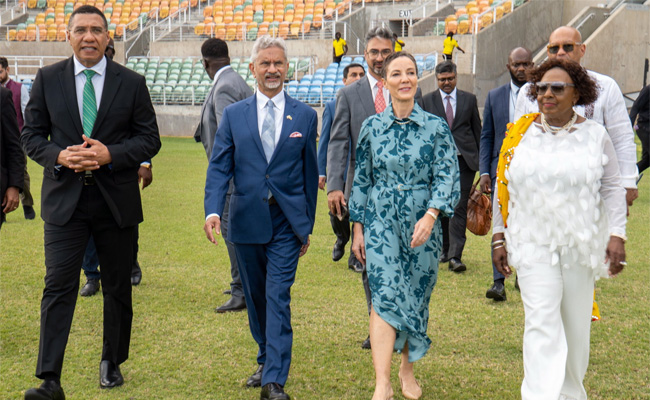
Kingston (PTI): External Affairs Minister S Jaishankar on Monday met Jamaican Prime Minister Andrew Holness and discussed ways to further deepen "political, economic and people-to-people cooperation."
Jaishankar also conveyed greetings from Prime Minister Narendra Modi to Holness.
"Pleased to call on Prime Minister @AndrewHolnessJM in Kingston. Conveyed the greetings of PM @narendramodi," Jaishankar posted on X.
"Discussed deepening our political, economic and people-to-people cooperation. Value his commitment towards further strengthening India-Jamaica relations," the post further read.
Also, the external affairs minister handed over 10 BHISHM (Bharat Health Initiative for Sahyog Hita & Maitri) Cubes as a gift to Jamaica.
"Formally handed over 10 BHISHM Cubes as a gift from India to Jamaica, in the presence of PM @AndrewHolnessJM, Health Minister @christufton and FM @kaminajsmith," Jaishankar posted on X.
"The BHISHM Cube mobile hospital system, designed for rapid deployment, will help Jamaica during disasters and emergencies. The gift of these cubes is a statement of friendship, a commitment to disaster preparedness, and an outcome of innovation," the post said.
Jaishankar arrived in Kingston on Saturday evening, marking the first leg of his nine-day tour of Jamaica, Suriname, and Trinidad and Tobago, aimed at further strengthening India's strategic and cultural ties with the Caribbean nations.
Earlier in the day, he interacted with the Indian diaspora and discussed India's ongoing transformation in infrastructure, human development and technology-driven governance and entrepreneurship with them.
He also highlighted the cricket bond between both countries as India gifted a scoreboard to Jamaica.
A scoreboard was dedicated at Sabina Park in Kingston. It is the home of the Jamaica cricket team and is the only Test cricket ground in the Caribbean island nation.
The minister expressed hope that the new scoreboard would witness many memorable innings, including those symbolising the enduring friendship between the two countries.
Cricket has long been a strong cultural bridge between India and Jamaica, which is part of the West Indies cricket team.
Jamaican players, including Chris Gayle, Courtney Walsh and Michael Holding, have played a major role in shaping the legacy of West Indies cricket in the international arena, contributing to its dominance in earlier decades and its continued global appeal.