Maharashtra government to enforce cashless toll payments from April 1
penalty for other payment modes

Mumbai: The Maharashtra government will mandate cashless toll payments across all toll plazas operated by the Maharashtra State Road Development Corporation (MSRDC) from April 1, 2025.
Drivers will be required to use FASTag or E-Tag for toll payments, with other payment methods no longer being accepted. Those who attempt to pay using cash, smart cards, credit/debit cards, or QR codes will face penalties. Non-compliance will result in a fine of double the toll charge, and vehicles without a valid FASTag will be penalised an amount equal to the toll, as reported by The Indian Express on Friday.
The new rule will be enforced at five major toll plazas in Mumbai—Vashi, Airoli, Dahisar, Mulund Eastern Express Highway, and LBS Marg Mulund/Thane. Additionally, toll plazas on key highways such as the Mumbai-Pune Expressway, NH-48, and the Rajiv Gandhi Sea Link will also adopt digital payment methods.
Other locations affected include 23 toll plazas along the Maharashtra Samruddhi Mahamarg, five under Nagpur’s Integrated Road Development Project (IRDP), four under Solapur’s IRDP, three under Chhatrapati Sambhajinagar’s IRDP, as well as the Katol Bypass and the Chimur-Warora-Vani route, added the report.
An official from MSRDC told IE that this move aligns with policies set by the National Highways Authority of India (NHAI) and directives from the Ministry of Road Transport and Highways (MoRTH). A government resolution formalising the shift to cashless toll payments has been issued.
Meanwhile, few vehicles will be exempt from paying tolls at Mumbai’s entry and exit points. Light motor vehicles (LMVs), state transport buses, and school buses will not be charged tolls at five locations—Dahisar, Anand Nagar (Eastern Express Highway), Mulund (LBS Road), Vashi, and Airoli.
Despite these exemptions, toll operators are reportedly expected to face an annual revenue loss of approximately Rs 460 crore, or Rs 1.26 crore per day. The government has assured compensation to MSRDC, with a committee tasked to determine the compensation amount.
Let the Truth be known. If you read VB and like VB, please be a VB Supporter and Help us deliver the Truth to one and all.
Sujit Nair raises concerns over speculation of DMK-AIADMK understanding to block TVK
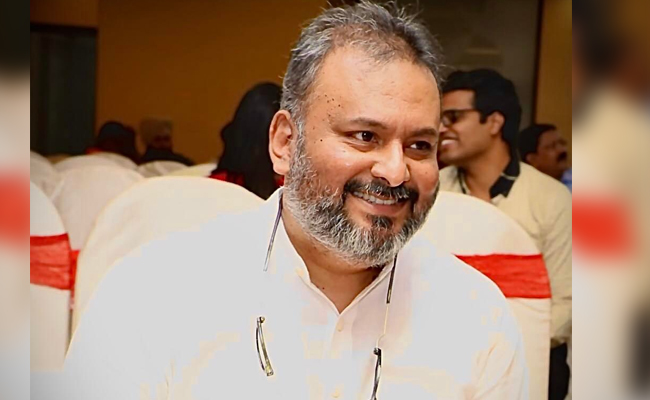
Chennai: Journalist and political commentator Sujit Nair has expressed concern over speculation that the Dravida Munnetra Kazhagam and the All India Anna Dravida Munnetra Kazhagam could explore a post-poll understanding to prevent Vijay-led Tamilaga Vettri Kazhagam from forming the government in Tamil Nadu.
In a social media post, Sujit Nair said the election verdict in Tamil Nadu reflected a clear public demand for political change and argued that the mandate should be respected irrespective of political preferences.
Referring to reports and political discussions surrounding a possible understanding between the DMK and AIADMK, he said he hoped such developments remained only speculative conversations and did not turn into reality.
Nair stated that if such an alliance were to take shape, it would raise serious questions about ideological politics in the country. He said TVK had emerged through a democratic electoral process and that the legitimacy to govern in a parliamentary democracy comes from the people’s verdict.
According to him, attempts to prevent an electoral winner from forming the government through unexpected political arrangements may be constitutionally valid, but many people could view them as politically opportunistic.
He further said that such a move could particularly affect the political image of the DMK, which has historically projected itself around ideology, social justice and opposition politics. Nair said that in ideological terms, the DMK appeared closer to TVK than to the AIADMK, and joining hands with its long-time political rival only to remain in power could weaken its broader political narrative.
He added that the same questions would apply to the AIADMK as well, as the party had spent decades positioning itself against the DMK and such an arrangement could create discomfort among its cadre and supporters.
Drawing a comparison with Maharashtra politics in 2019, Nair said he had expressed similar views when the Shiv Sena formed an alliance with the Indian National Congress and the Nationalist Congress Party after the Assembly elections.
He said post-poll alliances between long-standing political rivals often create a public perception that ideology and electoral mandates become secondary when political power equations come into play.
Nair also said such developments increase public cynicism towards politics and reinforce the belief among voters that ideology is often sidelined after elections.
He maintained that the Tamil Nadu verdict was emphatic and said respecting both the spirit and substance of the mandate was important for the credibility of democratic politics.