Maharashtra government triples salaries of madrasa teachers, announces welfare measures for minority
Mumbai: In a move potentially aimed at appeasing the Muslim minority and backward communities ahead of the upcoming assembly elections, the Maharashtra BJP-led Mahayuti government announced several key initiatives in a cabinet meeting chaired by Chief Minister Eknath Shinde on Thursday.
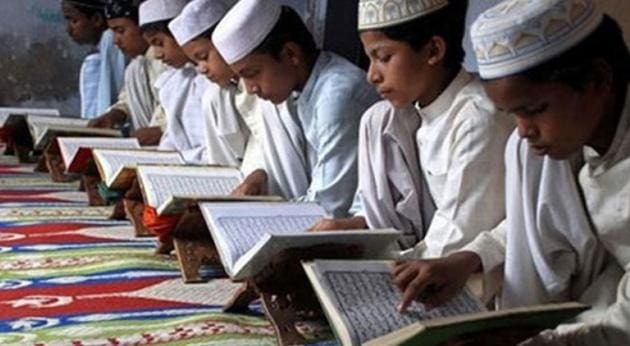
One of the significant decisions was the increase in salaries of madrasa teachers under the Zakir Hussain Madrasa Modernization Scheme. Primary madrasa teachers with D.Ed degrees will now receive Rs 16,000 per month, up from Rs 6,000, while secondary teachers with B.Ed degrees will see their pay rise from Rs 8,000 to Rs 18,000. The scheme encourages madrasas to integrate modern subjects like science, mathematics, sociology, English, Marathi, Hindi, and Urdu alongside religious studies.
Additionally, the government approved a proposal to raise the working capital of the Maulana Azad Financial Corporation from Rs 600 crore to Rs 1,000 crore. This increased capital will be used to provide financial assistance to the minority community for various purposes.
In another major decision, the cabinet also approved the formation of welfare cooperative boards for several communities, including Shimpi, Gavali, Lad Shakiya-Wani, Lohar, and Nam Panth. Each board will receive Rs 50 crore in investment capital for social and community activities.
The government also passed a resolution to request the Union government to raise the income limit for the ‘non-creamy layer’ category from Rs 8 lakh to Rs 15 lakh per year, allowing more individuals to benefit from reservation policies in the Other Backward Class (OBC) category.
The Maharashtra cabinet also approved a draft ordinance granting constitutional status to the Maharashtra State Scheduled Caste Commission. The ordinance, which is set to be tabled in the next legislative session, includes the creation of 27 new posts for the commission.
Let the Truth be known. If you read VB and like VB, please be a VB Supporter and Help us deliver the Truth to one and all.
TN Assembly elections: Eight-month pregnant homemaker wins Thiru Vi Ka Nagar seat for TVK

Chennai (PTI): Before giving birth, she had already delivered a mandate—a symbol of hope for Thiru Vi Ka Nagar.
Echoing Delhi’s 2013 “common citizen” political churn associated with the rise of the Aam Aadmi Party (AAP), an eight-month-pregnant homemaker, M R Pallavi, has been elected as an MLA from Chennai’s Thiru Vi Ka Nagar constituency, emerging as one of the notable first-time faces of the Vijay-led TVK in the recently held Tamil Nadu Assembly elections.
In the narrow lanes of Thiru Vi Ka Nagar, a steady stream of media personnel has been making their way to Pallavi’s residence—a scene reminiscent of the result day in Delhi when journalists thronged the modest home of Rakhi Birla, who had won from Mangolpuri on an AAP ticket.
Pallavi, 36, a homemaker educated up to class XII, defeated the DMK candidate K S Ravichandran by a margin of 22,333 votes in the reserved Thiru Vi Ka Nagar Assembly constituency.
Tamilaga Vettri Kazhagam emerged as the single largest party by winning 108 seats, while DMK and AIADMK got 59 and 47, respectively.
Pallavi’s victory has drawn attention due to her personal circumstances. She campaigned extensively while eight months pregnant, going door-to-door to reach voters.
According to local accounts, she even fainted once during the campaign but continued her outreach.
She has not spoken to the media following her victory, as doctors have advised her to rest. Her husband, Rajesh, briefly recounted her campaign efforts.
A self-professed admirer of actor-turned-politician Vijay, Pallavi joined TVK soon after its formation and is now among its first-time legislators.
Doctors have advised her to be hospitalised around May 20, as she is expecting her second child. Ahead of that, voters in Thiru Vi Ka Nagar have entrusted her with representing them in the state Assembly.
Political observers say the rise of candidates like Pallavi signals a possible shift in Tamil Nadu’s political landscape, with voters backing a new party and candidates from non-traditional backgrounds.