Maharashtra govt to allow flexible reporting time for women employees in Mumbai
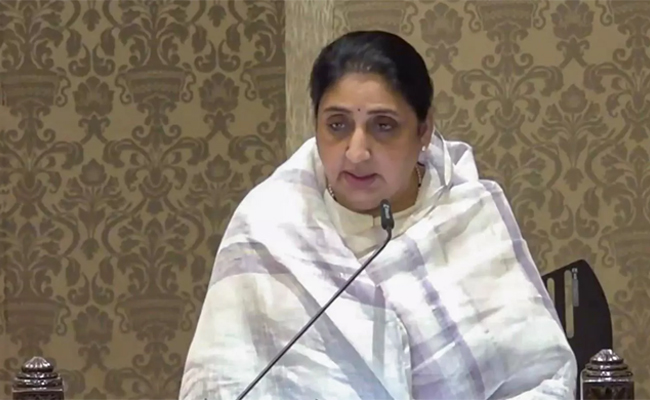
Mumbai (PTI): Maharashtra Deputy Chief Minister Sunetra Pawar on Tuesday announced a flexible work time initiative for women state government employees working in the jurisdiction of the Brihanmumbai Municipal Corporation (BMC).
Pawar said that under the "Come Early, Go Early" initiative, women employees will be allowed flexible reporting time between 9.15 am and 9.45 am, and can leave early in the evening by the same number of minutes after putting in the required number of hours of work.
"This decision would provide major relief to women by easing the inconvenience they face due to rush hour crowds," she said, during a special discussion in the legislative council to mark International Women's Day.
Reiterating the state government's commitment to the holistic development of women, Pawar urged members to strengthen the resolve to build a society that ensures proper respect, opportunities and security for women.
ALSO READ: Three held for robbery at businessman's house in Bengaluru
The deputy chief minister also noted that 42,594 children were traced through 14 campaigns conducted under 'Operation Muskan' between July 2015 and February 2026, while 'Operation Shodh' helped trace 5,066 women and 2,771 children.
The missing people's cells were functional in all districts, while 51 Bharosa cells had been activated to address women's issues, she said.
Technology was being increasingly used for women's safety, and systems to prevent cybercrime had been set up at Chhatrapati Shivaji Maharaj Terminus, Churchgate and Borivali railway stations, the deputy chief minister said.
Highlighting economic empowerment initiatives for women, the deputy chief minister cited schemes such as Ladki Bahin, Namo Mahila Sakshamikaran, Lek Ladki, Annapurna and Lakhpati Didi.
She said platforms such as Umed Mall, Umed Mart and Mahalakshmi Saras had been launched to provide markets for products made by self-help groups, which are now also available on online platforms.
Pawar stated that the government was positive about improving honorarium and infrastructure for anganwadi workers and helpers, noting that drinking water facilities had been provided to 17,254 anganwadi centres.
She also noted that the state had sanctioned 180 days of maternity leave for government employees and allowed up to one year of half-pay leave after maternity leave without the need for a medical certificate.
The Maharashtra government's 4th Women's Policy had been implemented and a high-level committee set up for its effective execution, she said.
The 'Adishakti Abhiyan' was also being implemented to ensure a safer and more dignified life for rural women, prevent child marriage, create atrocity-free villages and reduce school dropout rates among girls, Pawar said.
The state government has emphasised health, education, skill development, strengthening self-help groups, special measures for women farmers and labourers and strict enforcement of laws for women's safety, she said.
Let the Truth be known. If you read VB and like VB, please be a VB Supporter and Help us deliver the Truth to one and all.
Death toll in Mundathikode fireworks explosion rises to 16
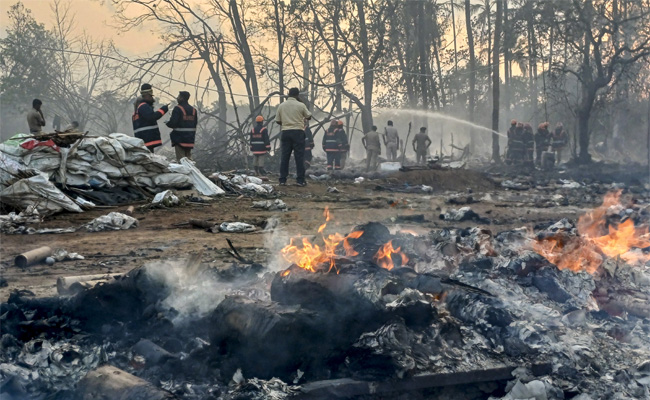
Thrissur (Kerala) (PTI): One more person who had been hospitalised following the Mundathikode fireworks explosion died at Thrissur Medical College on Sunday, police said.
With this, the death toll in the incident has risen to 16.
According to Thrissur Medical College police, the deceased has been identified as Unnikrishnan from Edappal, who was among the 38 persons present at the fireworks manufacturing unit in Mundathikode where the explosions occurred on April 21.
Police said Unnikrishnan had suffered over 80 per cent burns and had remained in critical condition.
The condition of the two other injured persons remains critical, police said.
Of the 38 persons present at the site, 16 have died, while four remain missing.
The fireworks were being manufactured for Thiruvambady Devaswom as part of the Thrissur Pooram festivities.
The licensee of the unit had also suffered burn injuries and had died earlier.