Maharashtra minister Zirwal's viral video with transwoman stirs row; Cong demands his sacking
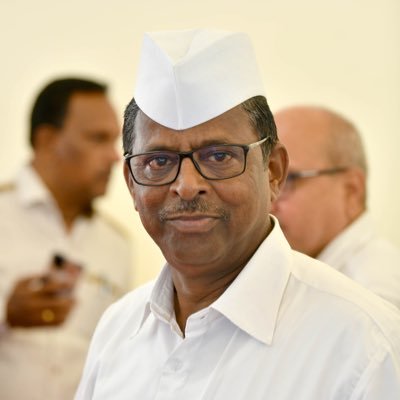
Mumbai, Mar 26 (PTI): Maharashtra minister Narhari Zirwal has landed in a controversy after his video with a transwoman surfaced on social media, with the opposition Congress demanding the NCP leader's sacking over his "obscene and unethical behaviour".
The Congress alleged that the video shows Zirwal, who is Food and Drugs Administration Minister, in a compromising position with the transwoman at his official residence.
The opposition party condemned the incident saying it shows the moral decline in Maharashtra's politics, and called the minister's conduct a "blot on public life".
Congress leader Vijay Wadettiwar attributed the emergence of the video to the tussle between the ruling allies.
ALSO READ: Road rage: Woman injured in firing after son honks at car blocking way in Gwalior
"This is nothing but a gang war within the government where the ruling parties are trying to finish each other. This is not good for Maharashtra. We hang our heads in shame. Same is the case with (arrested self-styled godman) Ashok Kharat, who exploited so many women. All these developments are not good for Maharashtra," he said.
He said that as per the available information, Zirwal was with a transgender person and the latter's brother allegedly made the video viral as part of a blackmail attempt.
"What Zirwal did at his official residence with that transgender is absolutely wrong," the former minister said.
Maharashtra Congress president Harshwardhan Sapkal called the incident a reflection of moral decline in state politics.
"The objectionable video of minister Narhari Zirwal going viral on social media is not just an incident, but a glaring example of moral degradation in Maharashtra's politics," he said in a social media post.
ALSO READ: Teen stabbed to death near home in Delhi's Dayalpur, 3 minors held
"A responsible public representative, entrusted with people's faith and taxpayers' money, indulging in such obscene and unethical behaviour is extremely condemnable. This is not just a breach of personal boundaries, but a blot on public life," he said.
Sapkal also said that elected representatives are expected to adhere to basic standards of morality.
"At the very least, a minister elected by the people is expected to follow a framework of ethics. However, the video clearly shows that these expectations have been completely violated," he said.
Sapkal demanded immediate action against Zirwal, stating, "The Chief Minister must, without any delay, remove Zirwal from the ministerial post."
When reporters sought NCP (SP) leader Jayant Patil's reaction over the controversial video on Wednesday evening, he refused to comment on it, saying he had not watched it.
ALSO READ: Two held at Bengaluru airport with hydroponic ganja worth Rs 5.79 cr
"It would be better to comment on it if I am aware of the details. I cannot comment right now over it," Patil said.
Social activist Anjali Damania told reporters on Thursday that a senior minister like Zirwal should have kept in mind the issues of propriety.
"He should have realised what he was doing, that too in government accommodation," Damania said.
"It is clear that the video was shot and made viral with an intention to blackmail," she said, and demanded a thorough probe into the issue.
Last month, the opposition parties demanded the resignation of Zirwal after bribery allegations surfaced involving his office staffer at the state secretariat.
The Anti-Corruption Bureau (ACB) on February 12 caught FDA clerk Rajendra Dherange while allegedly accepting a Rs 35,000 bribe at Mantralaya (state secretariat) in south Mumbai. Zirwal's private secretary, Dr Ramdas Gade, was also relieved of his post and directed to report back to his parent department following a sting operation related to bribery.
Let the Truth be known. If you read VB and like VB, please be a VB Supporter and Help us deliver the Truth to one and all.
Siddaramaiah stresses need to establish Supreme Court bench in South India
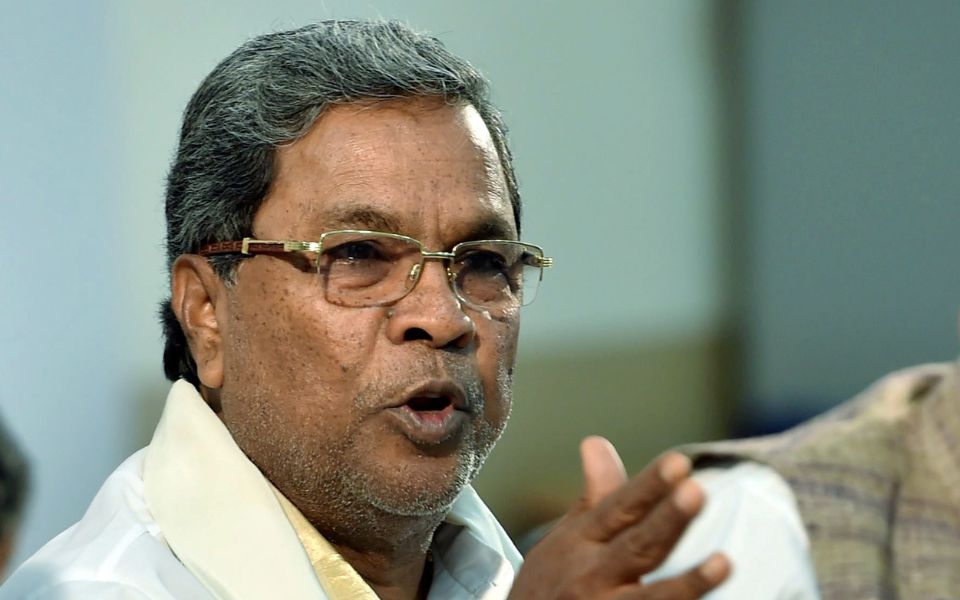
Bengaluru (PTI): Karnataka Chief Minister Siddaramaiah on Saturday stressed the need to improve accessibility to the highest court of the land, asserting that establishing a Supreme Court bench in South India would go a long way in ensuring justice.
Speaking at the 22nd Biennial State Level Conference of Judicial Officers with a theme 'Reimagining the Judiciary in the era of Artificial Intelligence', he said, the authority of a judge must never be overshadowed by the authority of an algorithm.
"Even as we explore these new frontiers, we must remain mindful of the enduring challenges facing our judiciary," the chief minister said.
"Pendency of cases continues to be a serious concern that affects the timely delivery of justice. While technology can provide tools to address this, it must be complemented by systemic reforms through strengthening infrastructure, increasing judicial capacity, and modernising court processes," Siddaramaiah said.
"There is also a strong and compelling need to improve accessibility to the highest court of the land. The establishment of a Supreme Court bench in South India would go a long way in ensuring justice," he said.
Chief Justice of India, Surya Kant, Supreme Court Judges B V Nagarathna and Aravind Kumar and Chief Justice of High Court of Karnataka Vibhu Bakhru were among those present.
The CM said, "We stand today at a defining juncture where law and technology are no longer separate domains, but interconnected forces shaping governance, rights, and the very nature of justice itself."
"Artificial Intelligence is emerging as a transformative force that challenges how we interpret evidence, how we understand facts, and how decisions are arrived at. It offers immense promise, aiding faster legal research, improved case management, and the possibility of reducing pendency through intelligent systems," he said.
"Yet, it also raises profound concerns. Algorithmic bias can undermine the guarantee of equality before law. Opaque systems may weaken the doctrine of reasoned decisions, which lies at the heart of our judicial process," he added.
Siddaramaiah said, Judicial independence, which is the cornerstone of our democracy, must be preserved not only from external pressures but also from subtle technological dependence.
"The authority of a judge must never be overshadowed by the authority of an algorithm," he said.
Pointing out that the emergence of AI-generated evidence presents new challenges for our legal system, the CM said, Deepfakes, synthetic data, and machine-generated content compel us to revisit established doctrines relating to admissibility, burden of proof, and authenticity.
"The courts will increasingly be called upon to determine what constitutes reliable evidence in a digital age. In doing so, we must ensure that truth remains grounded in verifiability and integrity, not merely in technological sophistication," he said.
Hoping that the judiciary will play a defining role in shaping the regulatory framework for artificial intelligence in India, he further said, "through well-established constitutional doctrines such as due process, proportionality, and the right to privacy, our courts will determine the contours within which AI must operate."
"The judiciary, therefore, is not only a user of technology but also the ethical compass that will guide its deployment in society," he added.
Noting that technology also offers meaningful opportunities to strengthen judicial processes, Siddaramaiah said, AI-assisted legal research may democratise access to precedents and reduce disparities in legal knowledge.
Siddaramaiah also said that blockchain technology holds promise in ensuring secure, tamper-proof judicial records. Stating that the intelligent case management systems can streamline court functioning and reduce delays, he said, "However, these innovations must be adopted with care, ensuring that efficiency does not come at the cost of fairness."
"In this transformation, the capacity of our judicial institutions becomes critical. Judges of the future must be equipped not only with legal acumen but also with a clear understanding of technological systems," he added.
Stating that the question is how artificial intelligence intersects with the fundamental principles of equality and social justice, the CM said, if not carefully designed and regulated, AI systems can replicate and even amplify existing social inequalities.
No algorithm can replace the human capacity for empathy, the wisdom that comes from lived experience, or the moral reasoning that defines judicial decision-making, he said, "Technology can assist, but it cannot replace the human conscience that lies at the heart of justice."
Siddaramaiah said, the Government of Karnataka remains committed to building robust judicial infrastructure, facilitating digital transformation, and creating an ecosystem where innovation and justice can progress together.