Maharashtra should also refuse CAA implementation: Sharad Pawar
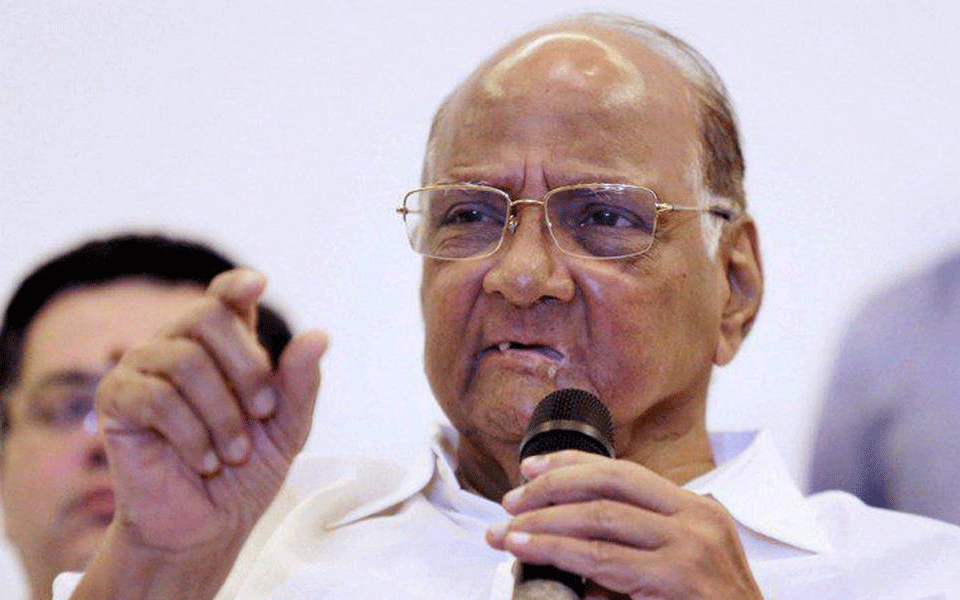
Pune: NCP chief Sharad Pawar on Saturday said that like eight other states, Maharashtra should also refuse implementation of the new citizenship law, which he feared would hurt the religious and social harmony of India.
Dubbing the Citizenship Amendment Act (CAA) and the proposed National Register of Citizens (NRC) "ploys" by the Centre to "divert attention" from serious issues plaguing the country, Pawar expressed apprehension that the Centre might dismiss the state governments opposing the new citizenship law.
The NCP is a ruling constituent, along with the Congress, in the Maharashtra Vikas Aghadi (MVA) government headed by the Shiv Sena. The former Union minister said his party had opposed the Citizenship (Amendment) Bill when it came up for passage in Parliament.
"Eight states, including Bihar, which is ruled by an NDA ally, have refused to implement the law and Maharashtra should also take a similar stand," he said in response to a query.
"But if the states oppose the Union government's order, there is a likelihood that it may dismiss these state governments," Pawar added.
Besides Bihar, states of Kerala, Punjab, West Bengal and Rajasthan had opposed the CAA implementation.
Chief Minister Uddhav Thackeray of the Sena had last Sunday said that implementation of the CAA will be dependent upon the ruling of the supreme court.
"We are checking legality of the new law. Some people have challenged the CAA in the Supreme Court. We are waiting to find out whether the new act fits the framework of Constitution or not," he had said.
Meanwhile, Pawar alleged that the Centre was misusing its power and avoiding a dialogue with the stake-holders even as anti-CAA protests are raging across the country.
"CAA and NRC (National Register of Citizens) are ploys to divert people's attention from serious issues being faced by the country," he told reporters here.
He also alleged that the new legislation posed a threat to the country's unity and social harmony.
"Not just minorities, but those who care for the country's unity and progress are opposing CAA and NRC. The new citizenship law will disturb and hurt religious and social unity and harmony of the country. Poor people will be impacted the most. In Assam, a few lakh non-Muslims are in camps and their condition is bad," the NCP chief said.
Pawar also questioned selective grant of citizenship to non-Muslim immigrants from Pakistan, Bangladesh and Afghanistan under the new law while excluding Sri Lankan Tamils.
"Is it because they (Sri Lankan Tamils) don't belong to a particular religion?" he asked.
"People from only these countries will be allowed (as citizens) as the government feels it will polarise the society to its benefit," he alleged.
As per the Act, people from Hindu, Sikh, Buddhist, Jain, Parsi and Christian communities, who have come to India till December 31, 2014 owing to their religious persecution they will not be treated as illegal immigrants and will be given Indian citizenship.
"There are so many people from Nepal who live and work here. In my official residence in Delhi, two staff members who have been looking after the house for the last 30 years, are Nepalis. Not just me, there are many Nepalis working as domestic helps in establishments," he said.
Replying to a query on the Centre's response to the ongoing violent anti-CAA protests across the country, Pawar said, "The government is misusing its power and avoiding the dialogue with the stakeholders. It should clarify things so that peace is restored."
"People can express anger and register their protest, but violence can't be tolerated. We have already appealed our leaders not to take part in any kind of violence," he said.
"The CAA may be a Central act, but the implementation will be done by the state agencies. But do the states have resources and machinery to do so?" he asked.
Stating that the Centre and states should work together, Pawar said the present government is working exactly the opposite way. "Such a situation is being deliberately created and we oppose this strongly," he said
Let the Truth be known. If you read VB and like VB, please be a VB Supporter and Help us deliver the Truth to one and all.
Madras HC seeks I-T report in Udhayanidhi Stalin poll affidavit 'discrepancies' case
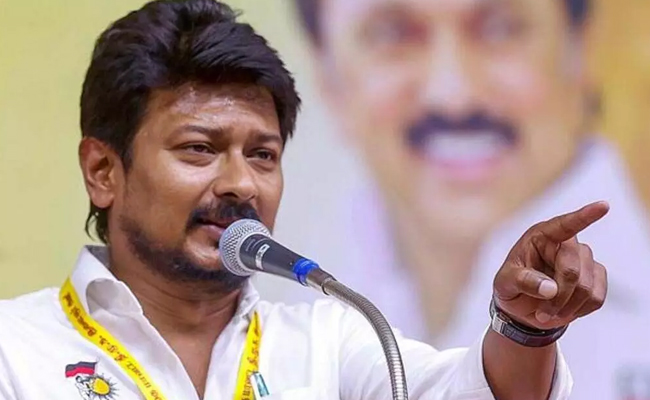
Chennai (PTI): The Madras High Court on Wednesday sought a report from the Income Tax Department on the alleged discrepancies in the poll affidavits filed by Tamil Nadu Deputy Chief Minister Udhayanidhi Stalin seeking re-election from Chepauk-Thiruvallikeni assembly constituency in Chennai.
A division bench of Chief Justice S A Dharmadhikari and Justice G Arul Murugan sought a status report from the Director General of Income Tax (Investigation), and the Ministry of Corporate Affairs, while hearing a plea from R Kumaravel of Chennai, seeking a probe into the assets declared by Udhayanidhi as a candidate in his election affidavit.
The bench posted the case to April 20 for further hearing.
The petitioner from Chepauk-Thiruvallikeni constituency, had alleged that there were discrepancies between the property details mentioned in the affidavit accompanying the nomination paper filed by the deputy chief minister in 2026 and the property details filed and the particulars mentioned in the affidavit for the 2021 polls.
A comparative analysis showed the "disappearance" of over Rs 7 crore in investments, Kumaravel claimed and sought a direction to the Election Commission of India and the returning officer for the constituency to verify the financial disclosures, sources of income, transactions and statutory filings made by Udhayanidhi.
Elections to the 234 Assembly constituencies spread across Tamil Nadu will be held on April 23.