Maharashtra village goes ‘caste-free’, penalties for abuse, 2-hour student “no-phone” period
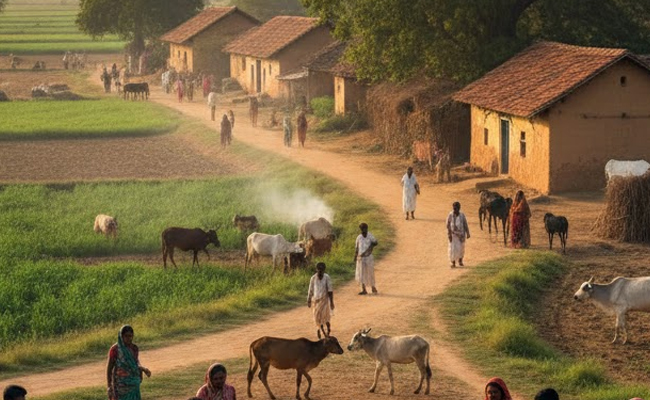
New Delhi: A village in Maharashtra's Ahilyanagar district made an effort to redefine social boundaries through a unanimous gram sabha resolution, with residents of Soundala publicly declaring the village "caste-free" earlier this month.
According to a report published by The Print, during a specially convened gram sabha, a resolution was passed on February 5, which calls for the removal of caste-based distinctions from public and social life. It urges residents to interact only on the basis of shared humanity. It also prohibits inquiries into caste identity and affirms equal access to public spaces, religious places, water sources, schools and government services.
Soundala is located about 350 km from Mumbai. It has a population of around 2,500 across nearly 450 families. Majority of the families belong to upper castes while a significant Dalit population, alongside a small number of Muslim and Christian families also live in the village. While overt discrimination had been declining over the years, residents say the resolution gives formal expression to changes that were gradually taking root.
The initiative was led by village sarpanch Sharad Argade. The Print quoted him as saying that the move was initiated because of rising caste and communal tensions in neighbouring areas of the state and he feared that social divisions seen elsewhere could harden in his own village if left unaddressed.
According to Argade, the idea of declaring Soundala caste-free was discussed over time, influenced by social worker Pramod Zinjade and shaped by his family’s long involvement in local politics. Argade’s wife Priyanka, a former sarpanch, is credited by villagers with playing a key role in challenging social norms through her outreach work, which included visiting homes across caste lines.
The resolution states that Soundala will not differentiate on the basis of caste, religion, creed or colour, and adopts the motto “My caste is humanity." The resolution also warns against social or economic boycotts, communal statements and the circulation of inflammatory content on social media, with provisions for penalties.
After the resolution villagers are sharing food in festivals, visiting each other's houses, and attending community events together. Older residents recall a time when Dalits were forced to sit separately at weddings, use different wells, and stay away from upper-caste houses. Members of the Muslim community also spoke of earlier experiences of exclusion that discouraged social interaction.
Soundala has also introduced penalties for verbal abuse, discouraged discriminatory practices against widows and extended financial support for widow remarriage. The gram panchayat also provides educational support to girls up to Class 12 and enforces a daily two-hour “no mobile phone” period for students to encourage study.
Two months before the caste-free resolution, the village had also adopted a practice of playing the national anthem each morning over a loudspeaker. Argade said it was intended to reinforce a shared civic identity.
Acknowledging that caste remains relevant in government policy, particularly in reservation for education and employment, the sarpanch was quoted by The Print as saying that the aim was to confine caste to official records and remove it from daily behaviour.
Let the Truth be known. If you read VB and like VB, please be a VB Supporter and Help us deliver the Truth to one and all.
'Sarke Chunar' row: Sanjay Dutt apologises; to sponsor education of 50 tribal girls
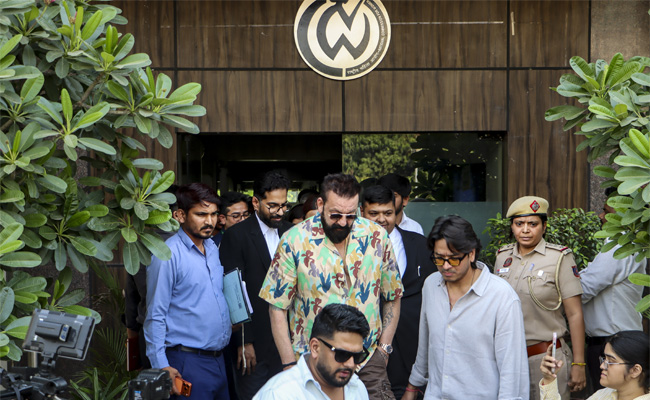
New Delhi (PTI): Actor Sanjay Dutt on Monday appeared before the National Commission for Women (NCW) in connection with the controversy over the song 'Sarke Chunar Teri Sarke' and submitted a written apology, expressing regret for any "unintended" harm caused to society.
During the hearing, held under NCW chairperson Vijaya Rahatkar, the commission raised concerns over alleged vulgarity and indecent representation of women in the song from the movie "KD The Devil" and questioned issues of intent, awareness and accountability.
The chairperson emphasised whether adequate due diligence was undertaken before participating in content that could be perceived as promoting objectification of women, while also underlining the responsibility of senior and influential public figures in ensuring that their work remains within the bounds of legal and societal standards.
As a corrective measure, Dutt committed to sponsoring the education of 50 tribal girl children as part of efforts towards social welfare and women's empowerment, the NCW said in a statement.
He also assured the commission that his future artist agreements would include mandatory legal due diligence provisions to ensure dignified and appropriate representation of women and children in films and related creative projects.
Actor Nora Fatehi, who was also summoned, could not appear as she is currently abroad and has sought a fresh date for the hearing.
On April 6, other individuals associated with the song, including director Kiran Kumar alias Prem, lyricist Raqueeb Alam and representatives of KVN Production Company Gautam K M and Suprith, appeared before the commission and submitted their apologies.
The NCW underscored that while artistic freedom is important, it must be exercised with responsibility and sensitivity, reiterating the need for accountability in content reaching wide public audiences and reaffirming its commitment to safeguarding the dignity and representation of women.
The Hindi version of the song, released on March 15 on YouTube, drew public ire for its sexually explicit lyrics.
After the outrage, the makers deleted the Hindi version of the song from YouTube, although it was widely played and shared across various platforms.
Fatehi, in a video later, distanced herself from the song, saying she shot the video for the Kannada version and her permission was not taken to use it in the Hindi version. The lyricist, singer and the director also apologised.
The issue was brought up in Lok Sabha during Question Hour by Samajwadi Party (SP) MP Anand Bhadoria last month.
Union Information and Broadcasting Minister Ashwini Vaishnaw said the song was already banned and the government was ready to take action against such vulgarity.
"KD The Devil" is a Kannada film, dubbed in four languages, including Hindi. It will release on April 30. The film features Dhruva Sarja, V Ravichandran, Ramesh Aravind, Shilpa Shetty, and Dutt.