Maharashtra: Voting begins in 5 Lok Sabha seats in first phase
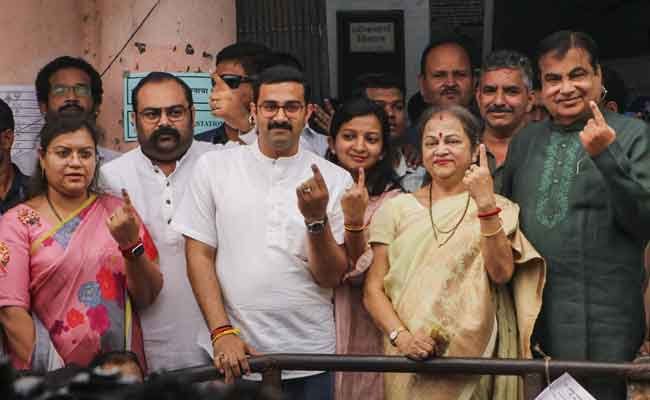
Nagpur (PTI): Polling began Friday morning in five Lok Sabha seats of Maharashtra, where more than 95 lakh voters are eligible to exercise their franchise in the first phase.
Polling in the 43 other Lok Sabha seats in the state will be held in four more phases later this month and in May.
Altogether 97 candidates, including Union minister Nitin Gadkari, are in fray in Nagpur, Ramtek (SC), Bhandara-Gondia, Chandrapur and Naxal-hit Gadchiroli-Chimur (ST) constituency, all located in eastern-most parts of the state.
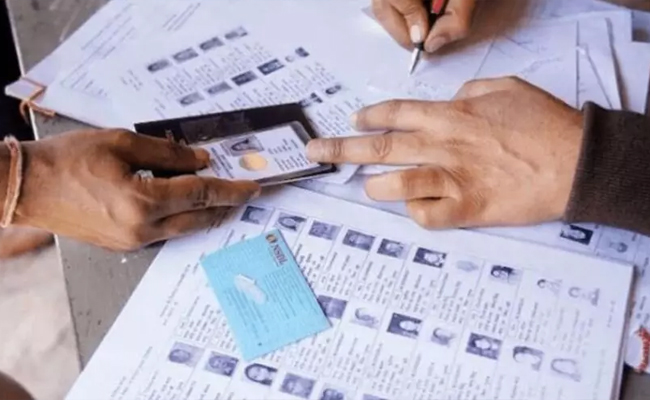
There are 95,54,667 voters in the five Lok Sabha constituencies in the Vidarbha region. Of these, 48,28,142 are male, 47,26,178 female and 347 transgender voters, an election official said.
In Nagpur, there is a direct fight between senior BJP leader Gadkari, who is seeking a third term, and Congress candidate Vikas Thakre. The high-profile constituency, which houses the RSS headquarters, has a total of 22,18,259 voters -- 11,10, 840 male, 11,07,197 female and 222 transgender persons.
In Chandrapur, BJP candidate and Maharashtra minister Sudhir Mungantiwar is facing Congress nominee Pratibha Dhanorkar, wife of late parliamentarian Suresh Dhanorkar, who was the lone MP from the grand old party to be elected to the Lok Sabha from Maharashtra in 2019. Chandrapur has 18,36,314 voters, including 9,45,026 males and 8,91,240 females.
In Bhandara-Gondia, the BJP has fielded sitting MP Sunil Mendhe, who is pitted against Congress candidate Dr Prashant Patole. Bhandara-Gondia has a total of 18,75,106 voters (9,36,041 males, 9,39,056 females and 12 transgenders).
Two-time Lok Sabha MP of BJP, Ashok Nete, is contesting against Congress nominee Dr Namdev Kirsan in Gadchiroli-Chimur (ST), where some areas are affected by Naxal insurgency. The constituency has 16,12,930 voters (8,11,836 males, 8,01,082 females and 12 transgenders).
In Ramtek, the fight is between Shyamkumar Barwe of the Congress and Eknath Shinde-led Shiv Sena's candidate Raju Parwe. The constituency has a total of 20,45,717 voters (10,43,266 males, 10,02,396 females and 55 transgenders).
Five assembly segments, spread across two Lok Sabha seats, including Naxal-hit Gadchiroli-Chimur, are voting between 7 am and 3 pm, unlike other areas where voters can exercise their franchise until 6 pm.
In the assembly segments of Amgaon, Armori, Gadchiroli and Aheri of Gadchiroli-Chimur Lok Sabha constituency and Arjune Morgaon in Bhandara-Gondia seat, polling is being held between 7 am and 3 pm, the official said.
VIDEO | Lok Sabha Elections 2024: “We are celebrating the festival of democracy with great enthusiasm, and I believe that the citizens of our country will exercise their duty and responsibility of voting. I would like to appeal to the people of Nagpur to come and vote as soon as… pic.twitter.com/c4f5uZxcHS
— Press Trust of India (@PTI_News) April 19, 2024
Let the Truth be known. If you read VB and like VB, please be a VB Supporter and Help us deliver the Truth to one and all.
4 held for sexually assaulting woman, girl on moving bus after social media alert in UP's Agra

Agra (UP) (PTI): Four people were arrested, after a prompt response by police following a social media alert, for allegedly sexually assaulting a woman and a girl inside a moving bus here, officials said on Tuesday.
According to an official police statement, at 12:27 am on April 27, information was received on the social media platform X about an incident of sexual assault on a bus travelling from Kanpur to Ahmedabad, which was approaching Namner crossing in Agra.
Acting under the direction of Police Commissioner Deepak Kumar, the Agra Police social media team immediately alerted the Rakabganj police station within minutes and coordinated with the victims to confirm the incident and obtain the exact location, it stated.
Police teams launched intensive checking at Namner crossing and intercepted the bus as it reached the spot. The four accused involved in the incident were apprehended on the spot, and legal action was initiated against them, the statement said.
The police said the swift response and coordination between the social media team and field units ensured timely action, bringing relief to the victims and other passengers, who expressed gratitude towards the police, it added.