Maharashtra's top post eluded Ajit Pawar after six stints as Deputy CM
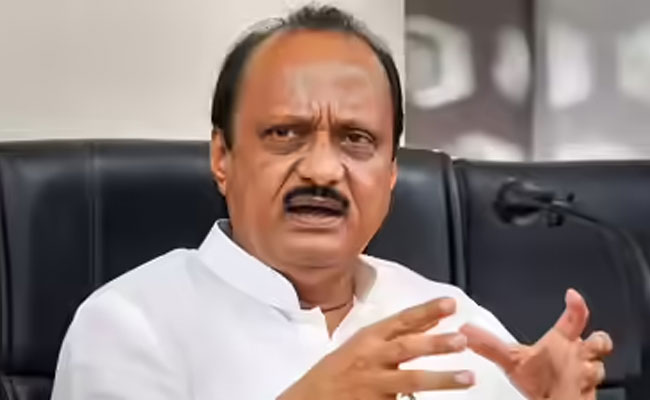
Mumbai (PTI): For Ajit Pawar, it was a perennial case of "Always the bridesmaid, never the bride", as the Maharashtra Deputy Chief Minister for a record six times passed away in a tragic air crash on Wednesday, without realising his goal of becoming the chief minister.
For the 66-year-old grassroots politician, the end came in Baramati, his home turf.
A seasoned politician, Ajit Pawar never hid his desire to become the state’s CM. Before joining the BJP and Shiv Sena alliance government in July 2023, he was deputy CM when Devendra Fadnavis was the CM in November 2019, their government lasting barely two days.
Pawar was known to be a workaholic, and was famous for his punctuality, unlike many politicians notorious for their tardiness.
He had the record of becoming the deputy chief minister in several governments, led by the Congress, Shiv Sena and BJP.
His political career was marked by twists and turns, and he was always the survivor, be it the alleged Rs 70,000 crore irrigation scam or the recent controversy over his son Parth’s land deal in Pune.
Affectionately called ‘’Dada’’ (elder brother), Ajit Pawar was known to speak his mind and did not mince words while expressing his view especially before a rural audience.
In 2013, Ajit Pawar stirred up a hornet's nest with comments ridiculing the acute water and power shortage in parts of the state. He was forced to issue a public apology after his remarks came in for all-round criticism.
Addressing a public meeting in a village in Pune's Indapur, he had mocked Bhaiyya Deshmukh, a farmer from a drought-hit area in Solapur who was on a hunger strike at Mumbai’s Azad Maidan, demanding more water.
“He has been fasting for the last 55 days. If there is no water in the dam, how can we release it? Should we urinate into it? If there is no water to drink, even urination is not possible,” he had said.
Referring to the load shedding situation in parts of the state, he had said, “I have noticed that more children are being born since the lights go off at night. There is no other work left then.”
In July 2023, he stepped out of his uncle and NCP founder’s Sharad Pawar’s shadow by rebelling against him and walking away with most of the party’s MLAs, along with the party’s name and symbol.
After a setback in last year’s Lok Sabha election where his party won only one seat, he outwitted critics by bagging 41 seats in the assembly polls five months later, in alliance with the BJP. The NCP(SP) got only 10 seats.
Since the 2024 assembly results, Ajit Pawar fortified his position in state politics.
Despite his alliance with BJP and the Eknath Shinde-led Shiv Sena, he stressed that he had joined the ruling alliance for development and had not deviated from his core progressive ideology.
He stayed focussed on his party and his ministries while political speculation centred around the so-called one-upmanship between chief minister Devendra Fadnavis and the other deputy CM Eknath Shinde.
Born on July 22, 1959 to Asha and Anantrao Pawar, Ajit Pawar followed the footsteps of his uncle (his father;s younger brother) Sharad Pawar into politics in 1982 when he was elected to the board of a sugar factory.
In 1991, he was elected to the Lok Sabha from Baramati and later vacated the seat for his uncle who then became defence minister in P V Narasimha Rao’s government.
Ajit Pawar then served as Baramati MLA for eight terms from 1991.
Ajit Pawar, who was the finance and planning minister, would have tabled his budget for 2026-27 next month when the state legislature’s budget session begins in Mumbai on February 23.
In the days to come, the focus will be on the future of the NCP factions, with political circles buzzing with the possible merger of the two outfits.
Let the Truth be known. If you read VB and like VB, please be a VB Supporter and Help us deliver the Truth to one and all.
Nursing college student from Kerala dies by suicide at hostel, parents allege foul play
Bengaluru (PTI): A 19-year-old student from Kerala, who was studying at a private nursing college here, allegedly died by suicide in his hostel room, police said on Friday.
The deceased was identified as Adhityan P A, a second-year student at a nursing college in Bommasandra, they said.
On April 29, he was found hanging from a ceiling fan in his hostel room, police said, adding that he left behind a suicide note stating that no one was responsible for his death.
Preliminary investigation suggested that he may have been suffering from depression, and there may have been other issues which are being probed, a senior police officer said.
According to police, in his complaint, the deceased's father, Pradeep S, claimed that a college representative informed him upon his arrival in Bengaluru that his son had died under suspicious circumstances and that it was a case of suicide in the college hostel.
"However, I firmly believe that my son would not have taken such a step. He was of good character and mentally strong. Therefore, I strongly suspect foul play in his death," he claimed.
He also highlighted an incident that occurred approximately 20 days ago, when his son informed him that some of his hostel roommates were involved in drug use and were caught by hostel authorities.
"They were warned along with my son, although he was innocent and not involved in the incident. This situation may be relevant to the present case," he stated.
The complainant has urged the police to conduct a thorough and impartial investigation into the matter and take appropriate legal action.
A case of unnatural death has been registered at Hebbagudi Police Station here. Further investigation is underway, and all allegations are being examined, police said.