Maharastra's Malegaon blast case; more than 100 witnesses yet to be examined by court
Mumbai(PTI): Fourteen years after a blast in Maharashtra's Malegaon town claimed six lives and injured more than 100 people, the trial in the case is still going on before a special NIA court here and more than witnesses are yet to be examined while 26 have turned hostile.
Seven persons, including BJP MP Prgaya Singh Thakur and Lt Col Prasad Purohit, are facing trial in the case, which is being probed by the National Investigation Agency, and have been charged under the stringent Unlawful Activities (Prevention) Act (UAPA).
All the accused are currently out on bail. As per the NIA, there were nearly 450 witnesses sought to be examined in the case. The special court has examined 272 witnesses of whom 26 have turned hostile. As per information available, more than 100 witnesses are yet to be examined.
In 2015, the Supreme Court had directed for the trial to be concluded expeditiously. Later, one of the accused the case, Sameer Kulkarni, filed a petition in the Bombay High Court claiming that despite the apex court order, the trial was not being conducted expeditiously. The HC earlier this year sought periodical reports from the special court on the status of the trial.
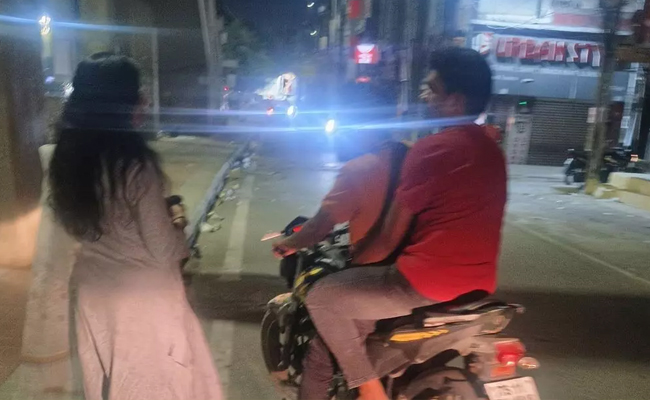
The special court, presiding over the case, has examined over 270 witnesses of which 26 have turned hostile. On September 29, 2008, six people were killed and more than 100 injured when an explosive device strapped to a motorcycle went off near a mosque in Malegaon, a communally sensitive town in Maharashtra's Nashik district.
According to the Maharashtra Police who conducted an initial probe into the case, the motorbike was registered in Thakur's name which led to her arrest. The case was later handed over to the NIA.
Besides Thakur and Purohit, the others facing trial in the case are Ramesh Upadhyay, Ajay Rahirkar, Sudhakar Dwivedi, Sudhakar Chaturvedi and Sameer Kulkarni.
The accused have been charged under Sections 16 (committing terrorist act) and 18 (conspiring to commit terrorist act) of the UAPA and under Sections 120 (b) (criminal conspiracy), 302 (murder), 307 (attempt to murder), 324 (voluntarily causing hurt) and 153 (a) (promoting enmity between two religious groups) of the Indian Penal Code.
If convicted under these sections, the maximum punishment can be life imprisonment or death.
Let the Truth be known. If you read VB and like VB, please be a VB Supporter and Help us deliver the Truth to one and all.
Sujit Nair raises concerns over speculation of DMK-AIADMK understanding to block TVK
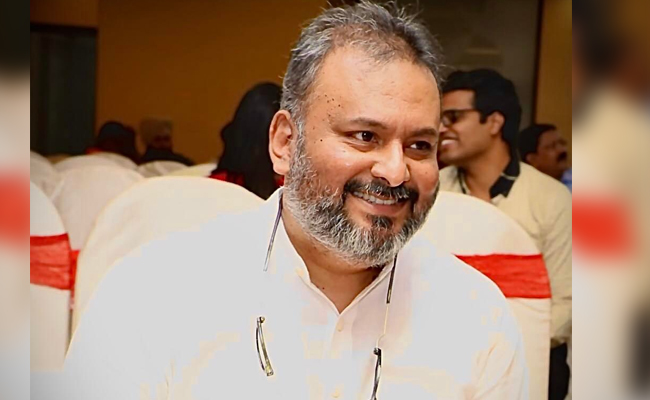
Chennai: Journalist and political commentator Sujit Nair has expressed concern over speculation that the Dravida Munnetra Kazhagam and the All India Anna Dravida Munnetra Kazhagam could explore a post-poll understanding to prevent Vijay-led Tamilaga Vettri Kazhagam from forming the government in Tamil Nadu.
In a social media post, Sujit Nair said the election verdict in Tamil Nadu reflected a clear public demand for political change and argued that the mandate should be respected irrespective of political preferences.
Referring to reports and political discussions surrounding a possible understanding between the DMK and AIADMK, he said he hoped such developments remained only speculative conversations and did not turn into reality.
Nair stated that if such an alliance were to take shape, it would raise serious questions about ideological politics in the country. He said TVK had emerged through a democratic electoral process and that the legitimacy to govern in a parliamentary democracy comes from the people’s verdict.
According to him, attempts to prevent an electoral winner from forming the government through unexpected political arrangements may be constitutionally valid, but many people could view them as politically opportunistic.
He further said that such a move could particularly affect the political image of the DMK, which has historically projected itself around ideology, social justice and opposition politics. Nair said that in ideological terms, the DMK appeared closer to TVK than to the AIADMK, and joining hands with its long-time political rival only to remain in power could weaken its broader political narrative.
He added that the same questions would apply to the AIADMK as well, as the party had spent decades positioning itself against the DMK and such an arrangement could create discomfort among its cadre and supporters.
Drawing a comparison with Maharashtra politics in 2019, Nair said he had expressed similar views when the Shiv Sena formed an alliance with the Indian National Congress and the Nationalist Congress Party after the Assembly elections.
He said post-poll alliances between long-standing political rivals often create a public perception that ideology and electoral mandates become secondary when political power equations come into play.
Nair also said such developments increase public cynicism towards politics and reinforce the belief among voters that ideology is often sidelined after elections.
He maintained that the Tamil Nadu verdict was emphatic and said respecting both the spirit and substance of the mandate was important for the credibility of democratic politics.