Mahua Moitra's political odyssey: From banker to parliamentarian and explosive exit
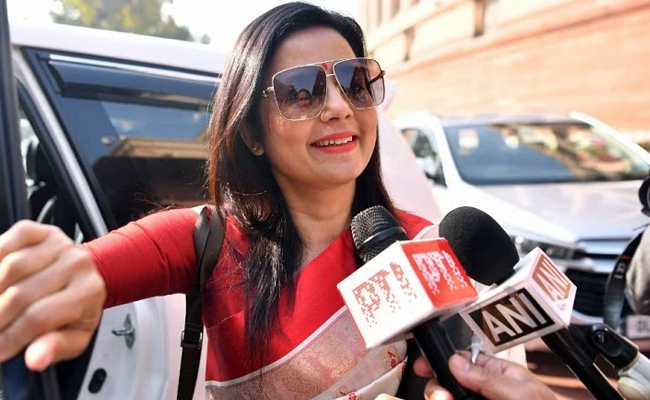
Kolkata (PTI): The 14-year political journey of Trinamool Congress leader Mahua Moitra has encountered both upheaval and elevation, as her expulsion from Parliament in a cash-for-query case marked the culmination of her tumultuous term in Lok Sabha.
Despite the abrupt brakes to her parliamentary career for the time being, the opposition's unwavering support painted a contrasting picture, underscoring Moitra's enduring impact in present-day Indian politics.
Moitra, a first-time MP representing Krishnanagar Lok Sabha seat, found herself expelled from the House on Friday.
The Ethics Committee's report, holding her accountable for accepting gifts and illegal gratification, paved the way for her expulsion.
Following a contentious debate where Moitra was denied the opportunity to speak, Parliamentary Affairs Minister Pralhad Joshi proposed a motion to expel the TMC member for "unethical conduct," a motion that was adopted through a voice vote.
In response to her expulsion, Moitra strongly criticised the decision, likening it to being sentenced by a "kangaroo court" and accusing the government of weaponising parliamentary panels to coerce the opposition into submission.
Born in Assam's Cachar district in 1974, Moitra's early education in Kolkata preceded her pursuit of higher studies in the United States.
Initially an investment banker with JP Morgan Chase in New York and London, Moitra's trajectory shifted dramatically after being inspired by Rahul Gandhi's "Aam Admi Ka Sipahi" initiative.
She relinquished her high-profile banking career in London to join the youth wing of the Congress in 2009. Assigned to the West Bengal unit, Moitra worked closely with Congress leader Subrata Mukherjee.
Amidst the winds of change in West Bengal against the Left Front regime, Moitra and Mukherjee switched allegiance to the TMC just days before the 2010 Kolkata Municipal Corporation elections, in which the Mamata Banerjee-led party triumphed.
Despite missing out on a party ticket for the 2011 assembly polls and 2014 Lok Sabha polls, Moitra waited patiently and made her electoral debut in the 2016 assembly polls, securing victory in Karimpur constituency.
Although not included in the state cabinet, her eloquent speeches and debating skills made her a prominent spokesperson for the party in the national media.
In 2019, she clinched the Lok Sabha ticket from Krishnanagar and won convincingly.
Moitra's impassioned speeches in Parliament, despite her novice status, catapulted her into the national limelight, making her a sought-after TMC leader in television debates.
However, controversies and internal party debates occasionally clouded her rise.
Known for speaking her mind, Moitra often found herself at odds with the party on organisational matters, with public rebukes from Mamata Banerjee.
Controversies became synonymous with Moitra over the last two years, including her remarks dubbing journalists as "two paisa journalists", leading to a prolonged boycott by local Bengali media.
Her statement at a conclave last year, asserting her right to imagine Goddess Kali as a meat-eating and alcohol-accepting deity, ignited a political storm nationwide.
A vocal opponent of the sedition law, Moitra has been actively involved in legal battles, serving as one of the writ petitioners in a Supreme Court case.
Amid the cash-for-query controversy, Moitra has asserted she was being bullied for challenging the BJP government and pledged a triumphant return to Parliament with a bigger mandate.
While this controversy brought an abrupt end to her first term as a parliamentarian, it undeniably enhanced her stature within the party, with unwavering support from the top leadership.
The opposition also rallied behind Moitra, exemplified by Congress leader Sonia Gandhi standing with her as she launched salvos against the BJP, underscoring the enduring influence of Moitra in the complex realm of Indian politics.
Let the Truth be known. If you read VB and like VB, please be a VB Supporter and Help us deliver the Truth to one and all.
Uttarakhand Assembly passes censure motion against opposition over women's reservation bill
Dehradun (PTI): The Uttarakhand Assembly passed a censure motion against the Congress and other opposition parties on Tuesday for allegedly blocking the passage of the Constitution (131st Amendment) Bill, 2026, in Parliament.
The motion, which expressed the House's formal disapproval of the opposition's conduct, triggered a massive uproar by Congress members, leading to the adjournment of the House sine die.
Parliamentary Affairs Minister Subodh Uniyal moved the censure motion, citing the "uncooperative attitude" of opposition parties toward the bill seeking 33 per cent reservation for women in legislative bodies.
Addressing a special daylong session convened specifically to discuss "Nari Samman -- Rights in Democracy", Chief Minister Pushkar Singh Dhami said the bill's passage would have benefitted every political party.
Dhami noted that after delimitation, the number of Assembly seats in the hill state would have gone up to 105, with 35 reserved for women. He added that the number of Lok Sabha seats from Uttarakhand would have risen from five to seven or eight.
"The opposition fears that if women from ordinary households enter politics, the shops of dynastic politics run by certain parties will shut down," the chief minister claimed.
He compared the opposition's conduct in Parliament to the assembly in Mahabharat where Draupadi was insulted. Dhami further likened the opposition's behaviour to the "arrogance of Ravan".
The chief minister highlighted his government's initiatives, asserting that Uttarakhand was the first state to implement a Uniform Civil Code (UCC) to protect women's rights. He said the UCC freed Muslim women from practices like "halala", "iddat", polygamy and child marriage.
Leader of Opposition Yashpal Arya questioned the technical feasibility of the bill, calling the ruling Bharatiya Janata Party's (BJP) claims of providing reservation by 2029 "misleading".
He argued that the bill is linked to census and delimitation processes. The Congress leader said the 2026 census would conclude by 2027 and the final data publication would take two more years.
"The delimitation process will take another six years. The actual implementation of this bill is not possible before 2034," Arya said, describing the move as a strategy to protect the BJP's "political ground".
The session also saw high drama outside the Assembly gates, where Congress MLA Virendra Jati staged a protest, demanding the payment of "outstanding" dues to farmers by sugar mills.
Jati arrived at the Assembly's main gate with a tractor-trolley loaded with sugarcane and dumped it on the road. The move brought the traffic to a halt, prompting traffic and security personnel to intervene and clear the area.
Women Congress workers also staged a demonstration against the "anti-people policies" of the state government.