Make mandatory 'bumper-to-bumper' insurance: Madras HC
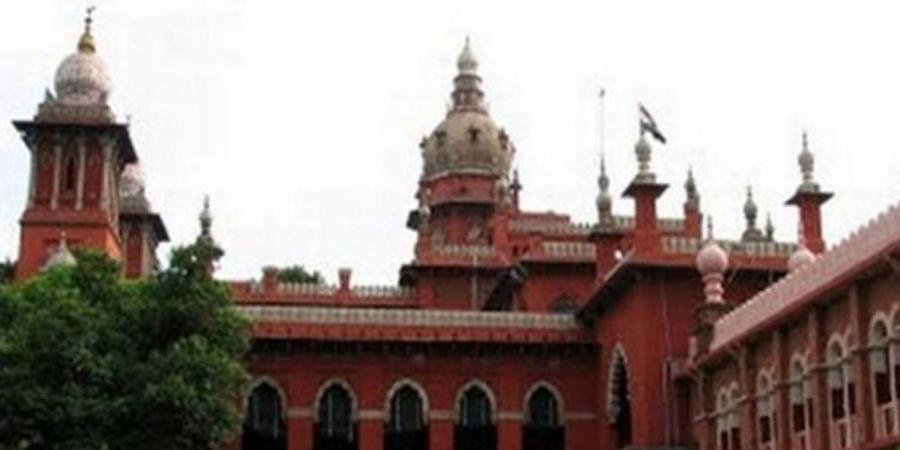
Chennai, Aug 26: In a significant order, the Madras High Court has ruled that "bumper-to-bumper" insurance should be mandatory whenever a new vehicle is sold, from September 1.
This must be in addition to covering the driver, passengers and owner of the vehicle, for a period of five years.
Thereafter, the owner of the vehicle must be cautious in safeguarding the interest of driver, passengers, third parties and himself/herself, so as to avoid unnecessary liability being foisted on the owner of the vehicle, as beyond five years, as on date there is no provision to extend the bumper to bumper policy, due to its non-availability, Justice S Vaidyanathan said in a recent order.
The judge was allowing a writ petition from the New India Assurance Company Limited in Avalpoondurai, challenging the orders dated December 7, 2019 of the Motor Accidents Claims Tribunal, Special District Court in Erode.
The Insurance company pointed out that the insurance policy in question was only an "Act Policy", which would cover only the risk that might be confronted by a third party to the vehicle and not its occupants. The coverage for an occupant of the vehicle could be extended upon payment of additional premium by the owner of the car, the insurance company contended.
The judge passed this order, which would go a long way in coming to the aid of lots of accident victims. He, however, could not come to the rescue of the claimants in this case, as the vehicle, in which their breadwinner was travelling/driving, was covered only with third-party insurance.
Left with no other choice but to deprive the claimants of the accident benefits ordered by the Motor Accidents Claims Tribunal in Erode, the judge quashed the order of the Tribunal awarding a compensation of Rs 14.65 lakh to K Parvathy and three others.
The judge, however, made it clear that this order will not preclude the claimants from claiming compensation for the death of the deceased from the owner of the car, as per the terms of the policy for which the car was insured.
Before parting with this judgment, the judge said that it is saddening to point out that when a vehicle is sold, the purchaser/ buyer is not clearly informed about the terms of policy and its importance. Similarly, at the time of buying the vehicle, the buyer is also not interested in thoroughly understanding the terms and conditions of the policy, as he/ she is more concerned about the vehicle's performance and not about the policy.
When a buyer is ready to pay a huge amount for purchase of a vehicle, it is really shocking as to why he/ she is not interested in spending a paltry sum to take a policy so as to safeguard himself/ herself and others.
"Therefore, this court directs that whenever a new vehicle is sold after September 1, it is mandatory for coverage of bumper to bumper insurance every year, in addition to covering the driver, passengers and owner of the vehicle, for a period of five years. Thereafter, the owner of the vehicle must be cautious in safeguarding the interest of driver, passengers, third parties and himself/ herself, so as to avoid unnecessary liability being foisted on the owner of the vehicle, as beyond five years, as on date there is no provision to extend the bumper to bumper policy, due to its non-availability, the judge said.
In view of untoward incidents like the present one on hand, the order shall be circulated by the Additional Chief Secretary, Transport department, to all the insurance companies and he must ensure that the above direction is followed scrupulously in letter and spirit without any deviation, the judge added and posted the matter on September 30 for reporting compliance.
Let the Truth be known. If you read VB and like VB, please be a VB Supporter and Help us deliver the Truth to one and all.
CJI's advice to aspirant: Join the bar, become a lawyer, don't hanker for judicial services post
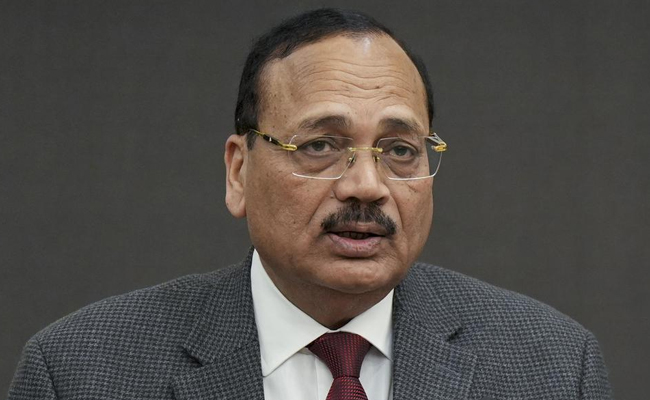
New Delhi (PTI): She came to the Supreme Court seeking a re-evaluation of her paper in the examination for joining judicial services as a magistrate. What she got instead was a rejection — and a candid confession by the Chief Justice that he too had wanted to join the judicial services in his youth but was advised by a senior judge to become a lawyer instead.
A bench comprising Chief Justice Surya Kant and Justice Joymalya Bagchi on Friday dismissed a plea filed by Prerna Gupta, the judicial services aspirant.
As Gupta pressed her case, the CJI intervened and said, "Let me share my personal story and I hope you will go happily as we cannot allow your petition."
He recounted his time as a final-year law student in 1984 when he wanted to become a judicial officer. As per requirement, he cleared the written test and was set to appear for an interview.
Judicial services is one of the two routes to become a judge after initially joining as a magistrate in lower court and thereafter rising through the ranks to become judge in a high court and possibly the Supreme Court.
The other route is to join the Bar, which means becoming a lawyer, and after building a reputation be picked from the Bar to become a judge at a senior level.
By the time the CJI's exam results came out, he had started practising at the Punjab and Haryana High Court when he was called for the interview.
The senior-most judge on the interview panel happened to be a judge before whom he had recently argued two significant matters.
"One of the matters was Sunita Rani vs Baldev Raj, where he had allowed my appeal in a matrimonial case and set aside the decree of divorce granted by the District Judge on the ground of schizophrenia," he noted.
Before the interview could take place, the judge called the young Surya Kant to his chamber and asked, 'Do you want to become a judicial officer?'
"I said 'yes.' He immediately said, 'Get out from (my) the chamber.'"
The courtroom fell silent as the CJI Justice described his initial heartbreak.
“I came out trembling. All my dreams were shattered. I thought he had snubbed me and that my career was over,” the CJI said.
However, the story took another turn the following day and the judge summoned him again, this time offering a piece of advice that would change the trajectory of his life.
“He said, ‘If you want to become (a judge), you are welcome. But my advice is, don’t become a judicial officer. The Bar is waiting for you,’” Justice Surya Kant recalled.
The CJI said he decided to skip his interview and didn't even tell his parents at first, fearing their disappointment, and instead chose to dedicate himself to his practice as an advocate.
“Now tell me did I make a bad right or bad decision,” the CJI asked and the litigant lawyer left the court with a smile on her face despite her case being dismissed.
Encouraging the petitioner to look toward the future rather than dwelling on the re-evaluation of a single paper, Justice Surya Kant said, "The Bar has much to offer."