Malegaon blast: SC asks Purohit to challenge prosecution sanction in trial court
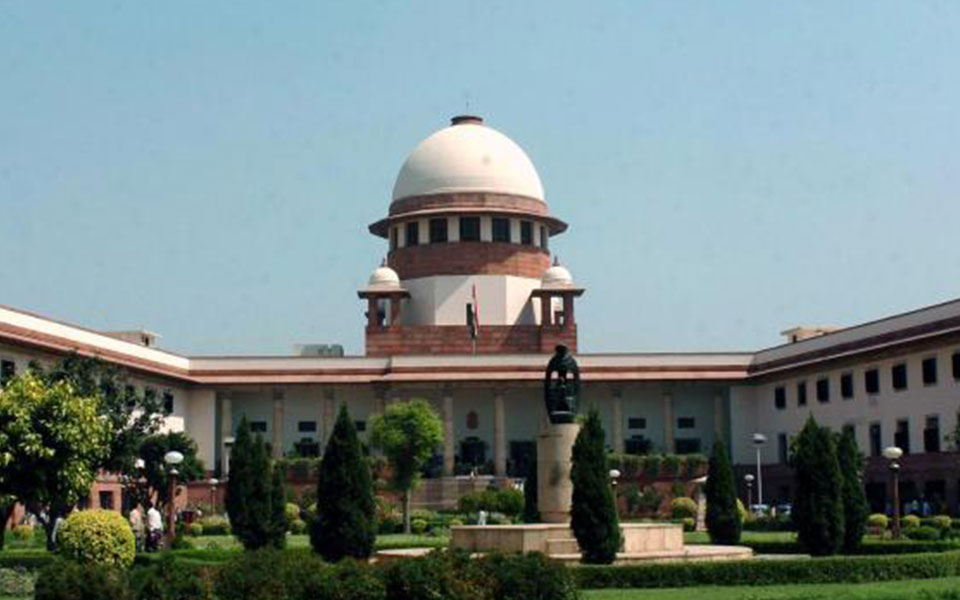
New Delhi, April 20: The Supreme Court on Monday asked 2008 Malegaon bomb blast accused Lt. Col. Prasad Shrikant Purohit to agitate his contention against the sanction given to prosecute him under an anti-terror law before the trial court hearing the case.
In a relief to Purohit, a bench of Justice R.K. Agrawal and Justice Abhay Manohar Sapre said the issue can be raised before the trial court during the framing of charges in the case.
The court was hearing a plea filed by Purohit challenging the proceedings against him under the Unlawful Activities Prevention Act (UAPA) in the absence of valid sanction from the competent authority.
On December 18, 2017, the Bombay High Court had dismissed the plea by Purohit. He then approached the apex court challenging the High Court order and the December 27, 2017 order of the Court of Special Judge under the Maharashtra Control of Organised Crime Act (MCOCA) and NIA Act.
The trial court in its 2017 order, while discharging Purohit of the offences under the MCOCA and the offences punishable under certain provisions of the UAPA, had decided to proceed against him under other provisions of the stringent act.
Purohit had contended in the High Court that no appropriate authority had been appointed by the Maharashtra government, as required under UAPA section, and so there was breach of mandatory requirement of the provision.
He had argued that under the UAPA, the state law and judiciary department, the sanctioning authority, has to seek a report from an appropriate authority. In his case, the sanction was given in January 2009 but the authority was appointed only in October 2010.
On January 17, 2009, the Additional Chief Secretary of the Maharashtra home department had accorded sanction to apply stringent provisions of the UAPA to the case.
The proceedings against him are in the absence of valid sanction from the competent authorities, and are thus a miscarriage of justice and bad in law, he added.
Section 45(1) and (2) of the Unlawful Activities Prevention Act, 1967 say that no court will take cognizance of any offence without the previous sanction of the Central government or any officer authorised by the Central government in its behalf.
The offences for which prior sanction is required under said provisions include being a member of unlawful association, punishment for terrorist activities and offence relating to membership of a terrorist organisation or supporting it.
The case against Purohit relates to 2008 Malegaon blast where six persons were killed and 101 injured when an improvised explosive device strapped to a motorcycle went off at Malegaon, a town with sizable Muslim population in north Maharashtra's Nashik district.
Let the Truth be known. If you read VB and like VB, please be a VB Supporter and Help us deliver the Truth to one and all.
IndianOil says it has scaled up Auto LPG supplies
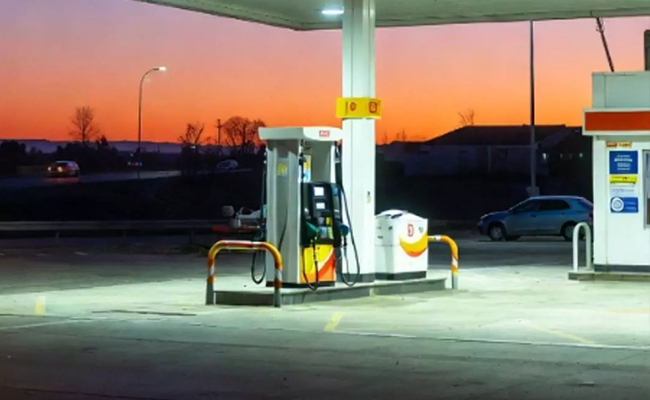
Bengaluru (PTI): IndianOil on Thursday said it has significantly scaled up its Auto LPG supplies across Karnataka in response to a sharp surge in demand, particularly following the closure or partial shutdown of several private Auto LPG outlets in Bengaluru and other parts of the state.
The PSU major said it is currently meeting the fuel requirements of auto rickshaws and LPG-driven cars through its network of 55 Auto LPG Dispensing Stations (ALDS) spread across Karnataka, even as a substantial portion of demand has shifted to public sector outlets due to over 300 privately operated outlets being closed or only partially functional.
"Indian Oil Corporation Limited (IndianOil) has significantly scaled up its Auto LPG supplies across Karnataka in response to a recent surge in demand," V Vetriselvakkumar, Chief General Manager (Corporate Communications) said in a release.
He added that the move comes particularly following the closure or partial shutdown of several private Auto LPG outlets in Bengaluru and other parts of the state.
Despite the increased operational burden, the company said it has taken concerted measures to ensure uninterrupted supply and efficient service delivery to LPG-powered vehicles during the current situation.
The average daily sales at IndianOil's ALDS in Karnataka have risen sharply to 59.53 metric tonne (MT), compared to the previous three-month average of 43.4 MT, reflecting a significant spike in consumer demand, the release said.
Reiterating its commitment, Vetriselvakkumar said IndianOil remains focused on ensuring seamless fuel accessibility while adhering to government directives and maintaining equitable distribution across all sectors.