'Mallya has enough assets to sell for repaying loans'
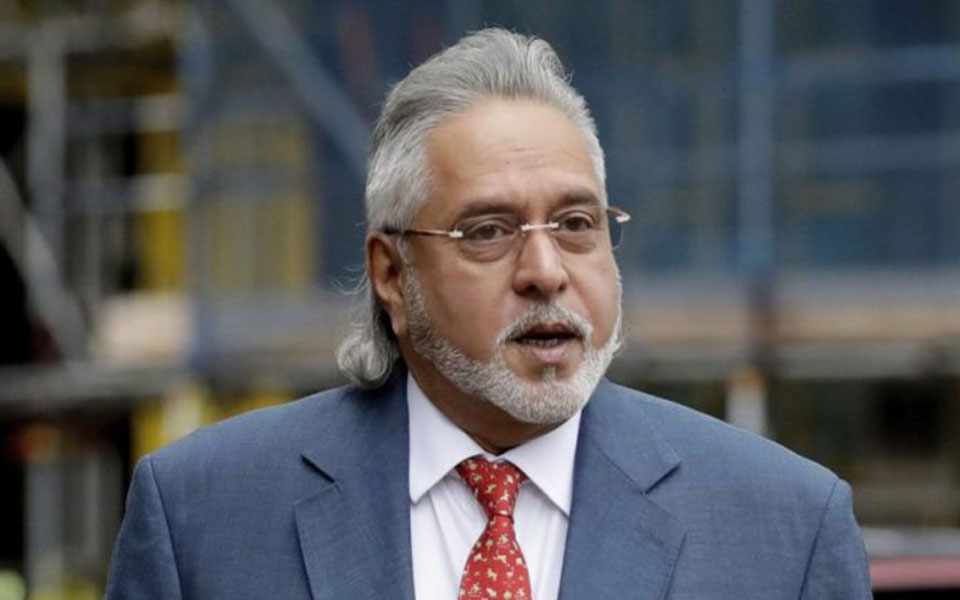
Bengaluru, June 26: Fugitive Vijay Mallya has enough assets to sell and replay loans he raised from banks to fund his now defunct Kingfisher Airlines, an official said on Tuesday.
"The value of Mallya's assets seized by the authorities concerned is estimated to be nearly Rs 13,960 crore, while he owes about Rs 9,500 crore to a consortium of banks," a law enforcing agency official told IANS here.
On a petition in February 2016 by the consortium of 17 banks for recovery of their dues from the airline, the Debt Recovery Tribunal recovered and transferred to the Enforcement Directorate (ED) assets valued at Rs 7,529 crore.
In a petition to the Karnataka High Court on June 22, Mallya offered to sell under judicial supervision his fixed assets and shares valued at Rs 8,423 crore to repay the outstanding dues to creditors, including banks.
"As most of fixed assets valued at Rs 1,700 crore and shares (pledged/unpledged) worth Rs 4,978 crore, totalling Rs 6,678 crore) have been seized and attached, the ED has to release them for sale," said the official, preferring anonymity.
The Tribunal has so far recovered Rs 198 crore in fixed deposits and balance amount in the bank accounts of the defaulters (Mallya and United Breweries Holdings Ltd) and Rs 73 crore from the sale of the sprawling Kingfisher Villa at Candolim in Goa in April 2017.
As stated by Mallya in a statement to the media earlier, he had deposited Rs 1,280 crore with the high court on its direction in 2013.
In addition, Mallya is ready to sell other assets worth Rs 2,650 crore.
Mallya's six other entities are also willing to sell shares worth Rs 2,888 crore, held in the group companies such as United Spirits Ltd, United Breweries Ltd and McDowell Holdings Limited.
Let the Truth be known. If you read VB and like VB, please be a VB Supporter and Help us deliver the Truth to one and all.
AIITA welcomes Karnataka’s ban on obscene songs in school events

Bhatkal: The Karnataka unit of the All India Ideal Teachers Association (AIITA) has welcomed the Karnataka government’s decision to strictly ban school children from dancing to obscene songs during educational and cultural programmes in government, aided, and private schools across the state.
AIITA Karnataka State President M. R. Manvi congratulated the government for taking what he termed an important step to preserve the sanctity of education.
“Such decisions to safeguard the dignity of school children and uphold the values of education are the need of the hour. This rule should not be limited to government schools alone but must be strictly implemented in all private educational institutions as well,” he said.
He further urged the government to address other concerns within school programmes.
“The government should not only prohibit obscene dances in the name of school anniversaries, but also ensure that plays and dialogues that incite religious hatred are avoided. Schools should be centres of harmony, not platforms for spreading hatred,” he added.
According to a recent circular issued by the Department of School Education and Literacy, obscene dances are adversely affecting the mental health and moral values of students.
In this regard, schools have been advised to use songs that promote nationalism, positive thinking, the greatness of Kannada culture, and value-based traditions instead of inappropriate content during programmes.
The circular also emphasises that students should be dressed in decent attire.
AIITA also backed the department’s warning that disciplinary action would be taken against head teachers if such guidelines are violated. The association has further demanded that district Deputy Directors of Public Instruction strictly monitor the implementation of these rules.