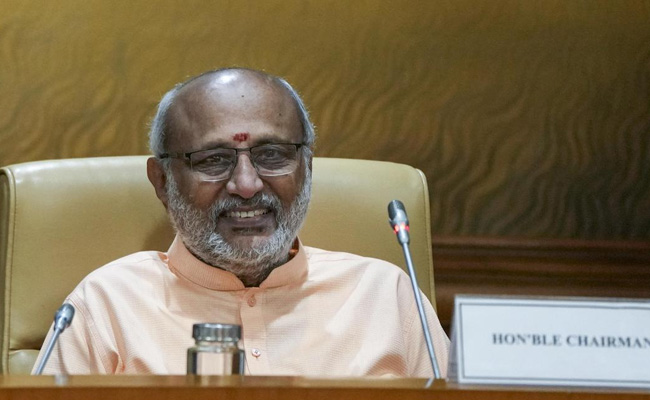
Mamata calls incoming Bengal Guv R N Ravi 'BJP cadre', alleges Bose was forced out

Kolkata (PTI): West Bengal Chief Minister Mamata Banerjee on Saturday alleged that incoming Governor R N Ravi is a "BJP cadre" and claimed that the sudden exit of C V Ananda Bose from Lok Bhavan was the result of pressure from the Centre.
Addressing supporters at her ongoing dharna against deletions in voter rolls, Banerjee accused the BJP-led central government of attempting to convert Lok Bhavan into a political outpost in the run-up to the assembly elections in the state.
"Have you seen how C V Ananda Bose was removed? I know everything. He was threatened. They want to distribute money from Lok Bhavan. They want Lok Bhavan to be converted into a BJP party office. But everybody may not agree to such whims and fancies of Delhi," she alleged.
ALSO READ: If not in politics, would have probably done entrepreneurship in aerospace: Rahul Gandhi
Without citing specific instances, the Trinamool Congress supremo also took a swipe at Ravi's tenure in Tamil Nadu, claiming that the governor had faced "many comments" from the Supreme Court.
"The person who is coming to West Bengal now, I heard that he had to face many comments from the Supreme Court. He is a cadre of the BJP. But remember, West Bengal is a different place. You may have done whatever you wanted in Tamil Nadu, but here you can't do that," Banerjee said.
Escalating her attack on the BJP-led Centre, the chief minister accused it of undermining constitutional institutions and not allowing governors to complete their tenures.
"The Centre is not letting anyone finish their term. You did the same thing with Jagdeep Dhankhar," she said, referring to the former West Bengal governor who later became vice president.
Banerjee said those ruling at the Centre were behaving "worse than Muhammad bin Tughlaq", invoking a phrase often used in the Indian political discourse to describe arbitrary or whimsical governance decisions.
"If you try to threaten us, we will ensure the fall of the BJP government at the Centre," she said.
Banerjee's remarks come amid a fresh political storm triggered by Bose's sudden resignation earlier this week, just days before the Election Commission is expected to announce the schedule for the West Bengal assembly polls.
In a dramatic development on Thursday evening, Bose stepped down from his post in New Delhi, setting off intense political speculation in the state.
Soon after the resignation, Banerjee said Union Home Minister Amit Shah had informed her that Tamil Nadu Governor R N Ravi would take over as the governor of West Bengal.
Ravi, however, is yet to assume charge.
The developments have added fuel to the already tense political climate in the state, where the Trinamool Congress and the BJP are locked in a fierce battle ahead of the assembly elections, with the Lok Bhavan often emerging as a flashpoint during Banerjee's confrontations with the Centre.
Banerjee's latest remarks also signal a renewed attempt by the ruling TMC to frame the upcoming polls as a fight to "protect West Bengal's autonomy" from what it calls interference by the BJP-led central government, a narrative the party has repeatedly deployed in past electoral contests.
Let the Truth be known. If you read VB and like VB, please be a VB Supporter and Help us deliver the Truth to one and all.
Court can reject anticipatory bail but cannot direct accused to surrender: SC
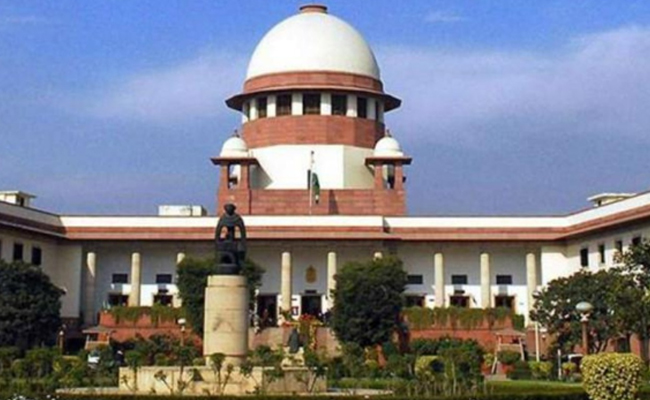
New Delhi (PTI): A court can reject anticipatory bail of an accused but it has no jurisdiction to direct him to surrender before the trial court, the Supreme Court has said.
A bench of Justices J B Pardiwala and Ujjal Bhuyan made the observation while hearing a plea filed by a man accused of cheating and forgery.
"If the court wants to reject the anticipatory bail, it may do so, but the court has no jurisdiction to say that the petitioner should now surrender," the bench said.
The Jharkhand High Court had rejected anticipatory bail plea of the accused and asked him to surrender and seek regular bail.
In this case, a complaint had been filed before a magistrate alleging offences under Sections 323 (voluntarily causing hurt), 420 (cheating), 467 (forgery of valuable security), 468 (forgery for purpose of cheating), 471 (using forged document) and 120B read with 34 of the IPC, in connection with a land dispute.
The high court had dismissed the second anticipatory bail application of the accused on the ground that no new circumstances were shown.
It had relied on its earlier order rejecting his first anticipatory bail plea, in which the court directed the petitioner to surrender before the trial court and seek regular bail in terms of the decision in Satender Kumar Antil v. CBI.
The top court said such a direction was wholly without jurisdiction and said that if a court chooses to reject anticipatory bail, it may do so, but it cannot compel the accused to surrender.