Man charged with attempt to murder for attending Tablighi event; HC says 'abuse of power'
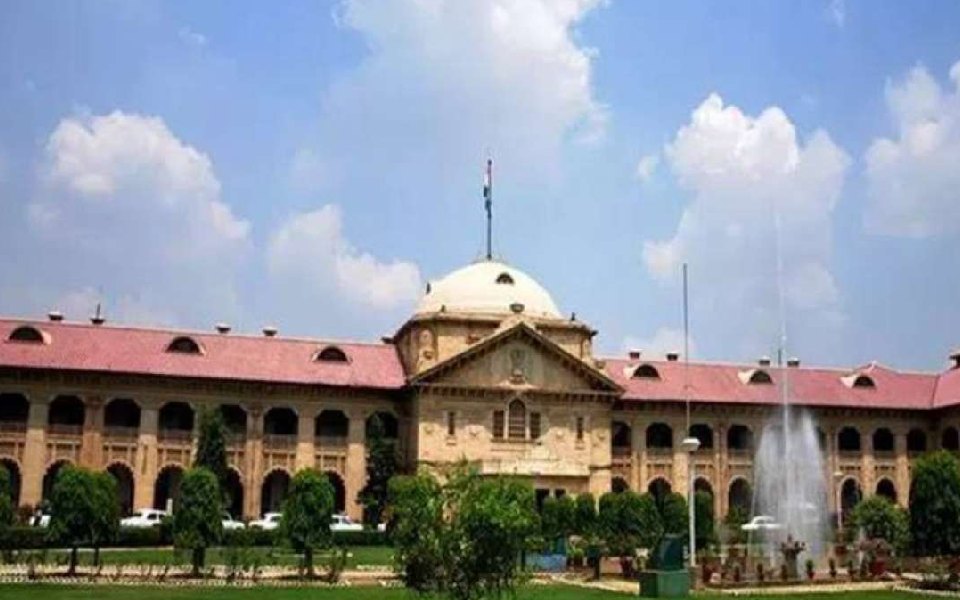
Allahabad: The Allahabad High Court has observed that the attempt to murder charge slapped against a Mau resident, who participated in the religious congregation organised by the Tablighi Jamaat at New Delhi in March, was reflective of "abuse of the power of law".
The high court made the observation while staying the proceedings under section 307 (attempt to murder) of the Indian Penal Code against Mohammad Saad, who was accused of deliberately not informing the local authorities about taking part in the event and avoiding voluntary quarantine upon his return from Delhi.
Justice Ajay Bhanot passed the order while hearing a petition filed by Saad challenging the chargesheet filed against him in the case.
The petitioner pleaded before the court that earlier the chargesheet was filed under sections 269 and 270 of IPC for spreading deadly disease, but later it was recalled and a fresh chargesheet was filed under section 307 of IPC for 'attempt to murder'.
The court after hearing the concerned parties observed, "From a perusal of the material, charge sheeting the applicant under Section 307 IPC prima facie reflects abuse of the power of law".
The court also directed the state government, SSP Mau, and the concerned police officer to file their reply in the case.
"C.O. shall also file his personal affidavit indicating as to how the ingredients of Section 307 IPC are made out from the facts in the record from the material collected during the investigation and justify the amendment directed by him to the charge sheet," the bench directed.
The court fixed December 15 as the next date of hearing in the case.
Let the Truth be known. If you read VB and like VB, please be a VB Supporter and Help us deliver the Truth to one and all.
Tribals, Scheduled Castes preserved India's identity and soul despite foreign invasions: Bhagwat
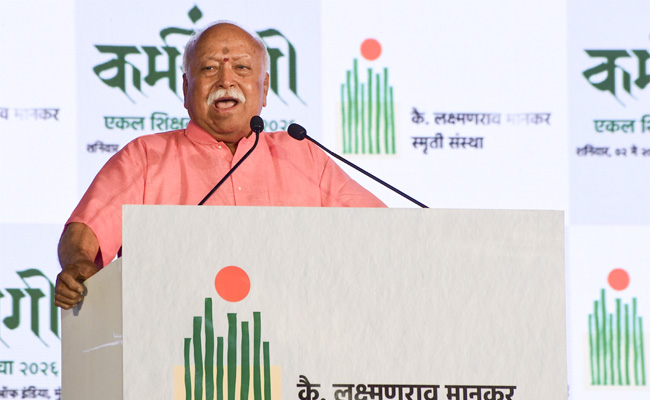
Mumbai (PTI): RSS chief Mohan Bhagwat has said that despite foreign invasions and hardships, tribal communities and Scheduled Castes preserved the country's identity and soul, stressing the need to integrate them into the mainstream development process.
He was speaking on Saturday at the Karmayogi awards ceremony in Mumbai, where Union Road Transport and Highways Minister Nitin Gadkari was also present.
"Human life is defined by giving back to the world, as we are all part of one great family. A person works and spends for the betterment of society, not as a favour, but out of duty. In serving others, we foster our own development. By helping others to thrive, we elevate ourselves and grow as human beings. This principle is the core value of this Indian land, commonly known as a Hindu society," Bhagwat said.
"This is the society's enduring ethos, which has survived for thousands of years. For various reasons, partly because of our indifference and partly because of foreign invasion, those who preserved this ethos paid a heavy price," he said.
The foreign invaders found that this ethos, this value system of the society is its soul and the key to keeping it alive. So they ensured that those who tried to preserve this soul would be uprooted and face extreme hardships, the Rashtriya Swayamsevak Sangh (RSS) chief noted.
But despite foreign invasions and hardships, tribal communities and Scheduled Castes preserved the country's identity and its soul, he said.
"Despite such adversities, the country's core identity remained intact among tribal communities and those belonging to SC and ST groups," he said, emphasising the need to integrate them into the mainstream development process while ensuring they receive equal access to services and facilities.
Referring to global developments, Bhagwat said the present world is "stumbling forward" and struggling to maintain balance, and asserted that India could emerge as a stabilising force.
The country must not only safeguard its own interests but also extend support to the world, he said.
"The world should get to see that the country is not only solving its own misery and sorrow but also helping the world to address similar issues," he said.
The RSS chief stressed that service to society is not a favour but a duty that contributes to one's own development.
Helping others grow also elevates individuals and strengthens the collective fabric of society, he said.
The so-called educated and developed sections have, over time, distanced themselves from these communities, Bhagwat pointed out, and called for the need to bridge this gap.
The identities preserved by these communities represent the true identity of Indian society, he said and underlined that without identity, existence itself is at risk.