Man dies of electrocution while preparing for son's wedding in UP's Kushinagar, kin injured

Kushinagar (PTI): A wedding celebration turned into a tragedy here on Monday when a man was electrocuted while making preparations for his son's marriage. His brother and son also suffered serious burns while trying to rescue him.
Police said the incident occurred around 6 am in Barsaina village of Ahirauli Bazar area when Umesh alias Gabbar Yadav (45) was helping build a room for his to-be daughter-in-law.
He was preparing for the wedding of his elder son Ajay, scheduled for November, when he came in contact with a high-tension wire while lifting an iron angle to the roof of his house, they said.
Umesh lost balance and touched the overhead live wire receiving an electric shock and seeing him collapse, his elder brother Raju Yadav (48) and son Ajay (22) rushed to rescue him but were also electrocuted.
The three were taken to AIIMS Gorakhpur, where doctors declared Umesh dead. Police said Raju remains in critical condition, while Ajay is undergoing treatment.
Let the Truth be known. If you read VB and like VB, please be a VB Supporter and Help us deliver the Truth to one and all.
Court can reject anticipatory bail but cannot direct accused to surrender: SC
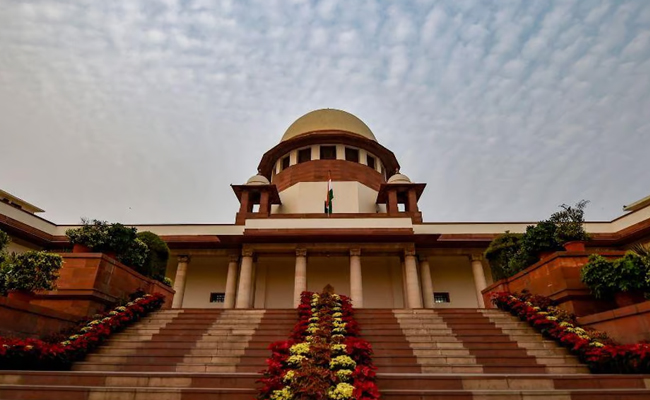
New Delhi (PTI): A court can reject anticipatory bail of an accused but it has no jurisdiction to direct him to surrender before the trial court, the Supreme Court has said.
A bench of Justices J B Pardiwala and Ujjal Bhuyan made the observation while hearing a plea filed by a man accused of cheating and forgery.
"If the court wants to reject the anticipatory bail, it may do so, but the court has no jurisdiction to say that the petitioner should now surrender," the bench said.
The Jharkhand High Court had rejected anticipatory bail plea of the accused and asked him to surrender and seek regular bail.
In this case, a complaint had been filed before a magistrate alleging offences under Sections 323 (voluntarily causing hurt), 420 (cheating), 467 (forgery of valuable security), 468 (forgery for purpose of cheating), 471 (using forged document) and 120B read with 34 of the IPC, in connection with a land dispute.
The high court had dismissed the second anticipatory bail application of the accused on the ground that no new circumstances were shown.
It had relied on its earlier order rejecting his first anticipatory bail plea, in which the court directed the petitioner to surrender before the trial court and seek regular bail in terms of the decision in Satender Kumar Antil v. CBI.
The top court said such a direction was wholly without jurisdiction and said that if a court chooses to reject anticipatory bail, it may do so, but it cannot compel the accused to surrender.