Man killed in anti-Naxal op in MP turns out to be tribal; Cong seeks judicial probe

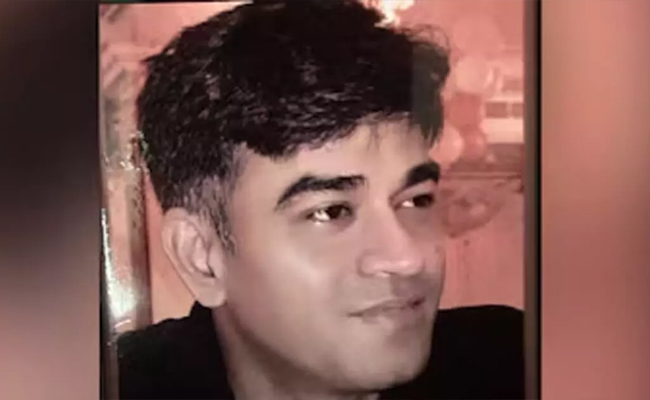
Mandla: A man killed in a recent anti-Naxal operation in Madhya Pradesh’s Mandla district was a tribal and not a Maoist, an official has said.
The opposition Congress claimed the man was innocent and demanded a high-level probe and a judicial inquiry into the incident.
The man, Hiran Singh Partha (38), belonged to the Baiga community, a Particularly Vulnerable Tribal Group, said officials.
The encounter took place on March 9 and his identity was ascertained on March 13, a senior official said on Saturday.
Partha was accompanying Naxalites deep inside a jungle in Khatiya area of the district, Balaghat Zone Inspector General (IG) of Police Sanjay Kumar told PTI when asked more about his identification.
“How come he was with the Maoists? This is a matter of investigation. Often, Naxalites move with tribals. We can speak about his association (with Naxalites) only after investigation,” Kumar said.
“We don't have any records that he was a Maoist. For now, he is a resident of Lasara Tola village,” the senior police official said.
After the encounter, two men having links with Maoists were arrested, he said.
Meanwhile, Congress MLA Narayan Singh Patta, who represents Bichhiya constituency in the tribal-dominated Mandla district, said he visited Partha’s village on Saturday and met his children and other residents.
“I was there from 10.30 am till 1 pm but could not meet Partha’s wife. The police did not allow her to meet me. I was told she was in the police station,” the tribal legislator said.
The deceased was the father of five kids. He was an innocent man and had even worked under the Mahatma Gandhi National Rural Employment Guarantee Act, Patta claimed.
“Partha might not have known who Maoists were. I have learnt that he used to go deep into the jungle to collect forest product and catch parrots,” the Congress leader said, demanding a high-level probe and a judicial inquiry into the incident.
Earlier, the police in a release on March 9 said a man from a Naxal group was killed during an encounter and information about him was being gathered.
IG Kumar had then said that around 205 rounds, including 125 by Naxalites, were fired during the March 9 gun battle. A .315 bore firearm was found near the body, he added.
Police said intelligence reports on March 8 suggested the presence of Naxalites in the Kanha National Park area within the jurisdiction of Khatiya police station.
Acting on these inputs, the state police’s anti-Naxal Hawk Force launched the operation, Kumar earlier said.
Besides killing Partha, police arrested two 28-year-old casual labourers of the forest department, Ashok Kumar Valko and Santosh Kumar Dhurve, claiming they helped Naxalites with ration.
The police have invoked the stringent Unlawful Activities (Prevention) Act against Valko and Dhurve, both locals.
Balsingh Thakur, the Mandla unit chief of the Madhya Pradesh Van Karmachari Sangh, a forest workers' union, on Friday claimed the two casual labourers were falsely implicated.
“We are going to meet the Mandla superintendent of police soon and submit a petition to ensure the innocent tribal labourers are released from jail,” he said.
Let the Truth be known. If you read VB and like VB, please be a VB Supporter and Help us deliver the Truth to one and all.
Sujit Nair raises concerns over speculation of DMK-AIADMK understanding to block TVK
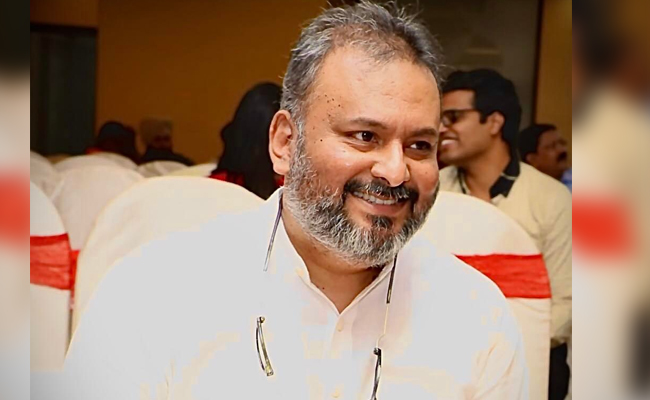
Chennai: Journalist and political commentator Sujit Nair has expressed concern over speculation that the Dravida Munnetra Kazhagam and the All India Anna Dravida Munnetra Kazhagam could explore a post-poll understanding to prevent Vijay-led Tamilaga Vettri Kazhagam from forming the government in Tamil Nadu.
In a social media post, Sujit Nair said the election verdict in Tamil Nadu reflected a clear public demand for political change and argued that the mandate should be respected irrespective of political preferences.
Referring to reports and political discussions surrounding a possible understanding between the DMK and AIADMK, he said he hoped such developments remained only speculative conversations and did not turn into reality.
Nair stated that if such an alliance were to take shape, it would raise serious questions about ideological politics in the country. He said TVK had emerged through a democratic electoral process and that the legitimacy to govern in a parliamentary democracy comes from the people’s verdict.
According to him, attempts to prevent an electoral winner from forming the government through unexpected political arrangements may be constitutionally valid, but many people could view them as politically opportunistic.
He further said that such a move could particularly affect the political image of the DMK, which has historically projected itself around ideology, social justice and opposition politics. Nair said that in ideological terms, the DMK appeared closer to TVK than to the AIADMK, and joining hands with its long-time political rival only to remain in power could weaken its broader political narrative.
He added that the same questions would apply to the AIADMK as well, as the party had spent decades positioning itself against the DMK and such an arrangement could create discomfort among its cadre and supporters.
Drawing a comparison with Maharashtra politics in 2019, Nair said he had expressed similar views when the Shiv Sena formed an alliance with the Indian National Congress and the Nationalist Congress Party after the Assembly elections.
He said post-poll alliances between long-standing political rivals often create a public perception that ideology and electoral mandates become secondary when political power equations come into play.
Nair also said such developments increase public cynicism towards politics and reinforce the belief among voters that ideology is often sidelined after elections.
He maintained that the Tamil Nadu verdict was emphatic and said respecting both the spirit and substance of the mandate was important for the credibility of democratic politics.