Man who applied for postal job in 1995 gets appointment order after SC intervention
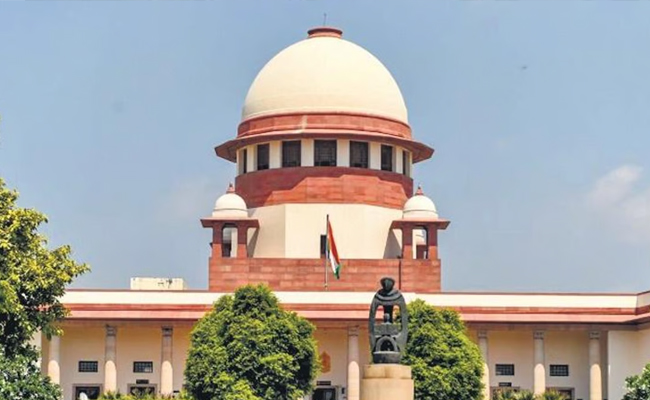
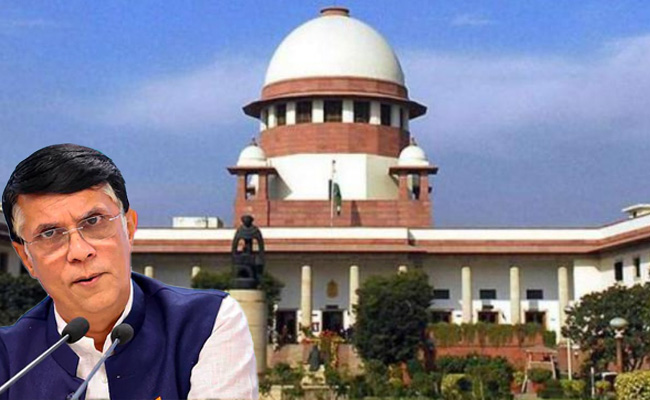
New Delhi (PTI): Twenty-eight years after a man applied for a job in the postal department, the Supreme Court has ordered his appointment noting that there was an error in holding him ineligible for the post.
Ankur Gupta had applied for the post of postal assistant in 1995. After being selected for pre-induction training, he was later excluded from the merit list on the ground that he completed intermediate education from the "vocational stream".
Gupta along with other unsuccessful candidates moved the Central Administrative Tribunal which ruled in their favour in 1999.
The postal department challenged the tribunal's order and approached the Allahabad High Court in 2000.
The high court dismissed the petition in 2017 and upheld the CAT's order. A review was filed in the high court which was also dismissed in 2021, following which the department approached the apex court.
In the top court, a bench of justices Bela M Trivedi and Dipankar Datta said a candidate cannot claim a vested right to appointment, once he is included in the merit list, he has a limited right of being accorded a fair treatment.
"However, if the candidature is not rejected at the threshold and the candidate is allowed to participate in the selection process and ultimately his name figures in the merit list though such candidate has no indefeasible right to claim appointment, he does have a limited right of being accorded fair and non-discriminatory treatment," the bench said.
The apex court said the employer, if it is a State within the meaning of Article 12 of the Constitution, would have no authority to act in an arbitrary manner and throw the candidate out without rhyme or reason.
"The employer-State being bound by Article 14 of the Constitution, the law places an obligation, nay duty, on such an employer to provide some justification by way of reason," it said.
The bench said if the department had declared Gupta as ineligible based on the appreciation of the educational qualification at the threshold, the situation would have entirely been different.
"However, it was not at the threshold that the third respondent was considered ineligible.
"As the factual narrative would reveal, the appellant had considered the third respondent eligible, allowed him to take part in the various tests in connection with the selection process, interviewed him, placed his name quite high in the merit list, and thereafter sent him for 15 days' pre-induction training starting from 15th March, 1996," it said.
Invoking its extraordinary jurisdiction under Article 142 of the Constitution, the top court directed that Gupta be offered appointment, initially on probation, on a post of Postal Assistant (for which he was selected) within a month and if no post is vacant, a supernumerary post shall be created for him.
It said Gupta has been discriminated against and arbitrarily deprived of fruit of selection.
"Subject to satisfactory completion of the period of probation, the third respondent shall be confirmed in service; Should service rendered during probation be considered not satisfactory, the appellant will be entitled to proceed in accordance with law.
"Having not actually worked, the third respondent (Gupta) shall neither be entitled to arrears of salary nor shall he be entitled to claim seniority from the date of appointment of other candidates who participated in the recruitment process of 1995," it said.
Let the Truth be known. If you read VB and like VB, please be a VB Supporter and Help us deliver the Truth to one and all.
Right to vote under threat, must be made fundamental right: Cong's Jairam Ramesh
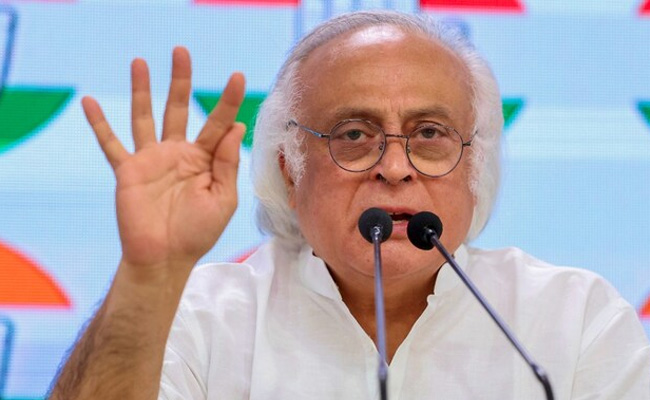
New Delhi (PTI): Congress leader Jairam Ramesh alleged on Thursday that the right to vote is under threat and the time has come when it should be made a fundamental right for citizens.
Speaking with reporters, Ramesh lashed out at Chief Election Commissioner (CEC) Gyanesh Kumar, saying the Election Commission (EC) has never been as compromised as it has been under him.
"The rot started under his predecessor. This man is a player and not a neutral observer," the Congress leader said, slamming Kumar.
Kumar is completely compromised and has become a player in elections, he alleged.
"Home Minister Amit Shah had talked about three Ds -- detect, delete and deport. So we want to know how many non-Indian citizens have been detected, how many have been deleted and how many have been deported," Ramesh said, adding that the right to vote is now under threat.
On opposition parties submitting a fresh notice in the Rajya Sabha, seeking to move a motion for the CEC's removal, the Congress leader said they will continue to make efforts for Kumar's removal as he is "compromised".
Ramesh also batted for the right to vote to be recognised as a fundamental right.
"I believe that the time has come that the right to vote should be made a fundamental right. It is a statutory right, it is not a fundamental right. Fundamental rights are justiciable," he said.
The former Union minister said this was discussed in the Constituent Assembly, but it was eventually decided that it should be made part of the Constitution.
B R Ambedkar and Jagjivan Ram had warned that in the future, governments might try to disenfranchise voters, he added.
"Once and for all, include the right to vote as a fundamental right for Indian citizens," Ramesh asserted.