Mandaviya introduces sports governance bill for greater transparency in NSFs, including BCCI
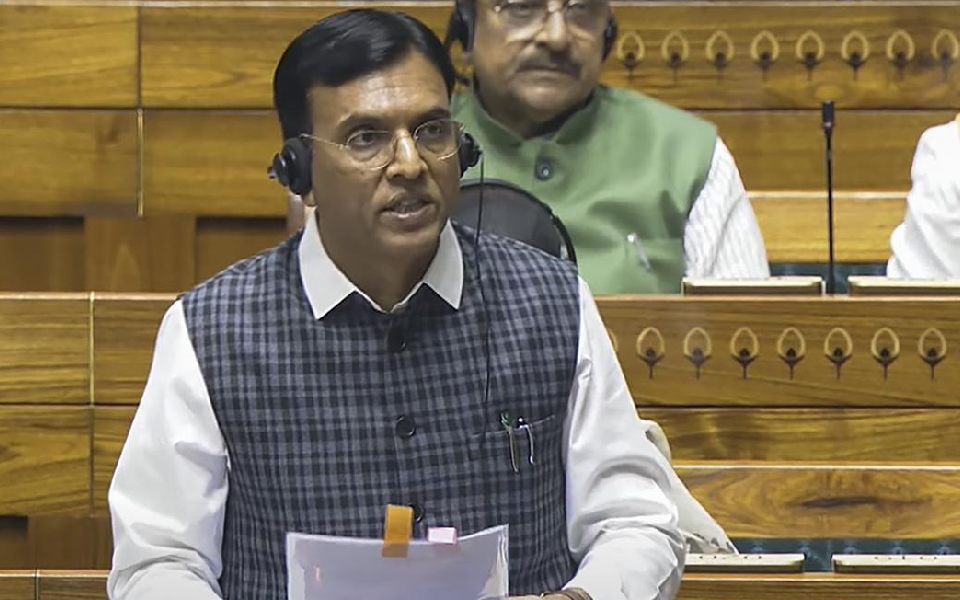
New Delhi, Jul 23 (PTI): Sports Minister Mansukh Mandaviya on Wednesday introduced the National Sports Governance Bill in Lok Sabha that proposes to institute a Board which will have sweeping powers to lay down rules and oversee the functioning of federations, including the cash-rich BCCI.
Mandaviya introduced the bill that has provisions for a National Sports Board (NSB) to create a stringent system of accountability. All National Sports Federations (NSFs) will have to attain NSB's recognition for access to central government funding.
Another striking feature is the proposal for a National Sports Tribunal, which will have the powers of a civil court and decide disputes ranging from selection to election involving federations and athletes. Once instituted, Tribunal's decisions can only be challenged in the Supreme Court.
The bill makes some concessions on the issue of age cap for administrators by allowing those in the bracket of 70 to 75 to contest elections if the concerned international bodies' statutes and byelaws allow for it. It is a departure from the national sports code that capped the age limit at 70.
"...as a part of the preparatory activities for the bidding of Summer Olympic Games 2036, it is imperative that the sports governance landscape undergoes a positive transformation to bring better outcomes, sporting excellence and aids in improved performance in major international competitions," read the bill's statement of objectives.
All recognised national sports bodies would also come under the ambit of the Right to Information (RTI) Act, something that the BCCI has vehemently opposed since it is not dependent on government funding.
"Now we have to study the bill and we will have to see if we need to place it before the Committee (Apex Council). We can only comment after that," BCCI vice President and Rajya Sabha member Rajeev Shukla said outside the Parliament.
"Obviously BCCI members will study the bill and its clauses and if put forth to any committee, they will study and then we will see what needs to be done. We will also have discussions with the government," he added.
The ministry has insisted that the BCCI, which is now a part of the Olympic movement following cricket's inclusion in the 2028 Los Angles Games roster, will have to comply with the provisions of the bill once it becomes an act.
The NSB will comprise a chairperson and its members will be appointed by the central government from "amongst persons of ability, integrity and standing."
The Board's constituents will also be expected to possess "special knowledge or practical experience in the field of public administration, sports governance, sports law and other related fields."
The appointments would be done based on the recommendations of a search-cum-selection committee, according to the draft bill that has been finalised after extensive consultations with stake-holders and public inputs.
The selection committee would be made up of the Cabinet Secretary or Secretary Sports as chairperson, the Director General of the Sports Authority of India, two sports administrators who have each served as the President or Secretary General or Treasurer of a National Sports Body and one eminent sportsperson who is a Dronacharya, or Khel Ratna or Arjuna awardee.
"...there is a felt need for a comprehensive legislation to improve
the governance of the sports bodies and achieve better results in sports and reduce
the disputes and litigation, inter alia, involving sports federations," stated the objectives of the bill.
"There is an imperative need to curb factionalism, and administrative interventions which adversely affects the organised development of sports and related activities in India and also for its better presentation before the international sports community," it added.
The NSB will have the mandate to de-recognise a national body that fails to hold elections for its Executive Committee or has committed "gross irregularities in the election procedures."
Failure to publish annual audited accounts or "misused, misapplied or misappropriated public funds" would also be liable for action by the NSB but it would be required to consult the concerned global body before making its move.
The bill also provides for a National Sports Election Panel consisting of former members of the Election Commission of India or the State Election Commission or former Chief Electoral Officers of the States or Deputy Election Commissioners.
"(They) shall act as electoral officers to oversee the conduct of free and fair elections to the Executive Committees and the Athletes Committee of the National Sports Bodies," the bill stated.
Mandaviya also introduced The National Anti-Doping (Amendment) Bill-2025 that seeks to incorporate the changes sought by the World Anti-Doping Agency (WADA), which objected to "government interference" in the functioning of the country's Anti-Doping Agency (NADA).
The act was originally passed in 2022 but its implementation had to be put on hold due to objections raised by WADA.
The world body objected to the institution of a National Board for Anti-Doping in Sports, which was empowered to make recommendations to the government on anti-doping regulations.
The Board, which was to comprise a chairperson and two members appointed by the central government, was also authorised to oversee the National Anti-Doping Agency (NADA) and even issue directions to it.
WADA rejected this provision as government interference in an autonomous body.
In the amended bill, the Board has been retained but without the powers to oversee NADA or the advisory role it was previously assigned.
Let the Truth be known. If you read VB and like VB, please be a VB Supporter and Help us deliver the Truth to one and all.
AIITA welcomes Karnataka’s ban on obscene songs in school events
Bhatkal: The Karnataka unit of the All India Ideal Teachers Association (AIITA) has welcomed the Karnataka government’s decision to strictly ban school children from dancing to obscene songs during educational and cultural programmes in government, aided, and private schools across the state.
AIITA Karnataka State President M. R. Manvi congratulated the government for taking what he termed an important step to preserve the sanctity of education.
“Such decisions to safeguard the dignity of school children and uphold the values of education are the need of the hour. This rule should not be limited to government schools alone but must be strictly implemented in all private educational institutions as well,” he said.
He further urged the government to address other concerns within school programmes.
“The government should not only prohibit obscene dances in the name of school anniversaries, but also ensure that plays and dialogues that incite religious hatred are avoided. Schools should be centres of harmony, not platforms for spreading hatred,” he added.
According to a recent circular issued by the Department of School Education and Literacy, obscene dances are adversely affecting the mental health and moral values of students.
In this regard, schools have been advised to use songs that promote nationalism, positive thinking, the greatness of Kannada culture, and value-based traditions instead of inappropriate content during programmes.
The circular also emphasises that students should be dressed in decent attire.
AIITA also backed the department’s warning that disciplinary action would be taken against head teachers if such guidelines are violated. The association has further demanded that district Deputy Directors of Public Instruction strictly monitor the implementation of these rules.