Maneka proposes to set up committee of legal experts to look into #MeToo cases
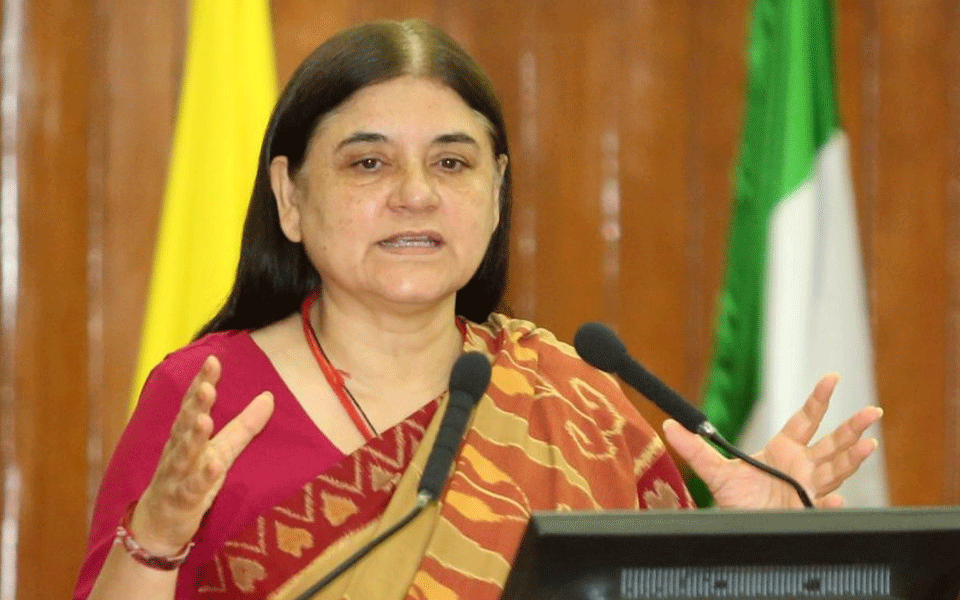
New Delhi, Oct 12: The Women and Child Development Ministry plans to set up a panel of legal experts to look into the allegations of sexual harassment that have surfaced in the #MeToo campaign, minister Maneka Gandhi said Friday, asserting that she believes in the "pain and trauma" of every complainant.
More women should come out and address the issue of sexual harassment and narrate their experiences, Gandhi said.
"I believe in all of them. I believe in the pain and trauma behind every single complainant," she told PTI in an interview.
Gandhi did not comment on the allegations of sexual harassment against her colleague M J Akbar, who has been accused by several former women colleagues of sexual harassment when he served as editor at various media organisations.
The minister of state for external affairs, film director Sajid Khan and actor Alok Nath are among those accused of sexual misconduct and more.
"I am proposing to set up a committee with senior judicial and legal persons as members to look into all issues emanating from the #MeToo campaign," Gandhi told PTI in an interview.
The committee will look into the legal and institutional framework in place for handling complaints of sexual harassment, including some of the complaints if required, and advise the ministry on how to strengthen these, the WCD minister said.
"It takes a lot for women to come out like this. These cases have been elephants in the rooms for the last 25 years. The question here is how can they prove these after all these years... they have faced verbal assault, they have been touched, pinched, their clothes have been pulled...
"The first thing to do is naming and shaming these monsters. Naming and shaming will go a long way in lessening the pain these women have been carrying," she said.
The next step, she said, is to set up a committee that can listen to the women.
Urging women to come out with their stories, Gandhi said men who sexually harass them depend on them to be shamed into keeping quiet.
She said her ministry has created a woman friendly environment in which they can complain to her directly. Even anonymous complaints will be addressed.
Gandhi said women could complain through the She Box (www.shebox.nic.in), which provides a single window access to every woman, irrespective of her work status to register complaints related to sexual harassment.
Complaints can also be lodged at min-wcd@nic.in, she said. All the cases will be closely monitored by the ministry.
"Regarding taking action against those that are in office, I am really hopeful that the system will react because I believe that these complaints are true," she said.
According to the minister, protecting women has been the watchword of the present government with the Beti Bachao Beti Padhao campaign one of its flagship schemes.
"The prime minister has always given top priority to the rights of women. The first programme that he launched was Beti Bachao Beti Padhao. We don't save our daughters to allow big shots to insult them later in life.
"I will do what I can do to help them," she said, adding that women should raise their voices.
"They should speak out and in one jolt finish off this matter altogether so that men are frightened from ever sexually assaulting or making women uncomfortable."
India's #MeToo movement, which started with Tanushree Dutta alleging that actor Nana Patekar harassed her during a film shoot in 2008, has escalated sharply with increasing numbers of women coming forward with their complaints.
Demands for action against Akbar have also been rising.
While most BJP leaders and ministers have refrained from commenting, on Thursday, Textiles Minister Smriti Irani said Akbar himself would be better positioned to speak on the issue.
She urged people not to mock women speaking out against the harassment meted out to them.
"That is my only appeal to everybody who is witnessing this surge of outpouring of emotion, of anger on the internet and offline also," she said in Mumbai.
Let the Truth be known. If you read VB and like VB, please be a VB Supporter and Help us deliver the Truth to one and all.
Sujit Nair raises concerns over speculation of DMK-AIADMK understanding to block TVK
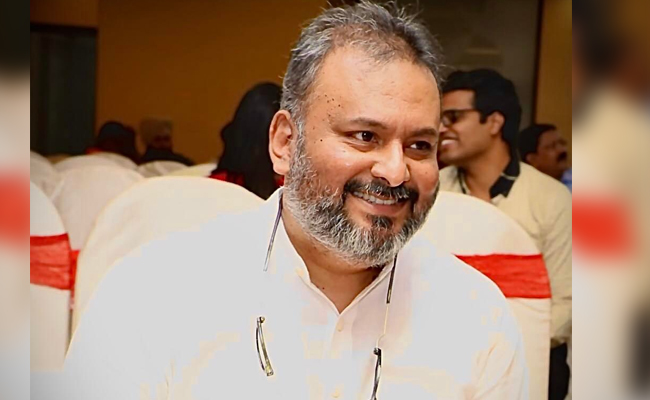
Chennai: Journalist and political commentator Sujit Nair has expressed concern over speculation that the Dravida Munnetra Kazhagam and the All India Anna Dravida Munnetra Kazhagam could explore a post-poll understanding to prevent Vijay-led Tamilaga Vettri Kazhagam from forming the government in Tamil Nadu.
In a social media post, Sujit Nair said the election verdict in Tamil Nadu reflected a clear public demand for political change and argued that the mandate should be respected irrespective of political preferences.
Referring to reports and political discussions surrounding a possible understanding between the DMK and AIADMK, he said he hoped such developments remained only speculative conversations and did not turn into reality.
Nair stated that if such an alliance were to take shape, it would raise serious questions about ideological politics in the country. He said TVK had emerged through a democratic electoral process and that the legitimacy to govern in a parliamentary democracy comes from the people’s verdict.
According to him, attempts to prevent an electoral winner from forming the government through unexpected political arrangements may be constitutionally valid, but many people could view them as politically opportunistic.
He further said that such a move could particularly affect the political image of the DMK, which has historically projected itself around ideology, social justice and opposition politics. Nair said that in ideological terms, the DMK appeared closer to TVK than to the AIADMK, and joining hands with its long-time political rival only to remain in power could weaken its broader political narrative.
He added that the same questions would apply to the AIADMK as well, as the party had spent decades positioning itself against the DMK and such an arrangement could create discomfort among its cadre and supporters.
Drawing a comparison with Maharashtra politics in 2019, Nair said he had expressed similar views when the Shiv Sena formed an alliance with the Indian National Congress and the Nationalist Congress Party after the Assembly elections.
He said post-poll alliances between long-standing political rivals often create a public perception that ideology and electoral mandates become secondary when political power equations come into play.
Nair also said such developments increase public cynicism towards politics and reinforce the belief among voters that ideology is often sidelined after elections.
He maintained that the Tamil Nadu verdict was emphatic and said respecting both the spirit and substance of the mandate was important for the credibility of democratic politics.