Manipur ethnic violence claimed 258 lives since May last year: Security Advisor
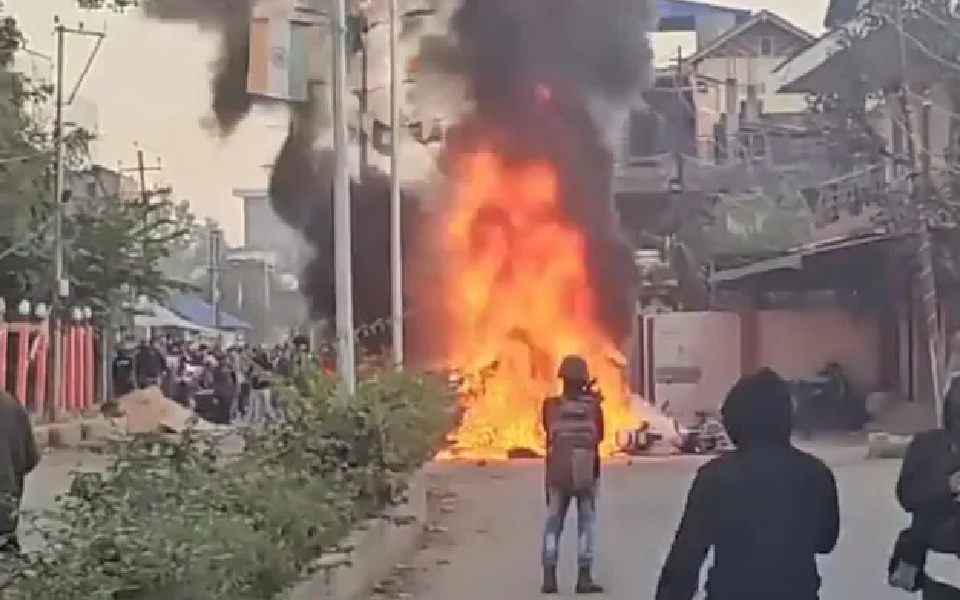
Imphal, Nov 22: The ethnic violence between Meitei and Kuki communities in Manipur has claimed 258 lives since May last year, the state government's Security Advisor Kuldiep Singh said on Friday.
He said that the state would get around 90 companies of the Central Armed Police Force (CAPF), over and above the 198 companies that are already in Manipur.
"The total number of deaths is 258 including militants," Singh while addressing a press conference after holding a security review meeting here.
The security advisor said that 32 people were arrested in connection with vandalism and torching of properties of ministers and MLAs while around 3,000 looted weapons have been recovered.
"We are getting approximately 90 companies of CAPF, over and above the 198 companies which were earlier sent to the state. A sizeable number of them have already reached Imphal. We are distributing forces to protect the lives and properties of the citizens and vulnerable points," Singh said.
The authorities would set up coordination cells and joint control rooms in each district, he said after the meeting which was attended by representatives of the Army, BSF, CRPF, Assam Rifles, SSB, ITBP and the Manipur Police.
"A number of SOPs (standard operating procedure) have been prepared for deployment of forces for coordination, for functioning, for fringe area security, for national highways security, and for any other important points which have to be taken care of," Singh said.
Chief Minister N Biren Singh would be briefed about the outcome of the meeting as is done in all similar cases, he said.
He said that nine bodies, including those of the victims including those of the six abducted and killed in Jiribam, were buried peacefully under tight security.
The bodies include three women and three children, who were allegedly abducted from a relief camp on November 11 by Kuki-Zo militants from Jiribam's Borobekra area when a group of Kuki youths were engaged in an encounter with CRPF in which 10 of them were killed.
"The CRPF post was attacked during which 10 militants were neutralised. Soon after that, it came to light that three women and three children were abducted," Singh said.
It will be found out whether the abduction happened in presence of the security forces, he said.
No information is available if the militants involved in the abduction belonged to Suspension of Operations (SoO) groups but it will be checked, Singh said adding that NIA is looking into the cases.
The SoO pact was signed by the Centre, the Manipur government and two conglomerates of Kuki militant outfits – Kuki National Organisation (KNO) and United People’s Front (UPF). The pact was signed in 2008 and extended periodically thereafter.
The violence between Imphal Valley-based Meiteis and adjoining hills-based Kuki-Zo groups, besides inflicting heavy casualties, rendered thousands of people homeless since May last year.
It started after a 'Tribal Solidarity March' was organised in the hill districts to protest against the Meitei community's demand for Scheduled Tribe (ST) status.
Meiteis account for about 53 per cent of Manipur's population and live mostly in the Imphal Valley. Tribals -- Nagas and Kukis -- constitute little over 40 per cent and reside in the hill districts.
Let the Truth be known. If you read VB and like VB, please be a VB Supporter and Help us deliver the Truth to one and all.
Activists write open letter to Odisha govt flagging anti-Christian violence
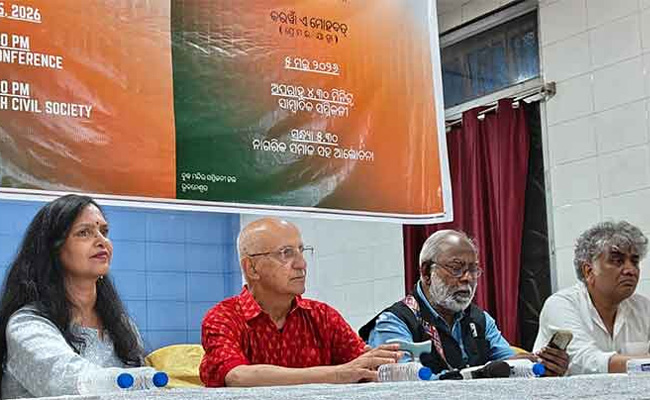
New Delhi: Activists and rights campaigners John Dayal, Aakar Patel, Vidya Dinker and Harsh Mander have expressed serious concern over the alleged rise in violence and intimidation against Christians in several districts, accusing both Hindutva organisations and sections of the police of targeting the minority community.
In a strongly worded communication addressed to the state administration, the signatories said they had received disturbing testimonies from affected people regarding social boycott, denial of burial rights, physical assaults and police intimidation.
According to the activists, Christians in some areas were allegedly boycotted by villagers, while people who traded with them, employed them or provided them shelter were also targeted.
The letter also highlighted what it described as “gruesome” incidents involving the prevention of burials of Christians within village burial grounds and even on privately owned lands belonging to Christian families. The activists said there were cases where bodies remained unburied for days due to opposition from local groups, while in some instances burials were allegedly forced to take place in forest areas outside village limits. Funeral prayers were also reportedly disrupted.
The signatories further alleged that in certain districts the violence escalated into physical assaults on Christians. They claimed that some victims were tied to trees and beaten, while others were allegedly placed inside sacks and assaulted. The letter also mentioned a few reported instances of sexual violence and attempts to burn people alive, which, according to them, were stopped at the last moment.
Expressing particular concern, the activists said many victims had testified that police personnel joined hands with Hindutva organisations to force Christians into signing “compromise” agreements. These agreements allegedly required them to give up their faith and stop collective worship.
The letter also accused the police of registering serious criminal cases against victims of attacks instead of taking action against the attackers. According to the signatories, many of those attacked were detained in police stations and jails, while in some cases the police themselves allegedly played a direct role in intimidation and violence against Christians.
Stating that there appeared to be a “complete breakdown in the constitutional machinery of the state” in relation to Christian minorities, the activists urged the administration to uphold and protect the constitutional and religious rights of all citizens without discrimination based on religion, caste or creed.
The letter was signed by John Dayal, Aakar Patel, Vidya Dinker and Harsh Mander.