Mann Ki Baat: PM Modi says 2025 year of proud milestones for India
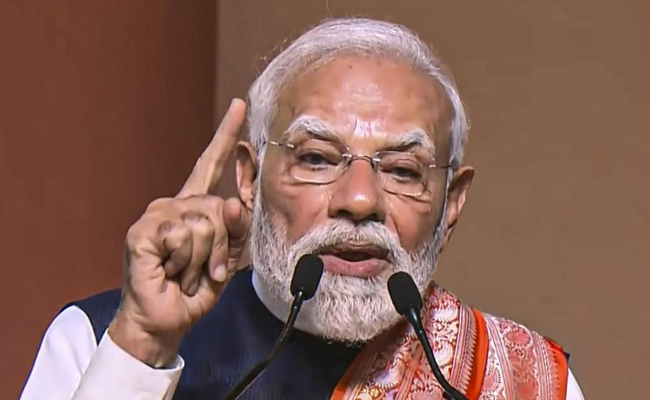
New Delhi (PTI): Prime Minister Narendra Modi on Sunday said 2025 was a year of proud milestones for India as he highlighted Operation Sindoor, saying it became a symbol of pride for every Indian and showed the world that the country does not compromise on its security.
Addressing his monthly 'Mann Ki Baat' address, the last in 2025, Modi said the country's impact was visible everywhere in the outgoing year.
"2025 was a year of proud milestones for India. Whether in national security, sports, scientific innovation or on the world's biggest platforms, India's impact was visible everywhere," he said.
The prime minister said during Operation Sindoor, images of love and devotion toward 'Maa Bharti' (Mother India) emerged from every corner of the nation and people expressed their emotions and gratitude in their own unique ways.
"Operation Sindoor' became a symbol of pride for every Indian. The world witnessed clearly that today's India does not compromise on its security," he said.
India carried out precision strikes under Operation Sindoor on terror infrastructure in Pakistan on May 7 in response to the April 22 Pahalgam terror attack that killed 26 people.
India and Pakistan reached an understanding on May 10 to end the military confrontation.
Modi said the same spirit was witnessed when national song 'Vande Mataram' completed 150 years.
"I had urged you to share your messages and suggestions using the hashtag '#VandeMataram150', and our fellow citizens participated in this campaign with immense enthusiasm," he said.
The prime minister noted that 2025 has truly been a memorable year for sports, with the men's cricket team clinching the ICC Champions Trophy and the women's cricket team winning the World Cup for the first time.
Besides, India's daughters scripted history by winning the Women's Blind T20 World Cup.
The tricolour flew high with pride after a dominant victory in the Asia Cup T20 and para-athletes brought home a haul of medals at the World Championships, he said. Modi also said that India has taken a giant leap in the field of science and space, and Shubhanshu Shukla became the first Indian to reach the International Space Station.
Today, he said, the world looks toward India with great hope and the biggest reason for this expectation is the country's Youth Power.
"Nations across the globe are deeply impressed by our achievements in science, constant innovations, and the expansion of technology," he said.
The prime minister said the number of cheetahs in India has increased to more than 30 in 2025.
Taking note of various events held during the year, he said in 2025, faith, culture, and India's unique heritage all came together.
"The Prayagraj Mahakumbh organised at the beginning of the year astonished the entire world. At the end of the year, the 'Dhwajarohan' ceremony at the Ram Mandir in Ayodhya filled every Indian with pride," he said.
Modi said the excitement towards 'swadeshi' was also evident among one and all and people are purchasing only those goods that bear the sweat of an Indian and the fragrance of Indian soil.
"Today, we can proudly say that 2025 has given India even greater confidence. It is also true that this year we had to face natural disasters at very many places. Now, the country is ready to move forward in 2026 with new hopes and new resolutions," he added.
In the 129th edition of Mann Ki Baat, PM Narendra Modi says, "2025 was also a memorable year in terms of sports. Our Men's Cricket team won the ICC Champions' Trophy. The women's cricket team won the World Cup for the first time. The daughters of Bharat created history by winning… pic.twitter.com/iXRGLaPdyK
— ANI (@ANI) December 28, 2025
Let the Truth be known. If you read VB and like VB, please be a VB Supporter and Help us deliver the Truth to one and all.
Remarks against St Francis Xavier: Right-wing speaker Gautam Khattar gets bail
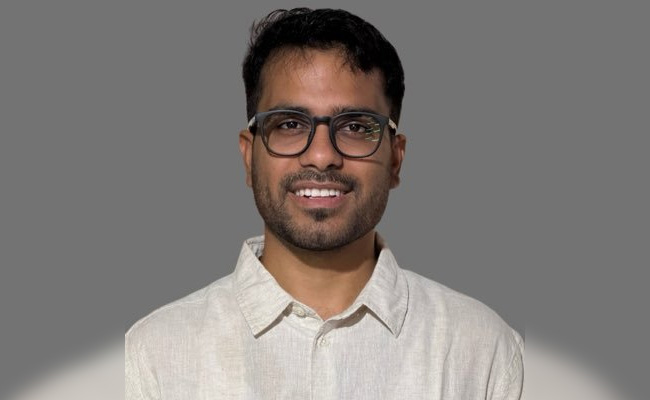
Panaji (PTI): A court in Goa on Saturday granted bail to right-wing speaker Gautam Khattar, who was arrested after he allegedly made derogatory comments against St Francis Xavier.
Judicial Magistrate First Class, Vasco, granted regular bail to Khattar, currently admitted to Goa Medical College and Hospital at Bambolim for treatment of chest pain after he was shifted from the District Hospital in Mapusa two days back.
A row erupted after a video of remarks by Khattar, the founder of Sanatan Mahasangh, at an event on April 18 in the presence of Swami Brahmeshanand, State Transport Minister Mauvin Godinho and BJP MLAs Sankulp Amonkar and Daji (Krishna) Salkar, went viral.
St Francis Xavier is revered as the patron saint of Goa.
The controversial remarks led to the Vasco Police registering an FIR against Khattar on charges of hurting religious sentiments and creating enmity between groups.
He was detained in Kullu, Himachal Pradesh, by local police. His custody was later handed over to the Goa Crime Branch, according to officials.