Mann ki Baat: PM says political parties, civil society played mature role after 2010 Ayodhya verdict
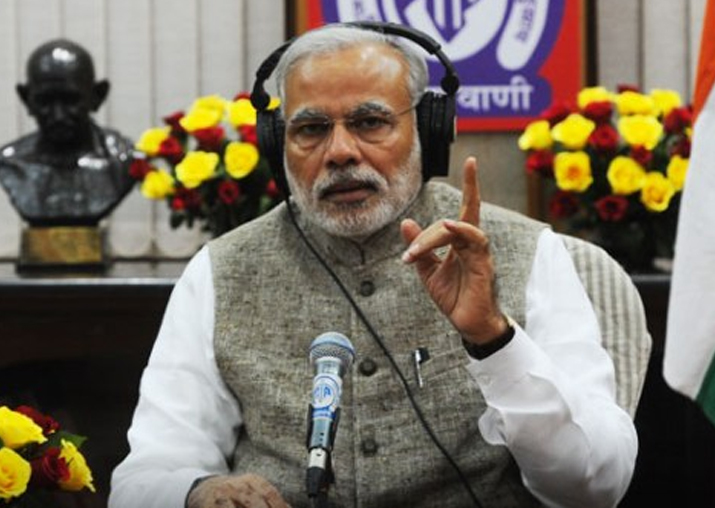
New Delhi: Ahead of the expected Supreme Court verdict on the Ayodhya issue, Prime Minister Narendra Modi on Sunday recalled how the government, political parties and the civil society prevented attempts to create fissures when the 2010 Allahabad High Court ruling on the disputed land in Ayodhya was to be delivered.
He described it as an example of how a united voice can strengthen the country.
In his monthly "Mann ki Baat" radio address, Modi asked people to jog their memory and recall the days ahead of the Allahabad High Court judgment of September 2010.
"I remember when the Allahabad High Court gave its verdict on Ram Janmabhoomi in September 2010. You could jog your memory a bit and reflect about the atmosphere then. Various kinds of people took to the arena. Various interest groups were playing games to take advantage of that situation in their own way," the prime minister said.
He referred to the "kind of language" used to "generate tension in the atmosphere." He said some loudmouths had the sole intention of hogging the limelight at that time.
"... and we all know what kind of irresponsible talk was floating around... This continued for five days, or seven days, or ten days, but, the court's decision generated a pleasant and surprising change of mood in the country," he said.
On the one hand, the machinations went on to generate tension. When the decision was delivered by the court, the government, political parties, social organizations, civil society, representatives of all sects and saints on the other issued balanced statements. There were attempts to reduce the tension in the sociopolitical environment, he pointed out.
He said the dignity of the judiciary was honoured "and no allowance for any heated discourse or tension was made anywhere."
"These episodes should always be remembered... It is an example of how the voice of unison can bestow strength upon our country," he said. While referring to the Allahabad High Court verdict, the prime minister did not mention the Supreme Court ruling expected in a few days.
A Special Full Bench of the Allahabad High Court had ruled that the disputed land in Ayodhya will be divided into three parts. A two-thirds portion is to be shared by two Hindu plaintiffs and one-third will be given to the Sunni Muslim Waqf Board.
The apex court is likely to deliver its verdict on the Ayodhya issue sometime in the middle of November.
Let the Truth be known. If you read VB and like VB, please be a VB Supporter and Help us deliver the Truth to one and all.
SC to hear on May 4 PIL seeking stringent guidelines for issuing Aadhaar to adolescents, adults
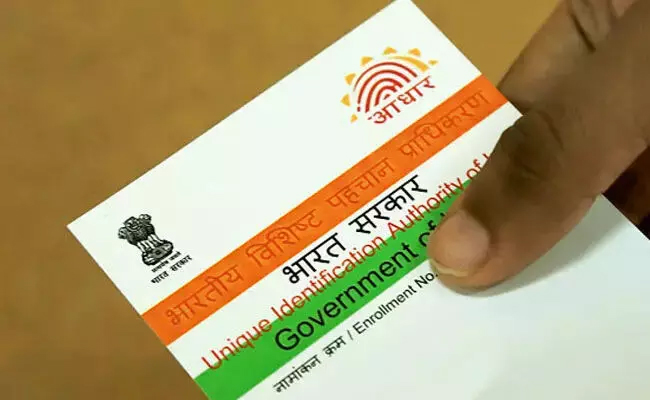
New Delhi (PTI): The Supreme Court is scheduled to hear on Monday a plea seeking a direction to the Unique Identification Authority of India to issue new Aadhaar cards only to citizens up to the age of six years, and frame stringent guidelines for its issuance to adolescents and adults to stop infiltrators from masquerading as Indian citizens.
As per the apex court's causelist of May 4, the plea would come up for hearing before a bench of Chief Justice Surya Kant and Justice Joymalya Bagchi.
The Public Interest Litigation (PIL) filed by lawyer Ashwini Upadhyay has also sought a direction to the authorities to install display boards at common service centres stating that the 12-digit unique identification number is only a "proof of identity" and not a proof of citizenship, address or date of birth.
Besides all the states and Union Territories, the plea has made the UIDAI -- which is the authority that issues Aadhaar -- and the Union ministries of home, law and justice, and electronics and information technology as parties.
The plea, filed through advocate Ashwani Dubey, said Aadhaar, originally intended as a proof of identity, has increasingly become a "foundational document" enabling individuals to obtain other identification documents, such as ration cards, domicile certificates and voter identity cards.
"The UIDAI has issued 144 crore Aadhaar and 99 percent Indians have been enrolled. Therefore, the petitioner is filing this writ petition as a PIL under Article 32, seeking a direction to UIDAI to issue new Aadhaar to children only and frame new stringent guidelines for adolescents and adults, so as to stop infiltrators from getting it and masquerading as Indian citizens," the plea said.
It said the need to file the plea arose when the petitioner came to know the manner in which infiltrators are able to procure Aadhaar through a verification process that is weak and can be easily manipulated.
"Foreigners apply for Aadhaar under the 'foreign' category. But infiltrators apply for Aadhaar under the 'Indian citizen' category and get it easily made. Thereafter, they obtain a ration card, birth and domicile certificate, driving licence, et cetera, essentially becoming indistinguishable from Indian citizens…," it said.
Besides seeking other directions, the plea has raised legal questions, including whether the Aadhaar Act 2016 has become "temporally unreasonable" for failing to keep up with the legislative intent of distinguishing foreigners from Indian citizens.
It said the alleged misuse of Aadhaar undermines targeted welfare delivery and leads to diversion of public resources.