Manoj Sinha inaugurates Ghazipur Regional Rail Training Institute
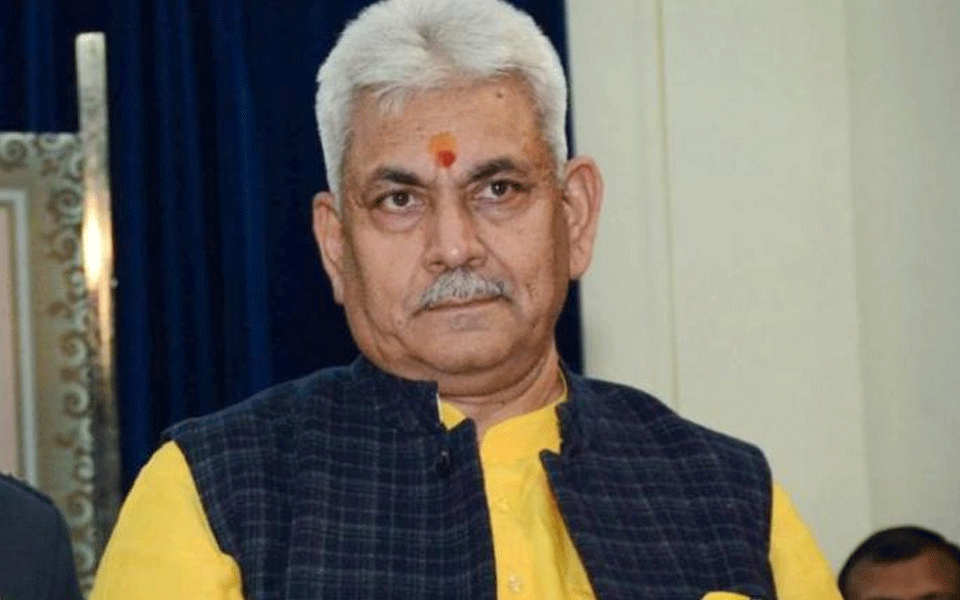
Varanasi, July 22 : In a bid to strengthen the expertise and capabilities of the employees of North-Eastern Railways, Minister of State for Railways Manoj Sinha on Sunday inaugurated Regional Rail Training Institute (RRTI) at Uttar Pradesh's Ghazipur.
He also inaugurated the newly constructed washing pit at Ghazipur City station, according to a official statement.
Addressing the gathering on the occasion, Sinha said the RRTI was constructed within the stipulated time and will immensely add to the development of the area.
"This training institute will give strength to the country's and state's development. It will provide modern training facilities to the railway employees and would enhance their efficiency," he said.
The institute, built with the cost of Rs 21 crore, is equipped with modern training facilities, an advanced model hostel, computer room, cafeteria and other necessary facilities.
Sinha said that the 400 metre washing pit was built at a cost of Rs 19.62 crore.
The minister said that doubling of railway tracks, their electrification and other passengers amenities are being developed in the area on priority basis.
"We will soon complete the other projects," he said mentioning the status of the projects of Tadighat to Mau via Ghazipur rail route, doubling of Chapra-Allahabad, Bhatni-Aurihar, Aurihar-Jaunpur, Indara-Phephna and Mau-Shahganj rail routes.
Let the Truth be known. If you read VB and like VB, please be a VB Supporter and Help us deliver the Truth to one and all.
4 workers die after being buried under coal slurry in Jharkhand's Dhanbad
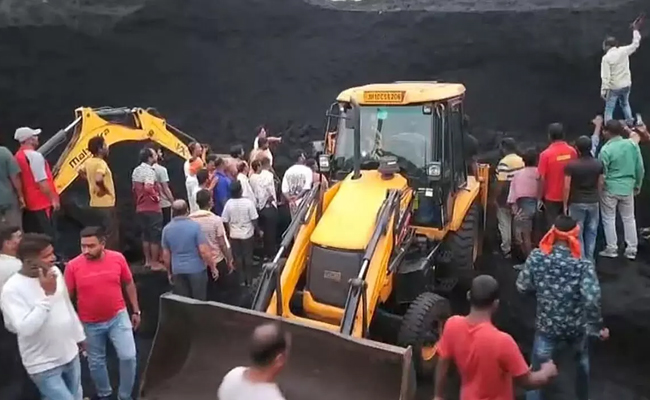
Dhanbad (Jharkhand) (PTI): At least four workers died after being buried under coal slurry in Jharkhand's Dhanbad district on Saturday, a police official said.
The incident took place at Moonidih coal washery in the command area of Bharat Coking Coal Limited (BCCL).
"Bodies of all four workers were dug out of debris during a rescue operation," Putki police station in-charge Waqar Hussain told PTI.
The incident took place when coal slurry was being loaded into trucks by workers, during which a large chunk of slurry fell and trapped several workers underneath, officials said.
The deceased have been identified as Manik Bauri, Dinesh Bauri, Deepak Bauri, and Hemlal Gope.
Meanwhile, the family members of the deceased and local villagers placed the bodies in front of the washery gate and began a protest.
They demanded compensation, jobs for dependents and action against those responsible for the incident.
Police and administration officials are trying to pacify the protesters, an official said.