Maratha quotas: Peaceful start to Maharashtra shutdown
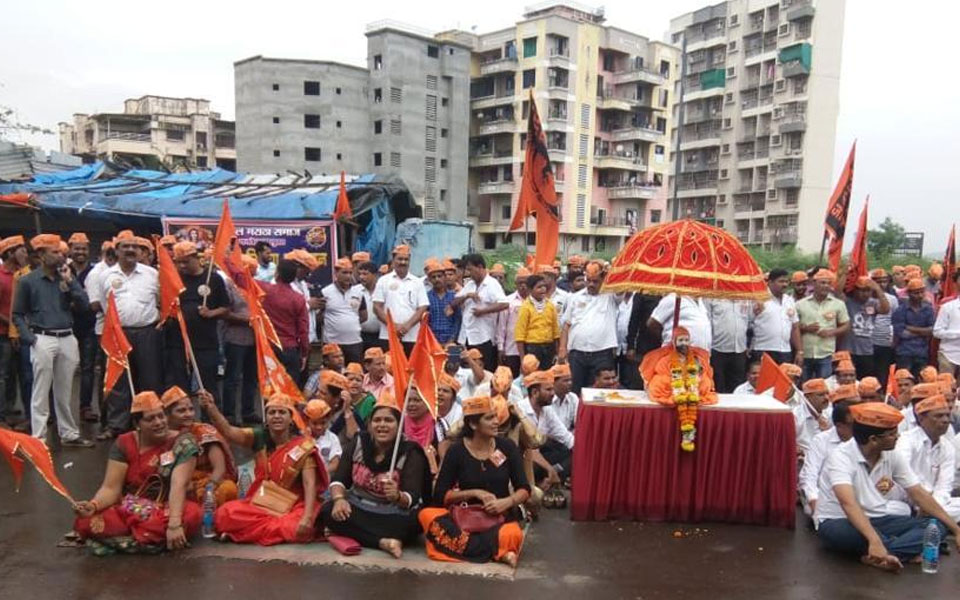
Mumbai, Aug 9 : The Maratha-sponsored shutdown demanding employment and education quotas started on a peaceful note in most parts of Maharashtra, barring Mumbai Metropolitan Region, officials said on Thursday.
The organisers - Sakal Maratha Samaj and Maratha Kranti Morcha besides other affiliated groups - have appealed to all supporters to ensure a violence-free shutdown and cooperate with the police among others things.
In Mumbai, Thane and Navi Mumbai, only token protests were held, the suburban trains on the Western Railway and Central Railway operated normally.
However, the Maharashtra State Road Transport Corp (MSRTC) decided to suspend its services in most parts of the state to avoid being the target of the activists.
In Latur, Sholapur, Kolhapur, Palghar and several other places, activists blocked road traffic while Pune, Ahmednagar, Washim, Dhule, Buldhana, Nanded, Akola, Parbhani, Jalna, Hingoli, Aurangabad woke up to a total shutdown.
Although Nashik was normal, there were roadblocks, processions and sit-ins and similar agitations in Nagpur, where activists performed prayers to a statue of Chhatrapati Shivaji Maharaj. In Yavatmal, a bike rally was taken out.
Internet services were snapped as a precaution in several districts like Aurangabad, Osmanabad and Ahmednagar while protestors staged a sit-in outside the Baramati (Pune district) home of Nationalist Congress Party President Sharad Pawar.
There were road blocks on the Mumbai-Goa Highway, Mumbai-Nashik Highway and the old Mumbai-Pune Highway, which remained practically traffic-free due to the shutdown.
In Sindhudurg district, Marathas staged a 'jail-bharo' agitation in all sub-districts. They were later let off.
Though exempt from the shutdown, many schools and colleges in the state remained shut as students and teachers could not reach on time owing to the agitation.
Let the Truth be known. If you read VB and like VB, please be a VB Supporter and Help us deliver the Truth to one and all.
Two injuries, one DNF, a DQ as India end messy World Relays campaign
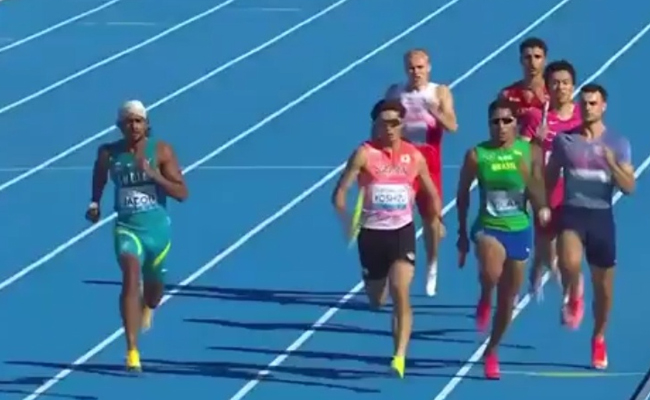
Gaborone (Botswana) (PTI): Amoj Jacob and Ragul Kumar got injured during the men's 4x400m and 4x100 races respectively as India ended their World Athletics Relays campaign in disappointment on the second day of competitions here on Sunday.
The Indian camp had high hopes of making the 2027 World Championships in the men's 4x400m relay but the team did not finish (DNF) the race as Jacob suffered cramps and pulled out of the race after taking the baton from the first leg runner Dharamveer Choudhary. Rajesh Ramesh and Vishal TK were to run in the third and fourth legs.
Those teams which could not qualify for the 2027 Beijing World Championships by reaching the final round of each of the six relay events on Saturday were given another chance in the second qualification round on Sunday.
The top two teams in each of the two heats (in all six relay events) booked the Beijing ticket on Sunday.
India will now have to try and qualify for the World Championships through the Top Lists of the World Athletics, which is a long and tedious process.
In the men's 4x100m race, third leg runner Ragul Kumar fell down the track after failing to hand over the baton inside the exchange zone to fourth leg runner Gurindervir Singh, which clearly showed the lack of coordination among the runners.
Harsh Santosh Raut and Animesh Kujur ran the first two legs.
The Indian quartet was disqualified and Kumar was seen being taken away from the Field of Play with the help of the volunteers.
It was a comedy of errors in the case of the women's 4x100m race, which saw the baton being dropped during an exchange between first leg runner Tamanna and second runner Nithya Gandhe, though the Indians finished the race in 53.09 seconds.
Gandhe started running quite a distance, but after realising that the baton was not in her hand, she turned and ran back to pick it up.
The only silver-lining for the Indian contingent was the national record time in the mixed 4x100m relay race, though the quartet of Ragul Kumar, Nithya Gandhe, Animesh Kujur and Sneha SS finished sixth in heat number two with a time of 41.35 seconds, bettering the previous national mark of 42.30 seconds set in March in Chandigarh.
The mixed 4x400m relay quartet of Theerthesh P Shetty, Kumari Saloni, Nihal William and Rashdeep Kaur ended at fifth in heat number one with a time of 3 minutes and 19.40 seconds.
On Saturday, all the five Indian relay teams had failed to make it to the respective final rounds and thus missed out on the 2027 World Championships berths.