Married persons can’t be in a live-in relationship without obtaining divorce: Allahabad HC
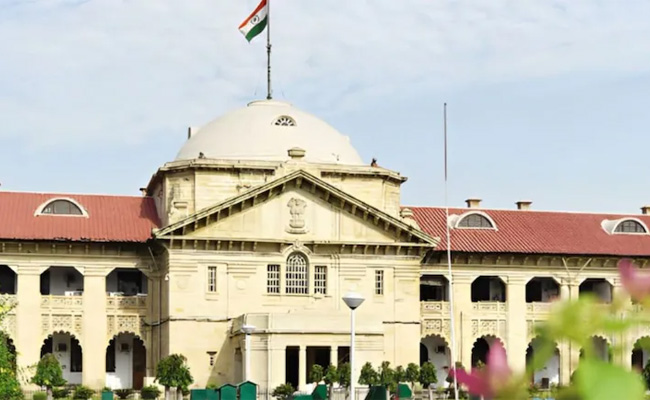
Prayagraj (PTI): The Allahabad High Court has observed that if a petitioner is already married and his/her spouse is alive, he/she cannot legally enter into a live-in relationship with a third person without obtaining a divorce from the earlier spouse.
A single-judge bench of Justice Vivek Kumar Singh said the court cannot issue any writ or direction for protection to the petitioners who are in a live-in relationship, without obtaining a decree of divorce from a competent court.
However, the court said that if the petitioners are disturbed or subjected to any act of violence, they may approach the SSP concerned by submitting a detailed application.
The concerned authority will verify its content and do the needful in accordance with the law to secure the life of the petitioners, the bench said.
Justice Singh then disposed of the petition filed by Anju and his male partner, who had sought a writ of mandamus directing the respondents not to interfere in their “peaceful life”, besides seeking protection.
The counsel for the petitioners argued, "Both the petitioners are living together as husband and wife, and they have apprehension of life threat.”
However, the standing counsel argued that both the petitioners were married separately, and their living together was “illegal” since they did not obtain a divorce from their respective spouses.
The court said, “In such a situation, protection to the petitioners who claim to be in a live-in relationship cannot be granted in exercise of powers conferred under Article 226 of the Constitution.”
In the order dated March 20, the court observed, “No one has the right to interfere in the personal liberty of two adults, not even their parents. But the right to freedom or the right to personal liberty is not absolute or unfettered; it is qualified by some restrictions as well.
“The freedom of one person ceases where the statutory right of another person starts. A spouse has the statutory right to enjoy the company of his or her counterpart, and he/she cannot be deprived of that right for the sake of personal liberty.
“No such protection can be granted to infringe the statutory right of the other spouse; hence, the freedom of one person cannot encroach or outweigh the legal right of another person.”
It added: “It is well-settled law that a writ of mandamus can not be issued contrary to law or to defeat a statutory provision, including a penal provision.
“The petitioners do not have a legally protected and judicially enforceable subsisting right to ask for mandamus.”
Let the Truth be known. If you read VB and like VB, please be a VB Supporter and Help us deliver the Truth to one and all.
Kolkata Port: Decline in number of voters during SIR brings in uncertainty in TMC bastion
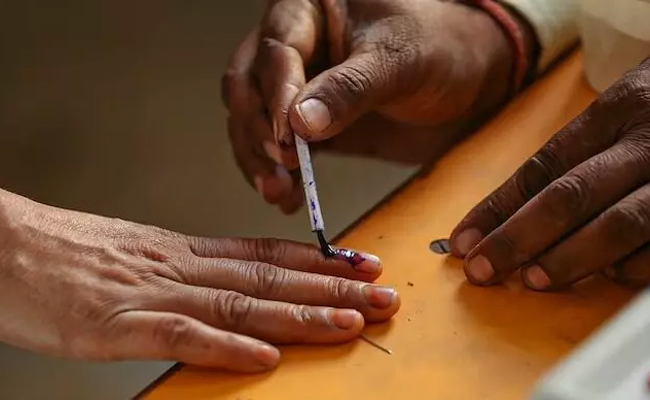
Kolkata (PTI): A sharp decline in the number of voters following the Special Intensive Revision (SIR) of electoral rolls has injected an element of uncertainty into the Kolkata Port Assembly constituency, considered a safe seat for the ruling Trinamool Congress (TMC).
The electorate in the south Kolkata constituency has dropped from 2.36 lakh in the 2021 Assembly polls to around 1.75 lakh, a fall of nearly 26 per cent, prompting political parties to closely assess its potential impact on the April 29 polling.
The TMC re-nominated senior minister and Kolkata Mayor Firhad Hakim, who has held the seat for two consecutive terms, while the BJP fielded Rakesh Singh. The Congress nominated Aquib Gulzar, and the CPI(M) put up Faiyaz Ahmad Khan, making it a four-cornered contest.
Kolkata Port, part of the Kolkata Dakshin parliamentary constituency, comprises dock areas, old business districts and densely populated neighbourhoods. Muslim voters form a significant segment of the electorate, alongside traders, transport workers and working-class Hindu families.
The reduction in voter numbers has prompted party workers across formations to scrutinise the revised rolls booth-wise to identify deletions and assess whether specific localities have been affected.
Singh’s candidature has added a twist to the contest. He had earlier contested against Hakim as a Congress candidate but is now in the fray on a BJP ticket.
Hakim won the seat in 2016 by 26,548 votes, defeating Singh, and increased his margin significantly to 68,554 votes in 2021, polling over one lakh votes.
While the TMC has expressed confidence in retaining the seat, opposition parties have raised concerns over the voter list revision, alleging that names of genuine voters have been removed.
“People here know who has stood by them. Elections are decided by trust,” Hakim told PTI during a campaign event.
Singh claimed several residents had complained about missing names in the rolls, stressing the need for transparency. The CPI(M) nominee also said voters in several areas had raised similar concerns.
The constituency has remained a difficult terrain for the opposition in recent elections.
Civic issues such as sanitation, traffic congestion and declining business activity in traditional markets also feature in the campaign in the constituency, though the revised voter list has emerged as a key talking point.
Polling in the constituency will be held in the second phase on April 29, with counting scheduled for May 4.