Mathura court dismisses nine pleas to have their say in Shri Krishna Janmabhhomi lawsuits
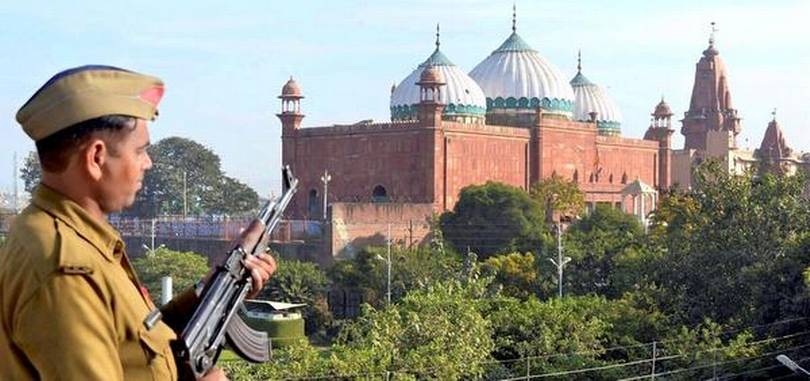
Mathura, Jan 28: A Mathura court on Thursday dismissed all nine pleas seeking to have a say during the adjudication of some lawsuits for removal of the 17h century Shahi Idgah mosque form near the birthplace of Lord Shri Krishna here.
The impleadment pleas were rejected by District and Sessions Judge Yashvant Kumar Mishra, Mathura's District Government Counsel Sanjai Gaur said.
There are a total of three lawsuits challenging the decisions of a senior civil judge ruling, rejecting the plea earlier for the removal of the mosque, is pending before the court of the district and sessions judge.
The first suit was filed by a Lucknow resident Ranjana Agnihotri as the next friend of child deity Shri Krishna Virajman of the Keshav Dev temple and six others.
The second suit was filed by Hindu Army chief Manish Yadav. The third one was filed by five other plaintiffs through advocate Mahendra Pratap Singh.
The suits have demanded the removal of the mosque allegedly built on orders of Mughal Emperor Aurangzeb in 1669-70 in the 13.37-acre premises of Katra Keshav Dev temple near the birthplace of Lord Sri Krishna.
They have also demanded the annulment of a 1967 court ruling, ratifying a deal reached between the Shree Krishna Janmasthan Seva Sansthan and Shahi Idgah Management Committee, allowing the existence of the mosque near the temple.
After rejecting the all nine impleadment pleas, some by individuals and others by civil societies, the court slated March 22 to hear arguments on the maintainability of the lawsuits.
Let the Truth be known. If you read VB and like VB, please be a VB Supporter and Help us deliver the Truth to one and all.
Vartha Bharati–Sankalp predictions align closely with Karnataka bypoll results
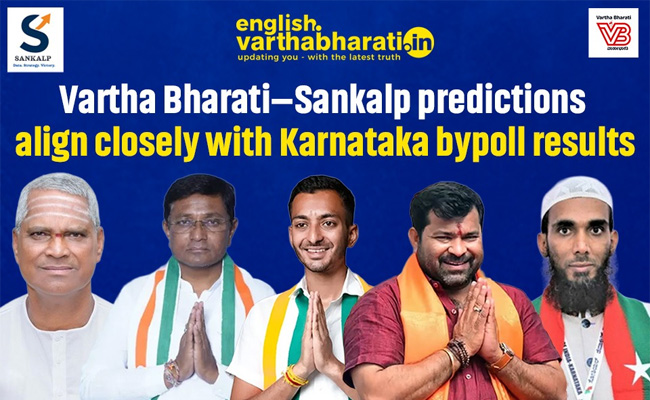
Bengaluru: The Vartha Bharati–Sankalp election analysis has shown a high level of accuracy in predicting the outcome of the recent Karnataka Assembly by-elections held in May 2026, correctly calling winners in both constituencies and closely estimating vote share trends.
The by-elections were held in Bagalkot and Davanagere South, drawing significant political attention as both seats were seen as key tests for the ruling Congress and opposition BJP.
According to the analysis, Vartha Bharati–Sankalp had made three major projections ahead of the results the winning party, vote share percentages, and margin of victory.
In both constituencies, the platform accurately predicted that the Congress would emerge victorious. The outcome matched the projections, with Congress candidates winning in Bagalkot and Davanagere South.
In terms of vote share, the predictions were largely in line with the final results. In Bagalkot, the BJP’s vote share was forecast in the range of 40 to 46 per cent, while the actual figure stood at 42.9 per cent. The Congress vote share, however, exceeded expectations, with the party securing 55.4 per cent against a projected range of 43 to 48 per cent.
The margin of victory in Bagalkot turned out to be significantly higher than anticipated. While the projection had placed the margin between 2,000 and 3,500 votes, the final margin was around 22,332 votes.
In Davanagere South, the predictions also remained largely accurate. The Congress vote share was projected between 43 and 51 per cent, and the final figure stood at 43.9 per cent. The BJP was expected to secure between 42 and 50 per cent but ended with 40.3 per cent.
The analysis had also identified the role of SDPI as a potential spoiler in the constituency. While its vote share was estimated around 6 per cent, the party eventually secured around 12 per cent of the vote.
The margin of victory in Davanagere South was predicted to be between 1,500 and 2,600 votes. The actual margin was higher at around 5,708 votes, though the contest remained relatively close as anticipated.
Overall, the performance of Vartha Bharati–Sankalp stood out for correctly identifying the winning parties in both seats and maintaining close accuracy in vote share estimates, with only limited deviations in specific cases.