MEA clarifies on police clearance certificate to Choksi
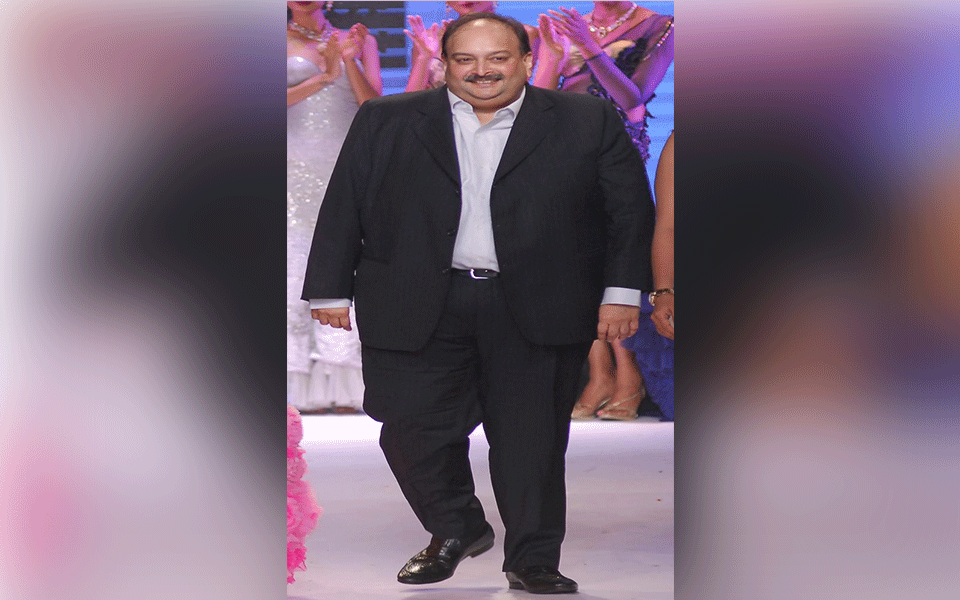
New Delhi, Aug 3 : The Ministry of External Affairs (MEA) on Friday said the police clearance certificate (PCC) issued to Mehul Choksi -- wanted in the Rs 13,500-crore Punjab and Sind Bank fraud and who has now taken citizenship in Antigua -- by the Regional Passport Office, Mumbai, "was as per extant instructions".
In response to queries after the Antiguan government said that citizenship was granted to Choksi in the Caribbean nation after it received a PCC from the Mumbai passport office, Ministry spokesperson Raveesh Kumar said the PCC was issued on the basis of a clear police verification report (PVR) available on his passport.
"All passport issuing authorities can issue a PCC if there is a clear PVR in the system," Kumar said.
"In case there is no PVR, then a fresh PVR is obtained prior to issuance of a PCC," he stated.
"As the PVR of Mehul Choksi was clear in the system at the time of issuance of PCC, the process followed by the Passport Office, Mumbai, was as per extant instructions."
Kumar also said that the PCC was issued to Choksi for Antigua and Barbuda in March 2017.
The Citizenship by Investment Unit (CIU) of Antigua and Barbuda, in a detailed statement said the Antiguan citizenship authority received the businessman's application in May 2017 with necessary documentary requirements, including a PCC.
"The said PCC from the government of India, Ministry of External Affairs' Regional Passport Office, Mumbai, certified that there was no adverse information against Mehul Chinubbhai Choksi which would render him ineligible for grant of travel facilities including visa for Antigua and Barbuda," the CIU statement said.
Let the Truth be known. If you read VB and like VB, please be a VB Supporter and Help us deliver the Truth to one and all.
Ruckus outside counting centre in Mamata's constituency, TMC claims entry of car with BJP flag
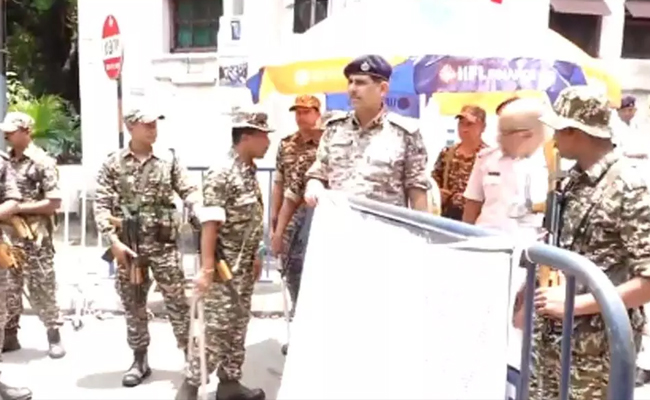
Kolkata (PTI): The counting centre at West Bengal Chief Minister Mamata Banerjee's Bhabanipur assembly constituency witnessed a ruckus a day ahead of the counting of votes, with TMC workers alleging two cars bearing the BJP's flag were allowed entry to the compound where EVMs are kept.
The incident comes close on the heels of a four-hour-long sit-in by Banerjee in front of the same counting centre at the Sakhawat Memorial Girls School on Thursday night, alleging unauthorised entry of persons into the strongroom.
With the polling now over, the wrangling for power in West Bengal has turned into a battle of nerves between the incumbent TMC and the BJP. Workers and leaders of both parties have been keeping a steely gaze on the security of strongrooms across the state where the electoral fate of the candidates is sealed.
Despite expressing her confidence in a "landslide victory", Banerjee has repeatedly aired her apprehensions of "counting malpractice and EVM tampering ahead of the day of results".
On Sunday morning, TMC workers camping 100 metres from the counting centre alleged that two cars with BJP flags entered the premises and went near the strongroom.
"The CAPF personnel at the spot are not allowing any vehicle or person to enter the premises of the counting centre without valid identity proof. Then how come this car, which we have not seen in the past few days, was allowed entry? Once we protested, the central forces asked us to move 100 metres away," a TMC activist said.
The TMC claimed that while the police personnel posted there promised the vehicle would be removed from the spot, it remained there for some time.
A senior Election Commission official said the car was passing by the Harish Mukherjee Road, and after checking by security forces and police, it was allowed to leave as nothing objectionable was found in it.
On Thursday night, two counting centres, including one at Sakhawat Memorial Girls School in the city, witnessed high drama after TMC leaders alleged a lack of transparency and possible malpractice at the strongrooms housing sealed EVMs of the assembly polls, which concluded on April 29.
TMC leaders and candidates, Sashi Panja and Kunal Ghosh, held a sit-in outside the Khudiram Anushilan Kendra counting centre on Thursday evening, alleging unauthorised activities inside the strongroom amid the absence of TMC agents
In Howrah, TMC protested renovation work by the public works department at a place adjacent to the strongroom, and the EC stopped the work temporarily.
On Saturday, the ruling party filed a complaint with the poll panel, alleging unauthorised sorting of postal ballot covers at the EVM strongroom in Khudiram Anushilan Kendra.
Similar scenes were witnessed on Saturday outside the strongrooms at Asansol College in Paschim Bardhaman and the Barasat Government College in North 24 Parganas districts, where TMC workers held protests, alleging that CCTV cameras were switched off for several minutes.
The EC turned down all allegations, saying the surveillance cameras were working in an uninterrupted manner.
BJP spokesperson Sajal Ghosh told reporters that the people of Bengal were finding it "hilarious" that the TMC, "which used to win elections through unfair means and strongarm tactics" were now coming up with all sorts of "frivolous charges".
"Are they scared of losing?" he posed.