MEA rejects "fake memo" alleging links between Indian diplomats, violent activities
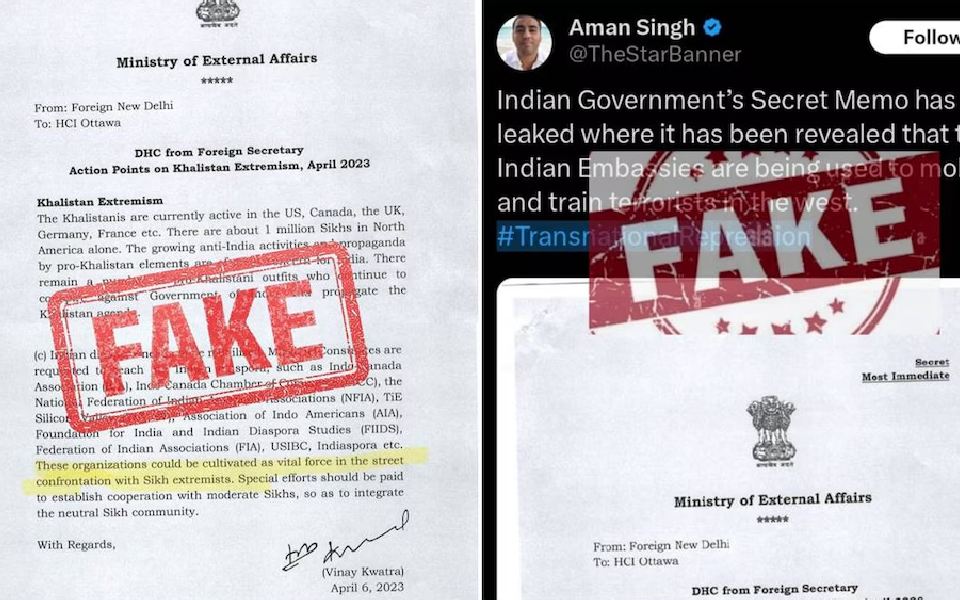
The Ministry of External Affairs (MEA) has dismissed a "secret memo" circulating on social media as fake. This memo, dated April 2023, falsely claims that Indian diplomats abroad are linked to violent activities involving Indian diaspora groups. The MEA’s External Publicity and Public Diplomacy Division clarified, “The said GoI communication is fake,” refuting that any such directive had been issued.
This fabricated document, allegedly signed by former Foreign Secretary Vinay Kwatra, suggests that Indian diplomats were instructed to encourage diaspora groups, particularly in Canada, to engage in "street confrontations" with Sikh extremist groups. Named organizations include the Indo-Canada Association (ICA), Indo-Canada Chamber of Commerce (ICCC), TiE Silicon Valley (TiE SV), and US-India Business Council (USIBC).
The fake memo has surfaced amidst heightened tensions between India and Canada, spurred by India’s accusations that Canada has become a refuge for Khalistani separatists. Recently, violence occurred at a Hindu temple in Brampton, Ontario, which India condemned, urging Canada to ensure the safety of Indian diplomats.
This controversy follows accusations from Canadian Prime Minister Justin Trudeau, who alleged last year in Parliament that he possessed credible evidence linking Indian agents to the killing of Khalistani activist Hardeep Singh Nijjar in June 2022. India has staunchly denied these claims, calling them “absurd” and accusing Canada of supporting extremist elements on its soil.
Let the Truth be known. If you read VB and like VB, please be a VB Supporter and Help us deliver the Truth to one and all.
Rickelton's ton in vain as SRH beat MI by 6 wickets
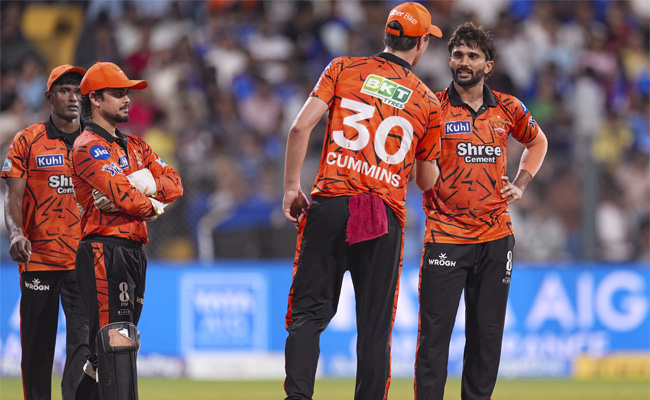
Mumbai (PTI): Ryan Rickelton's whirlwind unbeaten ton was overshadowed by Heinrich Klaasen's unbeaten 65 as Sunrisers Hyderabad defeated Mumbai Indians by six wickets in an IPL match here on Wednesday.
Chasing an imposing 244-run target, Travis Head (76 off 30) and Abhishek Sharma (45 off 24) shared 129 runs for the opening wicket to set the platform for SRH.
Klaasen (65 not out off 30 balls) then displayed his all-round hitting abilities to guide SRH home with the help of Nitish Kumar Reddy (21) and Salil Arora (30 not out off 10) in 18.4 overs.
Earlier, Rickelton's knock powered MI to 243 for five.
MI rode on a 93-run stand between Rickelton (123 not out off 55 balls) and Will Jacks (46 off 22) in 7.1 overs for the opening stand to power the side.
MI skipper Hardik Pandya scored a valuable 31 off 15 balls before being dismissed.
Praful Hinge (2/54), Eshan Malinga (1/29), Sakib Hasan (1/39) and Nitish Kumar Reddy (1/31) were the wicket-takers for SRH.
Brief Scores:
Mumbai Indian: 243 for 5 in 20 overs (Ryan Rickelton 123 not out; Praful Hinge 2/54).
Sunrisers Hyderabad: 249 for 4 in 18.4 overs (Travis Head 76, Heinrich Klaasen 65 not out; AM Ghazanfar 2/51).