Media reports on number of vaccine doses administered in May factually incorrect: Govt
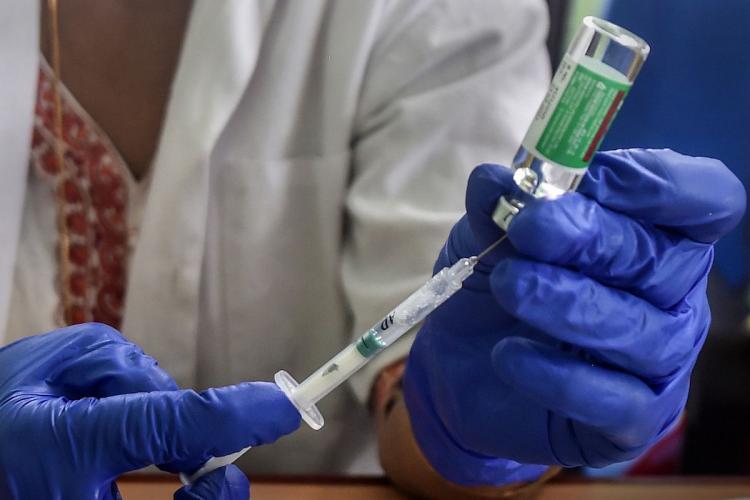
New Delhi, Jun 2: The Union health ministry on Wednesday termed as "factually incorrect and without any basis" media reports alleging that while the Centre has promised 120 million doses of anti-Covid vaccines in June, only around 58 million doses were administered of the 79 million doses available in May.
According to the ministry's data at 7 am on June 1, between May 1-31, a total of 61.06 million vaccine doses were administered by the states and Union territories.
A total of 16.22 million balance and unutilised doses were available with the states. The total number of vaccine shots available from May 1-31 was 79.45 million, the ministry said in a statement.
The Centre has been supporting the efforts of the states for an effective vaccination drive under the "Whole of Government" approach since January 16.
In order to streamline the availability of vaccine doses, the Centre has been in constant touch with the vaccine manufacturers and has opened up different procurement options for the states and Union territories since May 1.
There have been several unfounded media reports that have peddled misinformation among the masses regarding this exercise of national importance, the ministry said, adding that the total number of COVID-19 vaccine doses administered in the country has reached 21,85,46,667.
"There have been media reports alleging the Union Government promising 120 million doses of vaccines during June 2021 while administering only around 58 million doses from the total of 79 million doses available in the month of May. This report is factually incorrect and without any basis," the statement said.
Some media reports have criticised India's vaccination policy based on unverified quotes, it said, adding that these reports, questioning the prioritisation of population segments, are not supported by full information on the matter.
The National Expert Group on Vaccine Administration for COVID-19 (NEGVAC) was formed in August last year to provide guidance on all aspects of vaccine introduction, including prioritisation of beneficiaries, procurement, vaccine selection and its delivery. The prioritisation of beneficiaries for COVID-19 vaccination was based on a review of available scientific evidence, WHO guidelines, global examples and practices followed in other countries, the ministry said.
In India, the primary objectives of COVID vaccination are to protect the healthcare workers as part of the pandemic response system, prevent deaths and protect individuals at the highest risk and vulnerability of mortality due to the disease.
Accordingly, the vaccination drive has been sequentially expanded to cover the prioritised groups, starting with the healthcare workers (HCWs), followed by the frontline workers (FLWs), then people aged 60 years and above and those aged 45-59 years with 20 identified comorbidities.
Subsequently, from April 1, all citizens aged 45 years and above became eligible for vaccination.
Such an approach has yielded positive results by achieving more than 81 per cent first-dose coverage among the registered HCWs and around 84 per cent first-dose coverage among the FLWs, thereby protecting these cohorts who are involved in providing healthcare services, surveillance and containment activities amidst the second wave of the pandemic.
Also, 37 per cent beneficiaries in the 45 years and above age group have been administered the first dose of the vaccine, whereas 32 per cent of the eligible beneficiaries in this segment have received the second dose, the statement said.
From May 1, all citizens aged 18 years and above became eligible for vaccination. A "Liberalised Pricing and Accelerated National COVID-19 Vaccination Strategy" was adopted on May 1 which is guiding the ongoing third phase of the COVID-19 vaccination drive.
Under the strategy, every month, 50 per cent of the vaccine doses of any manufacturer cleared by the Central Drugs Laboratory (CDL) would be procured by the Centre. It would continue to make these doses available to the states and Union territories for free, as was being done earlier.
The remaining 50 per cent doses are available for direct procurement by the states, Union territories and private hospitals, of which the states' share is on a pro-rata basis.
Let the Truth be known. If you read VB and like VB, please be a VB Supporter and Help us deliver the Truth to one and all.
Sujit Nair raises concerns over speculation of DMK-AIADMK understanding to block TVK
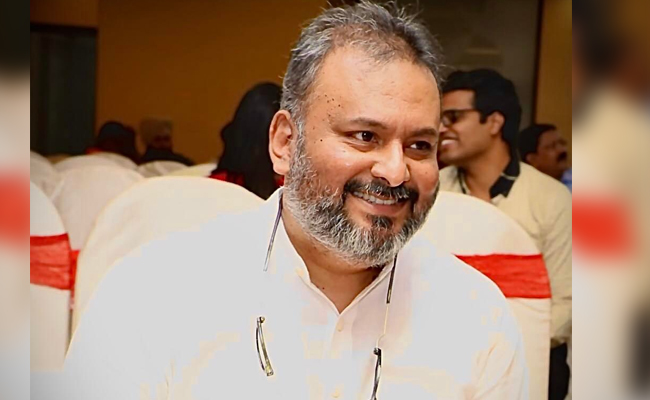
Chennai: Journalist and political commentator Sujit Nair has expressed concern over speculation that the Dravida Munnetra Kazhagam and the All India Anna Dravida Munnetra Kazhagam could explore a post-poll understanding to prevent Vijay-led Tamilaga Vettri Kazhagam from forming the government in Tamil Nadu.
In a social media post, Sujit Nair said the election verdict in Tamil Nadu reflected a clear public demand for political change and argued that the mandate should be respected irrespective of political preferences.
Referring to reports and political discussions surrounding a possible understanding between the DMK and AIADMK, he said he hoped such developments remained only speculative conversations and did not turn into reality.
Nair stated that if such an alliance were to take shape, it would raise serious questions about ideological politics in the country. He said TVK had emerged through a democratic electoral process and that the legitimacy to govern in a parliamentary democracy comes from the people’s verdict.
According to him, attempts to prevent an electoral winner from forming the government through unexpected political arrangements may be constitutionally valid, but many people could view them as politically opportunistic.
He further said that such a move could particularly affect the political image of the DMK, which has historically projected itself around ideology, social justice and opposition politics. Nair said that in ideological terms, the DMK appeared closer to TVK than to the AIADMK, and joining hands with its long-time political rival only to remain in power could weaken its broader political narrative.
He added that the same questions would apply to the AIADMK as well, as the party had spent decades positioning itself against the DMK and such an arrangement could create discomfort among its cadre and supporters.
Drawing a comparison with Maharashtra politics in 2019, Nair said he had expressed similar views when the Shiv Sena formed an alliance with the Indian National Congress and the Nationalist Congress Party after the Assembly elections.
He said post-poll alliances between long-standing political rivals often create a public perception that ideology and electoral mandates become secondary when political power equations come into play.
Nair also said such developments increase public cynicism towards politics and reinforce the belief among voters that ideology is often sidelined after elections.
He maintained that the Tamil Nadu verdict was emphatic and said respecting both the spirit and substance of the mandate was important for the credibility of democratic politics.