Meet Rahmat Pasha from Hyderabad who turned hero for victims during Bondi Beach Attack
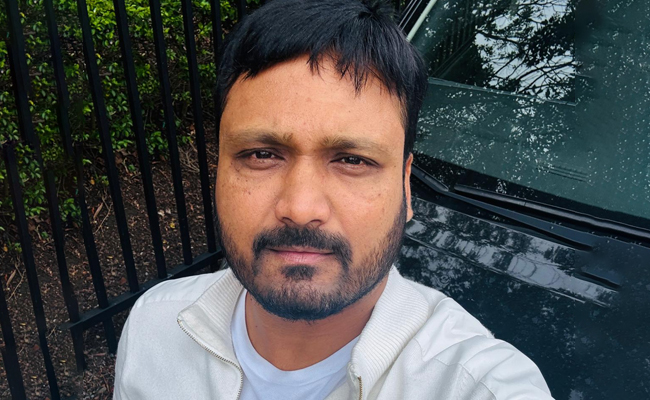
Hyderabad/Sydney: Mohammed Rahmat Pasha, a 37-year-old man from Hyderabad, emerged as an unlikely first responder during the recent shooting at Bondi Beach in Australia, helping injured victims even as the attacker continued firing.
Pasha, who hails from Vikarabad district in Telangana and previously lived in Masab Tank, Hyderabad, was walking along the beachfront a little after 7 pm when he heard sounds he initially mistook for firecrackers. Moments later, panic erupted as people began screaming and collapsing to the ground, making it clear that a shooting was underway.
ALSO READ: Messi event chaos: Court extends police custody of chief organiser till Jan 9
Recalling the incident in an interview to Vartha Bharati, Pasha said he saw the gunman advancing and firing. Despite fearing for his own life, he stopped to help an elderly woman who had been shot in the legs and was crying out for assistance. He sat beside her, comforted her, held her hand and reassured her until emergency services arrived.
“The shooter was not very far from me and I could see him clearly,” Pasha said. “I was scared, but I could not walk away when I saw someone badly injured and asking for help.”
Pasha assisted police and healthcare workers by helping move injured people onto stretchers and into ambulances. He said the scenes were chaotic and deeply disturbing, with people running in all directions to escape the gunfire. One of the victims, he recalled, succumbed to injuries while being assisted.
The father of three, who moved to Australia in 2019 to train as a chef, said the psychological impact of the incident has been severe. He has not returned to work since the attack and is struggling with sleep, managing only a few hours each night.
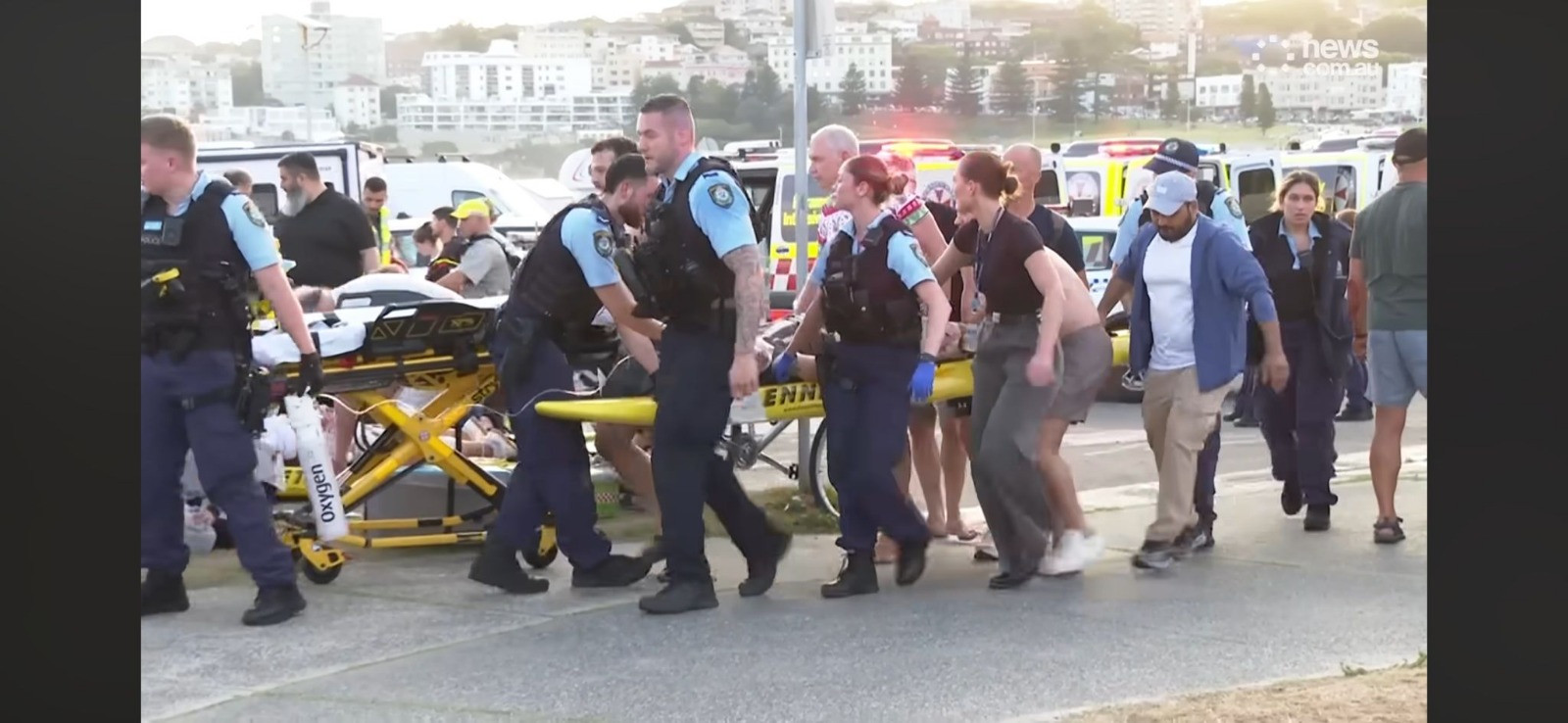
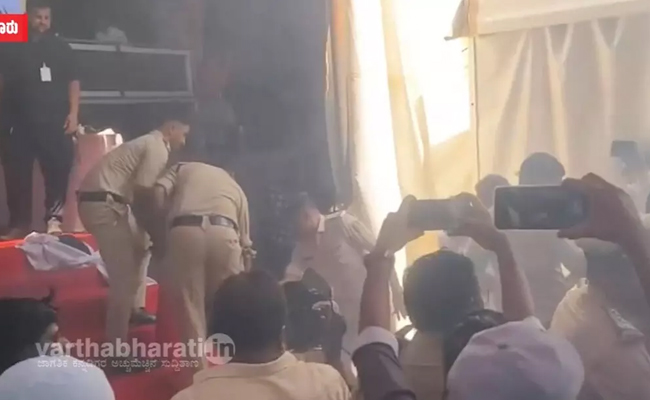
Screengrab from a video from during the attack wherein Pasha can be seen helping authorities
Speaking about the communal abuse and anti-immigrant rhetoric that surfaced online after the incident, Pasha rejected attempts to link the attack to religion. He said his faith teaches that saving one innocent life is equal to saving all of humanity and stressed that terrorism has no religion.
Pasha said he has received support and messages of solidarity from people around him in Australia, while his family in Hyderabad hopes he will return home soon.
Let the Truth be known. If you read VB and like VB, please be a VB Supporter and Help us deliver the Truth to one and all.
Two injuries, one DNF, a DQ as India end messy World Relays campaign
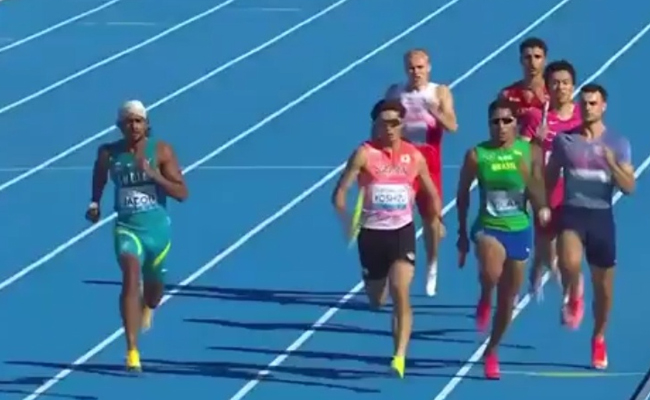
Gaborone (Botswana) (PTI): Amoj Jacob and Ragul Kumar got injured during the men's 4x400m and 4x100 races respectively as India ended their World Athletics Relays campaign in disappointment on the second day of competitions here on Sunday.
The Indian camp had high hopes of making the 2027 World Championships in the men's 4x400m relay but the team did not finish (DNF) the race as Jacob suffered cramps and pulled out of the race after taking the baton from the first leg runner Dharamveer Choudhary. Rajesh Ramesh and Vishal TK were to run in the third and fourth legs.
Those teams which could not qualify for the 2027 Beijing World Championships by reaching the final round of each of the six relay events on Saturday were given another chance in the second qualification round on Sunday.
The top two teams in each of the two heats (in all six relay events) booked the Beijing ticket on Sunday.
India will now have to try and qualify for the World Championships through the Top Lists of the World Athletics, which is a long and tedious process.
In the men's 4x100m race, third leg runner Ragul Kumar fell down the track after failing to hand over the baton inside the exchange zone to fourth leg runner Gurindervir Singh, which clearly showed the lack of coordination among the runners.
Harsh Santosh Raut and Animesh Kujur ran the first two legs.
The Indian quartet was disqualified and Kumar was seen being taken away from the Field of Play with the help of the volunteers.
It was a comedy of errors in the case of the women's 4x100m race, which saw the baton being dropped during an exchange between first leg runner Tamanna and second runner Nithya Gandhe, though the Indians finished the race in 53.09 seconds.
Gandhe started running quite a distance, but after realising that the baton was not in her hand, she turned and ran back to pick it up.
The only silver-lining for the Indian contingent was the national record time in the mixed 4x100m relay race, though the quartet of Ragul Kumar, Nithya Gandhe, Animesh Kujur and Sneha SS finished sixth in heat number two with a time of 41.35 seconds, bettering the previous national mark of 42.30 seconds set in March in Chandigarh.
The mixed 4x400m relay quartet of Theerthesh P Shetty, Kumari Saloni, Nihal William and Rashdeep Kaur ended at fifth in heat number one with a time of 3 minutes and 19.40 seconds.
On Saturday, all the five Indian relay teams had failed to make it to the respective final rounds and thus missed out on the 2027 World Championships berths.