Meghalaya coal mine blast: cremated labourer returns home in Assam

Sribhumi/Hailakandi (PTI): A labourer reported dead in the East Jaintia Hills coal mine explosion in Meghalaya has returned home in Assam's Sribhumi district, officials said on Saturday.
The incident has prompted police forces of both the neighbouring states to launch a joint probe into the circumstances surrounding the labourer’s unexpected return after the blast.
"The labourer reached his home at Muliala village in Sribhumi district's Ramkrishna Nagar circle on Thursday. This sent a shockwave as already a body had been cremated," a senior official of the district administration told PTI.
The family of the 44-year-old Shyambabu Singha had gone to Meghalaya to locate him after the blast as his phone was unreachable, he added.
"His wife and daughter were taken to the hospital by the local authorities there after Singha could not be located. Due to the blast, most of blast victims' faces were damaged beyond recognition. His family identified one body as his," the official said.
The authorities then brought the body to his native place and it was cremated as per Hindu rituals, he added.
"Meghalaya and Assam police have jointly started an investigation into the chain of events. We cannot say anything further as it is a very sensitive matter and under probe," the official said.
He also said the family has been requested not to speak to the media due to the unexpected development and until a clear picture emerges.
An explosion at an illegal rat hole coal mine at Thangsku area of Mynsngat village in East Jaintia Hills district of Meghalaya on February 5 has claimed at least 31 lives.
Meghalaya Police has constituted a Special Investigation Team (SIT) to probe the explosion at the mine.
Meghalaya Chief Minister Conrad K Sangma had also announced that a judicial inquiry commission would ascertain the circumstances leading to the blast and fix responsibility for the incident.
On February 9, the state government had called off search and rescue operations at the blast site after assessment teams concluded that there was no further possibility of locating survivors trapped inside the mine.
The state government has assured the Meghalaya High Court that strict action will be taken against those involved in running the illegal mine and that four persons have been arrested.
The National Green Tribunal (NGT) had banned rat-hole mining in 2014. However, coal is still extracted through this dangerous method in the Northeast.
Let the Truth be known. If you read VB and like VB, please be a VB Supporter and Help us deliver the Truth to one and all.
BJP's Pravesh Wahi elected MCD mayor
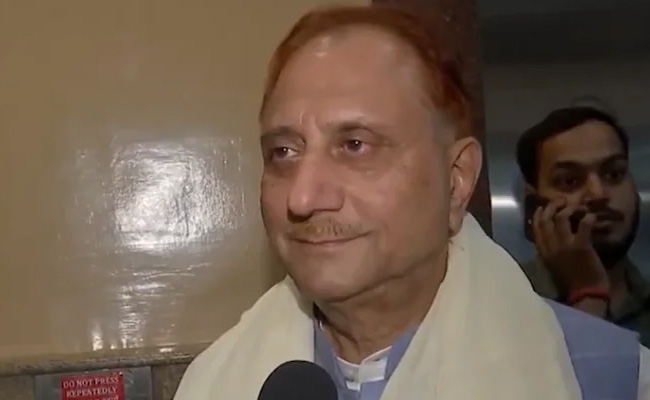
New Delhi (PTI): BJP councillor from Rohini East, Pravesh Wahi, was elected mayor of the Municipal Corporation of Delhi (MCD) on Wednesday.
Wahi secured 156 votes, with 14 councillors of the Indraprastha Vikas Party backing him. Congress candidate Hazi Zaraf received nine votes.
BJP councillor from Anand Vihar, Monika Pant, was elected deputy mayor with 156 votes.
Jai Bhagwan Yadav from Begumpur and Manish Chadha from Paharganj were elected to the standing committee from the BJP, while AAP councillor Jalaj Chaudhary from Shalimar Bagh was also elected to the MCD panel.
On being elected mayor, Wahi thanked Chief Minister Rekha Gupta and the BJP leadership, saying, "We will clean Delhi in the coming months. We will work for the development of Delhi."
The electoral college for this year's mayoral election comprised 273 votes, including 249 councillors, 14 MLAs nominated by the Delhi Assembly, seven Lok Sabha MPs and three Rajya Sabha members from Delhi. A candidate required 137 votes to win.
The Aam Aadmi Party (AAP) abstained from the mayoral polls. Earlier, the party's Delhi unit president Saurabh Bharadwaj said in a statement that the move would allow the BJP to take charge of the civic body and help AAP "expose" the ruling party on governance.
"Despite having power at all levels, the BJP has failed to bring about any change in Delhi. The BJP does not know how to perform. Only AAP knows how to work," Bharadwaj said.
Earlier, AAP controlled the mayoral post, with Mahesh Kumar Khinchi winning the election in November 2024 by just three votes.
The three civic bodies -- East Delhi Municipal Corporation (EDMC), North Delhi Municipal Corporation (NDMC) and South Delhi Municipal Corporation (SDMC) -- were reunified into a single entity on May 22, 2022, as the Municipal Corporation of Delhi.