Mehul Choksi arrested in Belgium on India's extradition request
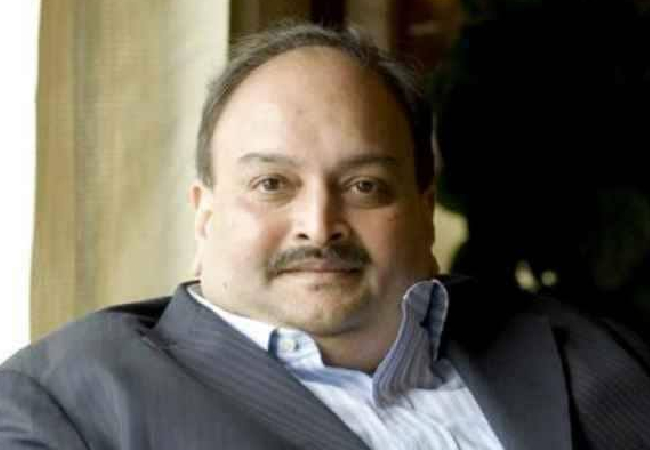
New Delhi (PTI): Absconding diamantaire Mehul Choksi has been arrested in Belgium following an extradition request by Indian probe agencies for his involvement in the Rs 13,000 crore PNB bank loan "fraud" case, official sources said on Monday.
The action against the second "prime suspect" in this case, after Choksi's nephew diamantaire Nirav Modi, was taken on Saturday based on an extradition request moved by the Central Bureau of Investigation (CBI) and the Enforcement Directorate (ED).
Choksi was located in Belgium last year when he went there on the grounds of getting medical treatment. He had been staying in Antigua since 2018 after leaving India.
Sources said the Interpol Red Notice against him for arrest was "deleted" sometime back and the Indian agencies were pursuing him via the extradition route since then.
At least two open-ended arrest warrants, issued by a special court in Mumbai in 2018 and 2021, have been shared by the Indian agencies with their Belgian counterparts as part of the extradition request, the sources said.
Formal paperwork is being done following the arrest/detention as Choksi may seek bail on health grounds, they said.
Choksi, Modi, their family members and employees, bank officials and others were booked by the CBI and the ED in 2018 for perpetrating the alleged loan fraud at the Brady House branch of the Punjab National Bank (PNB) in Mumbai.
It was alleged that Choksi, his firm Gitanjali Gems and others "committed the offence of cheating against PNB in connivance with certain bank officials by fraudulently getting the LOUs (letters of undertaking) issued and got the FLCs (foreign letter of credit) enhanced without following prescribed procedure and caused a wrongful loss to the bank".
The CBI has filed at least two chargesheets against him in this case while the ED has filed three such prosecution complaints.
Modi, declared a fugitive economic offender, has been lodged in a London jail since he was held by the authorities there in 2019 on the basis of a legal request made by the ED and the CBI in this case. He is contesting extradition to India.
According to the investigating agencies, officials at PNB's Brady House branch in Mumbai issued 165 LoUs and 58 FLCs during March-April 2017, against which 311 bills were discounted.
These LoUs and FLCs were allegedly issued to Choksi's firms without any sanctioned limit or cash margin and without making entries in PNB's central banking system to evade any scrutiny in case of a default.
LoUs are a guarantee given by a bank on behalf of its client to a foreign bank. If the client does not repay the foreign bank, the liability falls on the guarantor bank.
Based on these LoUs by PNB, money was lent by SBI, Mauritius; Allahabad Bank, Hong Kong; Axis Bank, Hong Kong; Bank of India, Antwerp; Canara Bank, Manama; and State Bank of India, Frankfurt.
"Since the accused companies did not repay the amount availed against the said fraudulent LoUs and FLCs, PNB made the payment of Rs 6,344.97 crore (USD 965.18 million), including the overdue interest, to the overseas banks, which had advanced buyer's credit and discounted the bills against the fraudulent LoUs and FLCs issued by the PNB," the CBI's supplementary charge sheet in the PNB bank fraud case alleged.
The ED has attached or seized assets worth Rs 2,565.90 crore in the case against Choksi and the court has allowed "monetisation" of all these properties.
Let the Truth be known. If you read VB and like VB, please be a VB Supporter and Help us deliver the Truth to one and all.
CM Siddaramaiah alleges ‘criminal conspiracy’ in Sringeri recount, vows legal action
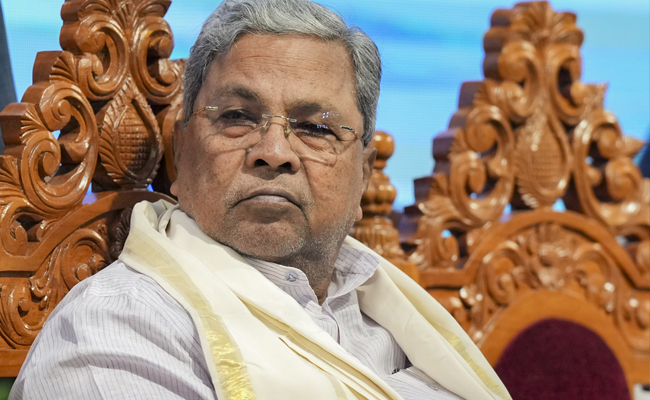
Bengaluru (PTI): Alleging a “criminal conspiracy” by BJP candidate D N Jeevaraj in the Sringeri Assembly poll recounting, Karnataka CM Siddaramaiah on Tuesday said the outcome was manipulated after valid postal ballot votes in favour of Congress leader T D Raje Gowda were tampered with during the recounting process.
Following a Karnataka High Court order on an election petition filed by Jeevaraj, challenging Raje Gowda’s election, the reverification and recounting were conducted on Saturday.
After the reverification and recount of postal ballots for the Sringeri Assembly constituency, votes polled in favour of Raje Gowda were reduced by 255, the returning officer said.
A report on the matter has been submitted to the Election Commission of India for further action, the officer added.
Congress leader Raje Gowda had won the 2023 Assembly polls from Sringeri by 201 votes, defeating his nearest rival Jeevaraj.
Addressing a press conference in Bengaluru, Siddaramaiah said the High Court had directed the recounting of postal ballots and that irregularities were noticed during the exercise conducted on May 2.
“This is a clear case of criminal conspiracy,” Siddaramaiah said, alleging that valid votes cast in favour of Raje Gowda were altered after being accepted by counting agents of all parties, including Congress, BJP, and JD(S).
He claimed that during the recounting of postal ballots, 255 votes were initially accepted as valid by all agents but were later tampered with by subordinate officials.
“There is a second mark on the votes polled in favour of Raje Gowda. They had accepted these as valid votes. Subsequently, another mark was made by officials. This is a clear case of criminal conspiracy,” he said.
When asked who was behind the alleged conspiracy, the CM replied, “It was hatched by Jeevaraj and others. It is planned.”
Siddaramaiah further alleged that the returning officer acted improperly by declaring the result despite the presence of an Election Commission observer during the recounting.
“Immediately after the counting, the returning officer announced the result. He should not have done so; this is against the law,” he said.
He pointed out that Raje Gowda had originally won by 201 votes, but after the recounting, the BJP candidate was declared the winner by 52 votes.
“The BJP has committed a criminal act of conspiracy. This is not vote chori but vote dacoity,” he alleged.
The CM said a police complaint had already been filed by Raje Gowda’s election agent, Sudhir Kumar, and emphasised the need for electoral integrity.
“We want transparency and free and fair elections. That is what our Constitution mandates,” he added.
Stating that the government would pursue legal remedies, Siddaramaiah said, “We are preparing an appeal challenging the returning officer’s announcement in a court of law.”
Responding to a separate query on elections in other states, the CM said there appeared to be an anti-incumbency factor in West Bengal, while results in Tamil Nadu were “surprising,” adding that Vijay’s party was emerging as the largest there.
Following the victory of party candidates in Bagalkote and Davanagere South, Siddaramaiah expressed confidence about future electoral prospects in Karnataka.
“Even in 2028, we will win the Assembly elections. We will come back,” the CM said.
Siddaramaiah added that he would order a forensic examination into the alleged tampering of postal ballots.