Mehul Choksi 'fugitive and absconder', ED tells Bombay High Court
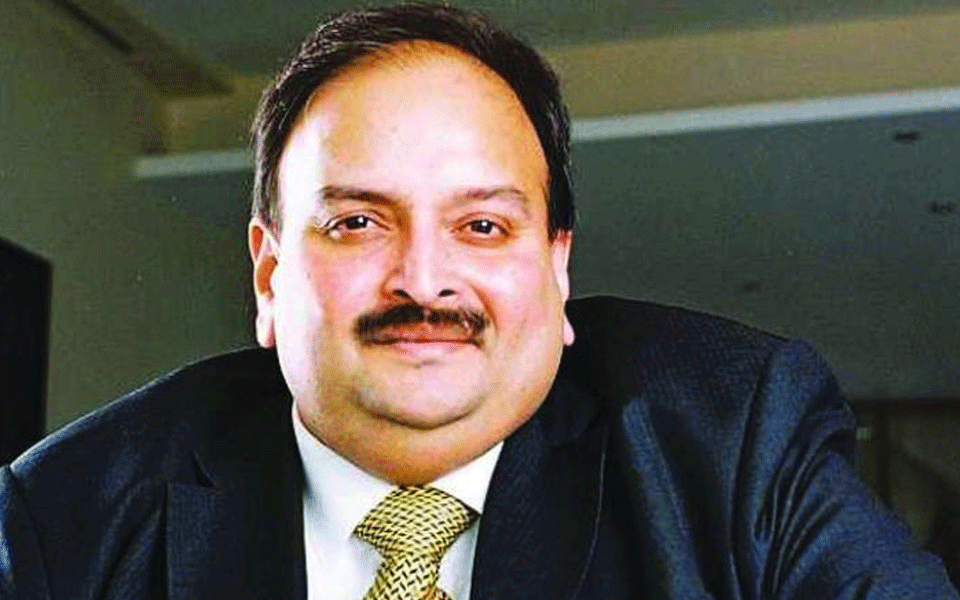
Mumbai: Diamantaire Mehul Choksi, accused in the multi-crore Punjab National Bank scam, is a "fugitive and absconder", the Enforcement Directorate told the Bombay High Court on Monday.
The agency, in its affidavit, sought dismissal of two petitions filed by Choksi one against a plea for him to be declared a fugitive economic offender and the second to permit him to cross-examine those persons on whose statements the ED is relying on to declare Choksi a fugitive economic offender.
The ED, in its affidavit submitted on Monday to a division bench headed by Justice I A Mahanty, said Choksi is accused of siphoning and laundering money to the tune of Rs 6,097 crore in the PNB scam, and despite having issued summons directing him to appear before the agency, he has said he does not intend to cooperate with the probe.
"He is a fugitive and absconder. He has deliberately and intentionally evaded from appearing before the investigating agency even after a special court has issued non-bailable warrants against him. This shows that he does not have any regard for the law of the land," the affidavit said.
"It is apparent that the applicant (Choksi) has left India to avoid criminal prosecution for the offence of money laundering under the provisions of the Prevention of Money Laundering Act and continues to refuse to return to India to face criminal prosecution," it said.
It added that Choksi has already taken citizenship of Antigua which clearly shows that he has no intention of returning to India to cooperate with the probe.
The agency further said that under the Fugitive Economic Offender Act, if the fugitive appears in person before the court then the proceedings can be terminated. However, it said, if the person fails to do so the court can declare him a fugitive economic offender and can confiscate his properties.
"The sole purpose of the Act is to compel the fugitive to return to India and face the proceedings initiated against him," the affidavit said.
The Act was introduced as an effective, expeditious and constitutional way to stop offenders from running away, it added.
The high court will take up the petitions for hearing on Tuesday. Choksi, in his plea, claimed he was unable to return to India due to persistent health problems.
To this, the ED said it was merely a facade and that Choksi can seek treatment for his health problems in India.
Choksi and his nephew Nirav Modi are wanted by the ED and the CBI for allegedly defrauding the PNB to the tune of Rs 13,400 crore, in collusion with a few of its employees.
The ED had filed an application before a special Prevention of Money Laundering Act court, seeking for Choksi to be declared a "fugitive economic offender" for evading summons to appear before the agency and for his properties be confiscated under the provisions of the Fugitive Economic Offenders Act, 2018.
Choksi had then filed an application before the lower court, seeking for the ED's plea to be dismissed. When the lower court rejected his application, Choksi approached the high court in April this year.
Let the Truth be known. If you read VB and like VB, please be a VB Supporter and Help us deliver the Truth to one and all.
Family of injured driver in murder of Suvendu's aide seeks exemplary punishment
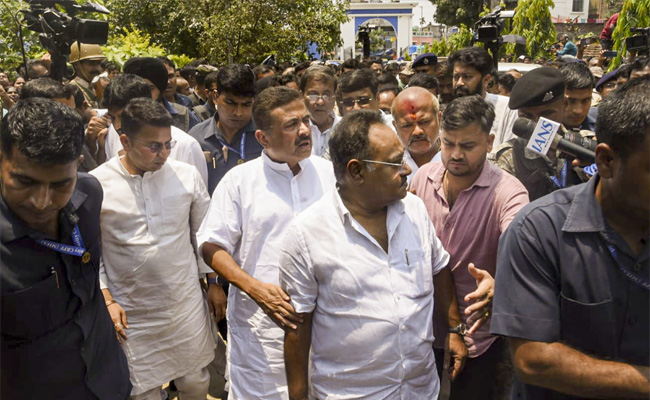
Kolkata (PTI): The family of Buddhabeb Bera, the driver injured in the shooting that killed BJP leader Suvendu Adhikari's close aide Chandranath Rath, demanded exemplary punishment for those responsible and urged the new government to ensure such incidents do not happen in West Bengal.
Rath was shot dead in Madhyamgram near Kolkata on Wednesday night, triggering a political storm in the state. Bera, who was driving the vehicle at the time of the attack, sustained gunshot wounds and is currently undergoing treatment at a private hospital.
Family members said they learned about the incident through television and immediately left for Kolkata.
ALSO READ: Trump says EU has until July 4 to approve last year's trade deal or it will face higher tariffs
"We came to know from TV reports that my nephew had been shot. We still do not know who carried out the attack or why it happened," Buddhabeb's uncle Biswajit Bera said.
"Our only wish now is that he recovers and returns home safely," he added.
Buddhabeb, 25, hails from Majnaberia village in the Chandipur police station area in Purba Medinipur district.
According to family members, he mostly stays in Kolkata for work and visits home occasionally during weekends.
Besides his parents, his younger brother, sister-in-law and several relatives have also travelled to Kolkata following the incident.
Demanding strict action against the perpetrators, the uncle said, "We want the government to conduct a proper investigation and identify those directly involved in the crime. They should be given exemplary punishment so that such incidents do not happen again in West Bengal and no other family has to go through this grief."
A neighbour, Ranjana Ghorai, also sought stringent punishment for those behind the attack.
"In our neighbourhood, we call him Sona. We want exemplary punishment for the people responsible for this incident," she said.
Rath's family members have demanded life imprisonment for the accused, while Adhikari has called for capital punishment for those involved in the killing.