Meitra Hospital to help Malabar Artists by bringing up Art Pavillion at Hortis Arts Festival
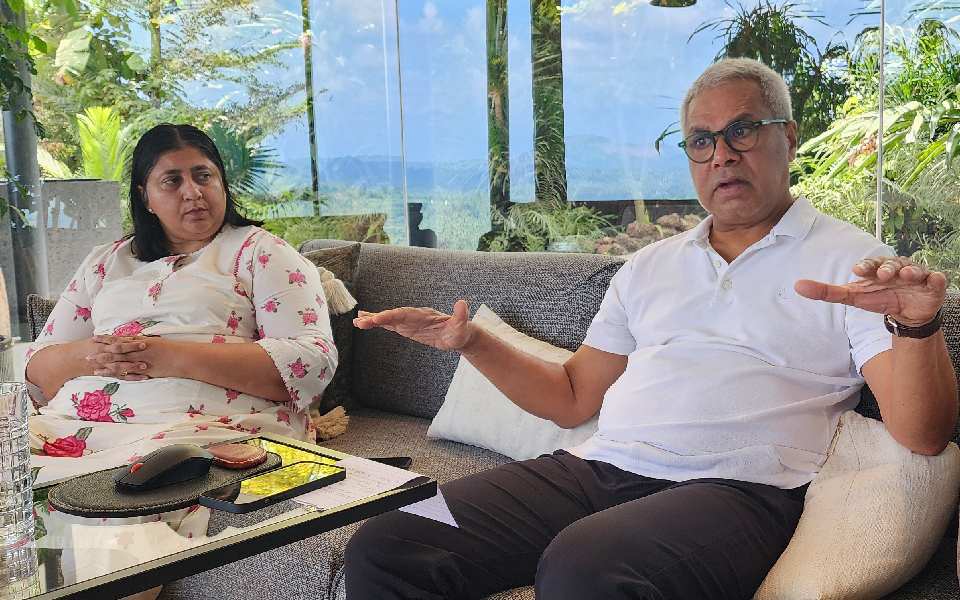
Kozhikode: The Kochi Biennale Foundation is gearing up to unveil a dedicated art pavilion at the Malayala Manorama Hortus Arts and Literature Festival, designed as a platform to spotlight local talent from the Malabar region. The pavilion, supported by Meitra Hospital, will provide emerging artists in Kozhikode and surrounding areas with a space to display and sell their work without leaving their native region.
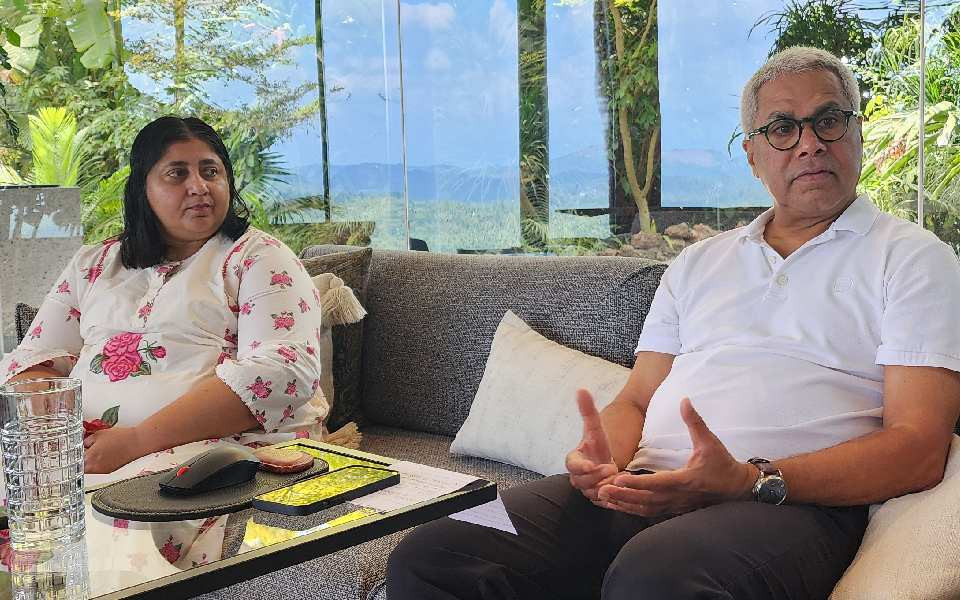
Faizal Kottikollon, chairman of Meitra Hospital and founder of KEF Holdings, along with his wife Shabana Faizal, view this initiative as a stepping stone for artists in Malabar, helping them nurture their craft while staying connected to their roots. The couple, who have long championed regional development, are committed to promoting Malabar’s artistic potential.
"Our land is home to countless talented artists, but many struggle to make a sustainable income from their art," Faizal shared. "Currently, artists often have to migrate to Kochi or beyond to find opportunities. With the Kochi Biennale event making Kochi a thriving art hub, we felt it essential to create a similar stage in northern Kerala, where artists in Kozhikode can perform and sell their work locally, generating income without leaving their homeland."
Both Shabana and Faizal envision the Art Pavilion project developing in the same spirit as the successful Nadakkav School Project, a model school with international standards that inspired similar projects in places as far-flung as Kenya, Bengaluru, and Srinagar.
For Faizal, supporting art is a way of sharing life’s privileges. "True happiness comes from giving back," he noted. "Instead of profit-driven ventures, we’re now focusing on education and health, areas that need urgent support. Art plays a crucial role in enriching lives, and this pavilion aims to uplift both artists and the community."
In line with their community-centered approach, the Kottikollons recently launched Thula, a new venture in Chelari, blending traditional medicine with modern practices. "Thula isn’t about profit; it’s a first-of-its-kind initiative to integrate traditional methods for restoring the body’s natural balance with contemporary medicine," Faizal explained.
While the couple was inspired by the famous botanical treatise Hortus Malabaricus, they see Thula as a means to honor India’s heritage of indigenous healing knowledge, shared by legends like Itty Achuthan. Thula also taps into local talent by featuring artisans, weavers, and Kalaripayattu experts from Kozhikode, creating further opportunities for the region’s skilled artists.
About Faizal and Shabana Kottikollon:
Founders of the Faizal and Shabana Foundation, the couple has actively transformed educational infrastructure across Southern India. Since its inception in 2007, the foundation has contributed over INR 340 million ($4.5 million) to rebuild schools using prefabricated structures to replace decaying classrooms. Shabana Faizal, originally from Mangaluru, is the daughter of Late B Ahmed Haji Mohiudeen, a prominent business and community leader, while Faizal Kottikollon is the son of Malayali entrepreneur PK Ahammed, chairman of the Peekay Group of Companies.
With the pavilion at the Hortus Arts and Literature Festival, Faizal and Shabana Kottikollon continue their dedication to preserving and uplifting Malabar’s artistic culture, opening new avenues for the community’s creative talent.
Let the Truth be known. If you read VB and like VB, please be a VB Supporter and Help us deliver the Truth to one and all.
Sujit Nair raises concerns over speculation of DMK-AIADMK understanding to block TVK
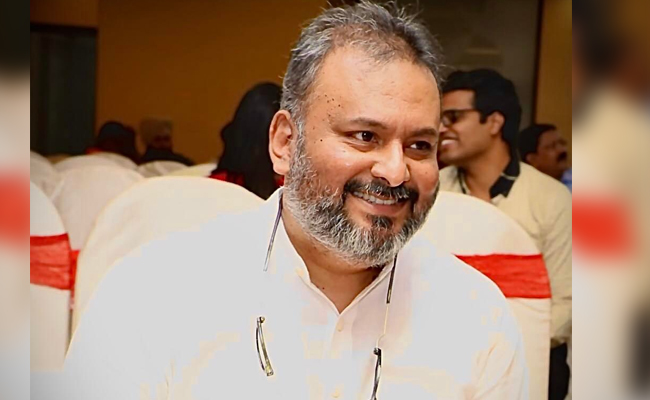
Chennai: Journalist and political commentator Sujit Nair has expressed concern over speculation that the Dravida Munnetra Kazhagam and the All India Anna Dravida Munnetra Kazhagam could explore a post-poll understanding to prevent Vijay-led Tamilaga Vettri Kazhagam from forming the government in Tamil Nadu.
In a social media post, Sujit Nair said the election verdict in Tamil Nadu reflected a clear public demand for political change and argued that the mandate should be respected irrespective of political preferences.
Referring to reports and political discussions surrounding a possible understanding between the DMK and AIADMK, he said he hoped such developments remained only speculative conversations and did not turn into reality.
Nair stated that if such an alliance were to take shape, it would raise serious questions about ideological politics in the country. He said TVK had emerged through a democratic electoral process and that the legitimacy to govern in a parliamentary democracy comes from the people’s verdict.
According to him, attempts to prevent an electoral winner from forming the government through unexpected political arrangements may be constitutionally valid, but many people could view them as politically opportunistic.
He further said that such a move could particularly affect the political image of the DMK, which has historically projected itself around ideology, social justice and opposition politics. Nair said that in ideological terms, the DMK appeared closer to TVK than to the AIADMK, and joining hands with its long-time political rival only to remain in power could weaken its broader political narrative.
He added that the same questions would apply to the AIADMK as well, as the party had spent decades positioning itself against the DMK and such an arrangement could create discomfort among its cadre and supporters.
Drawing a comparison with Maharashtra politics in 2019, Nair said he had expressed similar views when the Shiv Sena formed an alliance with the Indian National Congress and the Nationalist Congress Party after the Assembly elections.
He said post-poll alliances between long-standing political rivals often create a public perception that ideology and electoral mandates become secondary when political power equations come into play.
Nair also said such developments increase public cynicism towards politics and reinforce the belief among voters that ideology is often sidelined after elections.
He maintained that the Tamil Nadu verdict was emphatic and said respecting both the spirit and substance of the mandate was important for the credibility of democratic politics.