Mental trauma should also be considered while compensating accident victims: Bombay HC

Mumbai (PTI): The Bombay High Court has observed that the mental trauma should be taken into account besides physical injuries suffered by victims of motor accidents while granting compensation to them.
In an order passed on April 7, a copy of which was made available on Tuesday, Justice Bharati Dangre dismissed the appeals filed by Iffco Tokio General Insurance Company, challenging the compensation amounts it was asked to pay two women, who met with an accident on the Nashik highway in 2014.
The judge also enhanced the compensation amount for one of the victims while noting the accident had left her with a life-long mental agony, and that she also required further medical treatment.
In 2019, the Motor Vehicles Accident Tribunal had directed the insurance firm to pay around Rs 20 lakh to one Sameera Patel, and Rs 22 lakh to her daughter Zuleka.
The duo suffered grievous physical injuries in the accident on the highway after their car rammed into a trailer which had broken down and was parked in the middle of the road without any warning, indicator or parking lights.
The accident resulted in Sameera, who was then 37 years' old, losing vision in one eye and several physical disabilities.
She told the HC that she had five children, including twin daughters, who suffered from cognitive physical and mental disabilities. The accident left her incapable of taking care of her daughters and she was forced to hire help, the woman told the high court.
Zuleka, who was 19 at that time, lost her hearing capability and a part of her face had to be restructured by surgeons.
She was an athlete and had hoped to make a career in sports, but the accident resulted in major physical disabilities and she lost her chance to be a sportsperson, Zuleka told the HC.
The insurance company argued that the trailer driver had been driving without a valid license. It said the vehicle owner had breached the terms of insurance, hence the owner must be asked to pay the compensation amount.
The HC, however, said the law was clear that even if one had breached the insurance terms, it was the insurance company that must pay the compensation amount and recover it from the owner subsequently.
The high court also said it must take into account the facts that Zuleka lost a chance at a bright career and also lost any prospect of marriage because of the injuries received in the accident.
No amount of arithmetical calculation could help arrive at a justified compensation amount for the victims, the HC observed.
The victims are emotionally exhausted and filled with a feeling of helplessness in coping with the problem. The whole episode has left the family in severe distress and their condition can be analysed as post-traumatic stress disorder, which may bring chronic changes in the functioning and personality, as a person. Traumatic brain injury and impact on mental health must be taken into account, the HC said.
For Zuleka, the HC said the tribunal had failed to include the component of loss of marriage prospects and future medical treatment in the compensation amount.
I am, therefore, inclined to enhance the compensation limited to Zuleka by adding an amount of Rs three lakh for the loss of marriage prospects and Rs two lakh for future medical treatment, since it has surfaced in her deposition, the judge said.
Let the Truth be known. If you read VB and like VB, please be a VB Supporter and Help us deliver the Truth to one and all.
Congress using hijab issue to pacify minority anger, alleges Karnataka LoP R Ashoka
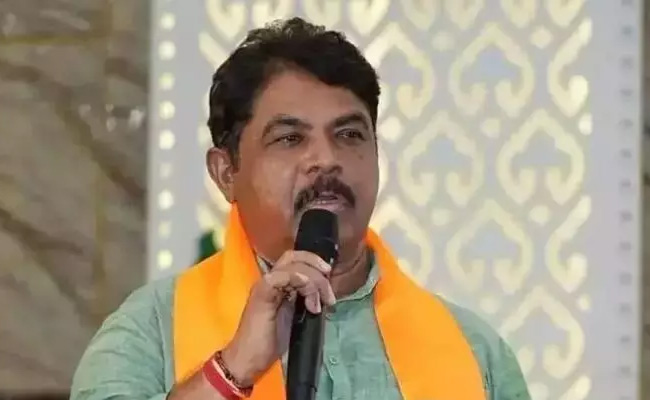
Bengaluru: Leader of Opposition in the Assembly R. Ashoka has accused the Congress government of using the hijab issue to placate what he described as discontent among minority voters after the Davanagere by-election.
In a post on X on Wednesday, Ashoka alleged that the state government, instead of addressing issues such as price rise, corruption, farmers’ distress and law and order, was attempting to retain its minority vote base by reviving the hijab issue.
Referring to the 2022 dress code introduced by the BJP government, which prohibited hijab in schools and colleges, Ashoka said the Karnataka High Court had upheld the policy and emphasised the importance of discipline in educational institutions.
He questioned the Congress government’s move to revisit the issue and asked whether setting aside the court-backed policy to benefit one community could be described as secularism.
Ashoka further alleged that while the government was willing to permit hijab, it continued to prohibit saffron shawls.
He accused the government of dividing students on religious lines rather than treating schools and colleges as spaces of equality.
Drawing a comparison with Mamata Banerjee’s government in West Bengal, Ashoka claimed that excessive appeasement politics had harmed the state and warned that the Congress in Karnataka could face a similar political response.
He said voters in Karnataka would teach the Congress a lesson for what he termed “vote-bank politics” and for compromising constitutional and judicial principles.