Merely possessing Aadhaar, PAN card or voter ID doesn't make person Indian citizen: Bombay HC
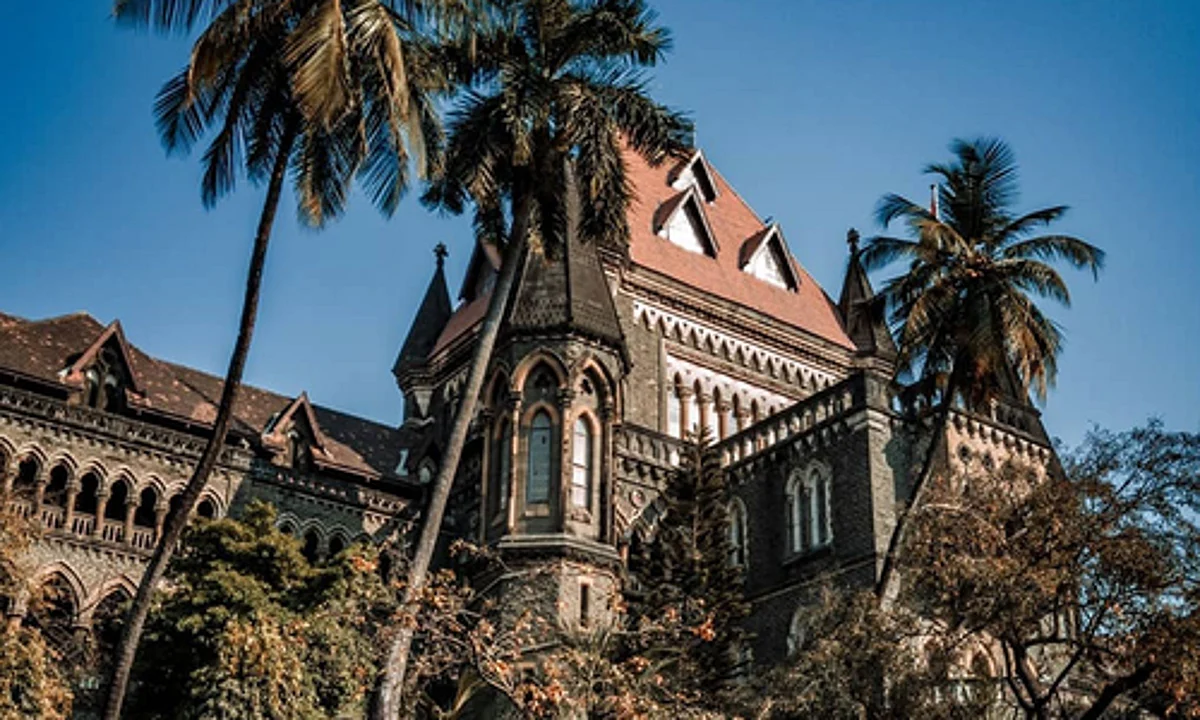
Mumbai (PTI): A person does not become a citizen of India merely by possessing documents like Aadhaar card, PAN card or a voter ID, the Bombay High Court on Tuesday said while refusing bail to a man, allegedly from Bangladesh, for entering India illegally.
The man is accused of staying in India for more than a decade with forged and fabricated documents.
A bench of Justice Amit Borkar said provisions of the Citizenship Act lay down who can be a citizen of India and how citizenship can be acquired and documents such as the Aadhaar card, PAN card and voter ID are only meant for identification or availing services.
The court refused bail to Babu Abdul Ruf Sardar, alleged to be a Bangladeshi national, who entered India illegally without a valid passport or travel documents. He allegedly procured forged Indian documents such as Aadhaar card, PAN card, voter ID and also an Indian passport.
In 1955, Parliament passed the Citizenship Act which created a permanent and complete system for acquiring citizenship, Justice Borkar noted.
"In my opinion, the Citizenship Act of 1955 is the main and controlling law for deciding questions about nationality in India today. This is the statute that lays down who can be a citizen, how citizenship can be acquired and in what situations it can be lost," he said.
"Merely having documents such as Aadhaar card, PAN card or voter ID does not, by itself, make someone a citizen of India. These documents are meant for identification or availing services, but they do not override the basic legal requirements of citizenship as prescribed in the Citizenship Act," the HC said.
The law draws a clear line between lawful citizens and illegal migrants, the bench said.
People falling in the category of illegal migrants are barred from obtaining citizenship through most of the legal routes mentioned in the Citizenship Act, it added.
"This distinction is important because it protects the sovereignty of the country and ensures that benefits and rights meant for citizens are not wrongfully taken by those who have no legal status to stay in India," the court said.
The bench, while refusing bail to Sardar, noted that verification of his documents was still on and the investigation was also still continuing, and the police's fear that he may abscond if granted bail is a genuine apprehension.
The allegations in the case are not small and it is not just about staying in India without permission or overstaying, but it is about making and using fake and forged identity documents with the aim of pretending to be an Indian citizen, the HC said.
Sardar was booked under provisions of the Bharatiya Nyaya Sanhita, the Passport (Entry to India) Act and the Foreigners Order.
The court noted the investigation in the case is still going on with regard to genuineness of the Aadhaar card, which is being verified by the Unique Identification Authority of India (UIDAI).
Sardar in his bail plea said he was a bona fide citizen of India and that there was no conclusive or reliable evidence to prove he is a national of Bangladesh.
He further claimed his documents are linked with his income tax records and business registration and that he has been residing in Mumbai's neighbouring Thane district since 2013.
The prosecution opposed the plea, claiming if the accused was released on bail, he may abscond.
The police further said a probe was on to ascertain if there was a larger organised network involving illegal immigration and identity fraud.
The court in its order noted the allegations against Sardar are not limited to a mere technical violation of immigration norms, but indicate a case of deliberate concealment of identity and creation of forged documents for obtaining the Indian citizenship benefits.
When the Constitution of India was being drafted, the country had just gone through a historic transformation and the partition at the time caused a massive movement of people across borders, creating a need to decide who would be accepted as citizens of the new nation, it noted.
Keeping this in mind, framers of the Constitution decided to make an arrangement for deciding citizenship, the high court said.
The Constitution laid down provisions which gave immediate clarity on who would be considered a citizen at the very beginning of the Republic and it gave the elected Parliament the powers to make laws on citizenship in future, the court noted.
Let the Truth be known. If you read VB and like VB, please be a VB Supporter and Help us deliver the Truth to one and all.
Real Madrid fines Valverde and Tchouaméni half a million euros each for altercation

Barcelona (AP): Real Madrid slapped players Federico Valverde and Aurélien Tchouaméni with half-a-million-euro ($588,000) fines on Friday for their altercation during practice.
The massive fines came a day after the midfielders tussled when the team trained. Valverde said in a post on social media on Thursday that no punches were thrown. But Valverde knocked his head on a table and he suffered a small cut that required a brief hospital visit.
On social media, Valverde initially called it a “meaningless fight” with a teammate and said “everything has been blown out of proportion."
His employers, however, considered it a significant enough breach of team discipline to nail both Valverde and Tchouaméni with fines that bite even the bank account of a top soccer player. The half-a-million euro penalties reflect the reputational damage the club was enduring in a chaotic end to a disappointing season.
In a statement, the 15-time European champion said its disciplinary action was concluded after both players expressed to the club “their complete remorse for what happened and apologized to one another.”
Madrid added they also apologized to their teammates, the coaching staff and club supporters, as well as showing their willingness to accept whatever disciplinary action the club deemed “opportune.”
Tchouaméni was back training with Madrid on Friday, two days before they play at Barcelona in a clasico. Madrid has to win otherwise Barcelona will be crowned La Liga champion.
After being notified of the fine, he posted a public apology to the club and its fans on social media.
“What happened this week in training is unacceptable,” Tchouaméni wrote. "I say this while thinking about the example we are expected to set for young people, whether in football or at school.
“Above all, I am sorry for the image we projected of the club.”
Valverde was not at practice due to the head knock.
Both players are set to play in the World Cup next month, with Tchouaméni playing for France and Valverde for Uruguay.
Chaotic end to a poor season
===================
The run-in between the players, who for seasons have played side by side in Madrid's midfield, came after they argued this week in previous training sessions. But tempers boiled over on Thursday. Spanish media was rife with reports that the players previously disagreed over the club's decision to let coach Xabi Alonso go after just months on the job.
It was not the only altercation involving Madrid players during training this week. Álvaro Carreras confirmed he was in a “minor” incident with a teammate. Spanish media said he and fellow defender Antonio Rüdiger got into a scuffle.
Álvaro Arbeloa, the coach who was promoted from Madrid's reserve team when Alonso was fired in January, will face tough questions on what went wrong inside the changing room when he gives a press conference on Saturday ahead of the clasico at Camp Nou.
Madrid is facing a second consecutive campaign without a major trophy amid rumors in the Spanish media that club president Florentino Pérez is considering bringing back Jose Mourinho to straighten out his underperforming team.