MGNREGA was transformative law, its substitute a flaw: Congress
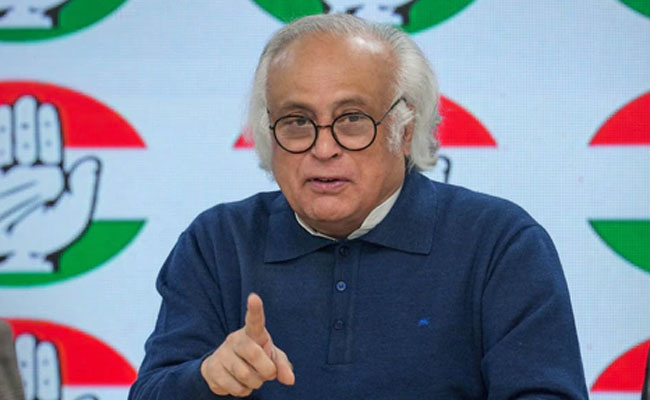
New Delhi (PTI): Hitting out at the Modi government, the Congress on Monday said MGNREGA was a transformative law while the new scheme brought by the Centre that "bulldozed it away" is a "flaw".
Congress general secretary in-charge communications Jairam Ramesh said exactly 20 years ago today, the Mahatma Gandhi National Rural Employment Guarantee Act (MNREGA) was launched at Badnapalli village in Anantapur district of Andhra Pradesh.
"Over the years, it has provided 180 crore days of work to rural households (especially women), created an estimated 10 crore community assets, significantly reduced distress migration, empowered gram panchayats, and decisively increased the bargaining power of the rural poor for higher wages," Ramesh said on X.
It also launched the direct benefit transfer initiative to credit wages directly into bank and post office accounts, he said.
Individual small and marginal farmers were able to establish irrigation facilities like digging wells on their own lands, the Congress leader said.
MGNREGA was a demand-based legal guarantee and not just an administrative promise, Ramesh asserted.
"It was a right derived from Article 41 of the Constitution. Work was allocated when demanded by citizens and was made available anywhere in rural India. Projects were decided upon by the local Gram Panchayat, and the State Government having to pay only 10% of the overall costs was incentivised to provide work without having to bear significant costs," he said.
Social audits through the Gram Sabha and high-level audits through the CAG were conducted regularly, Ramesh pointed out.
He further claimed that Modi Government's new law guarantees only centralisation in New Delhi.
Work will now be notified in certain districts by the Modi government, he added.
"Work will be provided based on the Government's allocated budget rather than on citizen demand. The scheme will stop altogether for two months every year during peak agricultural activities - a big blow to workers' bargaining power who won't be able to negotiate better wages for agricultural work," Ramesh said.
The panchayat has been sidelined, and projects will be determined by the Modi government according to its priorities, he said.
Finally, states will now have to bear 40% of the costs given their financial stress, they will not be able to do so and will stop providing work altogether, he opined.
"MGNREGA was a transformative law. The Modi government's new scheme that bulldozed it away is a flaw," Ramesh said.
Ramesh also shared a photo from 20 years ago when Cheemala Pedakka, a Dalit woman from Badnapalli, became the first job card holder under MGNREGA.
The Union government's Viksit Bharat Guarantee for Rozgar and Ajeevika Mission (Gramin) Act, 2025 (VB-G RAM G), was passed by both houses amid opposition uproar and received presidential assent in December 2025, effectively replacing MGNREGA after two decades.
Under the new law, the statutory guarantee of employment was increased on paper from 100 to 125 days per rural household each year, and changes were made in funding patterns, planning mechanisms and implementation structures.
Opposition parties have argued the new law dilutes the rights-based nature of MGNREGA, increases centralisation of power, and saddles states with greater financial responsibilities, potentially weakening the original legal entitlement to work.
Let the Truth be known. If you read VB and like VB, please be a VB Supporter and Help us deliver the Truth to one and all.
AIITA welcomes Karnataka’s ban on obscene songs in school events
Bhatkal: The Karnataka unit of the All India Ideal Teachers Association (AIITA) has welcomed the Karnataka government’s decision to strictly ban school children from dancing to obscene songs during educational and cultural programmes in government, aided, and private schools across the state.
AIITA Karnataka State President M. R. Manvi congratulated the government for taking what he termed an important step to preserve the sanctity of education.
“Such decisions to safeguard the dignity of school children and uphold the values of education are the need of the hour. This rule should not be limited to government schools alone but must be strictly implemented in all private educational institutions as well,” he said.
He further urged the government to address other concerns within school programmes.
“The government should not only prohibit obscene dances in the name of school anniversaries, but also ensure that plays and dialogues that incite religious hatred are avoided. Schools should be centres of harmony, not platforms for spreading hatred,” he added.
According to a recent circular issued by the Department of School Education and Literacy, obscene dances are adversely affecting the mental health and moral values of students.
In this regard, schools have been advised to use songs that promote nationalism, positive thinking, the greatness of Kannada culture, and value-based traditions instead of inappropriate content during programmes.
The circular also emphasises that students should be dressed in decent attire.
AIITA also backed the department’s warning that disciplinary action would be taken against head teachers if such guidelines are violated. The association has further demanded that district Deputy Directors of Public Instruction strictly monitor the implementation of these rules.