MHA recommends ban on 54 Chinese apps citing security concerns

New Delhi(PTI): The Ministry of Home Affairs has recommended a ban on 54 Chinese mobile applications that pose a threat to the country's security, officials sources said on Monday.
The Ministry of Electronics and Information Technology (MeitY) will formally issue a notification banning the operations of these apps in India.
The apps against whom the adverse security inputs were generated include Sweet Selfie HD, Beauty Camera, Music Player, Music Plus, Volume Booster, Video Players Media all formats, Viva Video Editor, Nice Video Baidu, AppLock and Astracraft, among others, the sources said.
This will be second major action against Chinese apps.
In June 2021, the government had banned 59 Chinese apps including the popular short video sharing platform TikTok, UC Browser, WeChat and Bigo Live, saying they were prejudicial to the sovereignty, integrity and security of the country.
Both moves came in the backdrop of India's ongoing stand-off along the Line of Actual Control (LAC) in Ladakh with China. The stand-off has been going on since April 2020.
India shares a 3,400 km-long LAC with China from Ladakh to Arunachal Pradesh.
Let the Truth be known. If you read VB and like VB, please be a VB Supporter and Help us deliver the Truth to one and all.
Congress using hijab issue to pacify minority anger, alleges Karnataka LoP R Ashoka
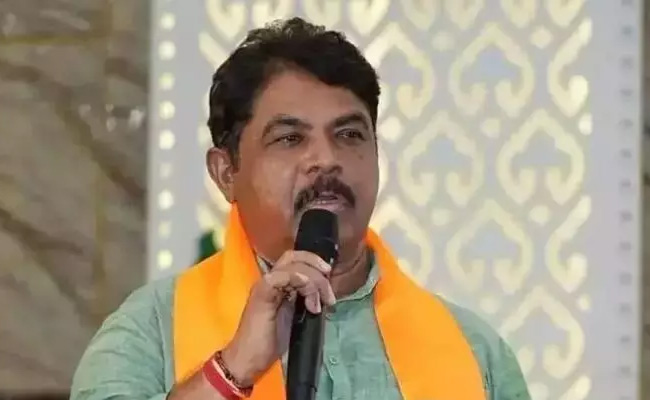
Bengaluru: Leader of Opposition in the Assembly R. Ashoka has accused the Congress government of using the hijab issue to placate what he described as discontent among minority voters after the Davanagere by-election.
In a post on X on Wednesday, Ashoka alleged that the state government, instead of addressing issues such as price rise, corruption, farmers’ distress and law and order, was attempting to retain its minority vote base by reviving the hijab issue.
Referring to the 2022 dress code introduced by the BJP government, which prohibited hijab in schools and colleges, Ashoka said the Karnataka High Court had upheld the policy and emphasised the importance of discipline in educational institutions.
He questioned the Congress government’s move to revisit the issue and asked whether setting aside the court-backed policy to benefit one community could be described as secularism.
Ashoka further alleged that while the government was willing to permit hijab, it continued to prohibit saffron shawls.
He accused the government of dividing students on religious lines rather than treating schools and colleges as spaces of equality.
Drawing a comparison with Mamata Banerjee’s government in West Bengal, Ashoka claimed that excessive appeasement politics had harmed the state and warned that the Congress in Karnataka could face a similar political response.
He said voters in Karnataka would teach the Congress a lesson for what he termed “vote-bank politics” and for compromising constitutional and judicial principles.