Migrant workers denied pay in B'luru, walks, hitch-hikes 1,000 km in 7 days to return home in Odisha
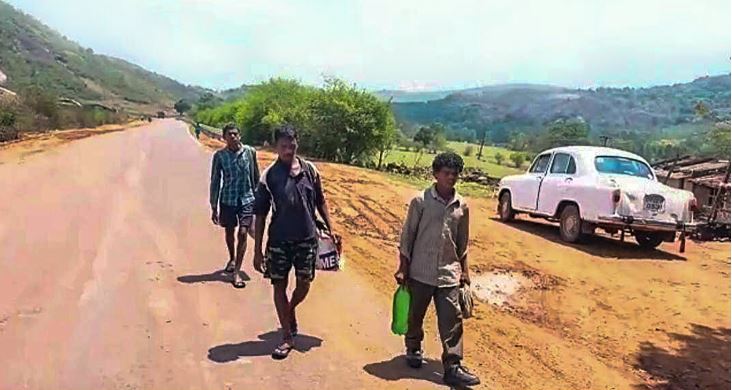
Koraput (Odisha), April 5: In a near rerun of the dark days of COVID lockdown, three destitute migrant workers from Odisha walked and hitch-hiked over 1,000 km to Koraput on their way home to Kalahandi from Bangalore in seven days.
They reached their homes on Sunday, their pockets empty and holding on only to their water bottles, with tales of struggle, hardships, exploitation and gestures of help from unknown people during the long journey.
The trio - Budu Majhi, Katar Majhi and Bhikari Majhi from Tingalkan village of Kalahandi district had undertaken the arduous journey after being denied their wages by their employer in far away Bengaluru. They had exhausted their meagre savings and had no food or money left.
On reaching Koraput, they told locals at Padalguda in Potangi block that they had started their journey on March 26 and walked even at night over the seven days. At some places they managed to get lifts.
Many people, touched by their ordeal came forward spontaneously and helped them. A shopkeeper offered them food, while the president of Potangi unit of Odisha Motorists Association, Bhagwan Padal gave them Rs 1,500 and arranged for their transport to Nabarangpur, which is on way to Kalahandi.
The three men were part of a 12-member group of migrant workers who had travelled to the southern city two months ago with the help of middlemen in search of jobs.
They found work after reaching Bengaluru but their employer allegedly denied them wages even though they worked for two months. When they asked for their pay they were thrashed, the trio said.
"We had gone to Bengaluru with the hope of earning money to support our families. But instead of paying our pending dues the company staff beat us whenever we asked for it. Unable to bear the torture any further, we left the place," Bhikari Majhi told PTI.
"The condition of the three migrants workers was pathetic when they reached Koraput by foot from Bengaluru. We offered them food, collected some money and sent them home with the help of a few people," Padal told PTI.
Congress lawmaker Santosh Singh Saluja, who hails from the backward KBK (Koraput-Bolangir-Kalahandi) said the incident was reflective of the condition of migrant workers from the region. Training his guns at the Naveen Patnaik government in Odisha, he said it has failed the people even after being in power for 23 years.
Odisha Pradesh Congress Committee president Sarat Patnaik told PTI that the government is spending crores to finance the travels of bureaucrats and politicians to Japan in the name of bringing in investment instead of bothering about poor people. The chief minister is on a tour to Japan.
Odisha Labour Minister Srikant Sahu and labour commissioner N Thirumala Naik did not respond to repeated calls or messages from PTI on the issue.
Let the Truth be known. If you read VB and like VB, please be a VB Supporter and Help us deliver the Truth to one and all.
Mumbai-Pune Expressway ‘missing link’ to open on May 1; will improve travel safety: Shinde
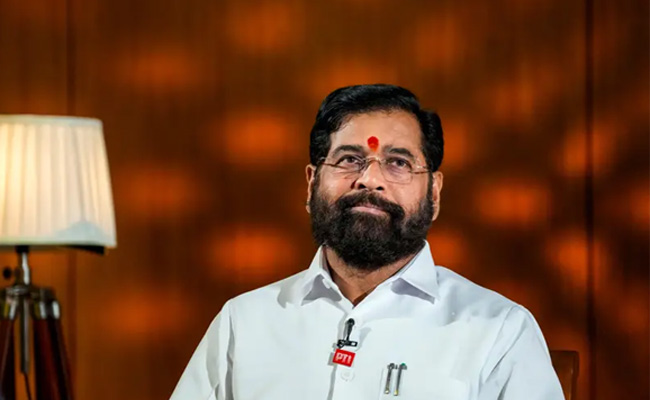
Mumbai (PTI): Maharashtra Deputy Chief Minister Eknath Shinde on Sunday said the long-awaited ‘missing link’ on the Mumbai-Pune Expressway, aimed at bypassing the winding Bhor Ghat section and improving safety, will be inaugurated on May 1.
Shinde, who inspected the project site, said the new stretch will make the expressway fully access-controlled, easing congestion in the hilly section.
Chief Minister Devendra Fadnavis is likely to inaugurate the 13.3-km-long missing link, which connects Khopoli on the Mumbai side to Kusgaon near Lonavala, on Maharashtra Day, which is celebrated on May 1, he said.
The deputy CM said that 99 per cent of the project work has been completed. “I personally inspected the quality of work and found it satisfactory. The remaining minor works will be completed in the next few days,” Shinde said.
Shinde said the new alignment will bypass sharp curves and accident-prone stretches in the ghat section, helping reduce delays and improve commuter safety. He claimed accidents in the section would reduce substantially once the project becomes operational.
“The missing link project will make travel between Mumbai and Pune quicker, safer and more convenient, and will contribute significantly to the state’s development,” he said.
The Rs 6,700-crore project, developed by the Maharashtra State Road Development Corporation (MSRDC), includes two tunnels, high viaducts and a cable-stayed bridge over Tiger Valley.
The missing link will reduce the travel distance between Mumbai and Pune by approximately 6 km and shorten the journey time by 20 to 30 minutes, said officials.
Initially, only light motor vehicles and buses will be permitted on the new stretch to reduce congestion on the existing ghat section, officials said, adding that heavy goods vehicles will be prohibited due to safety concerns.
“There will be no toll hike because of the missing link project. No increase has been proposed at the Khalapur toll plaza either,” Shinde said.
The project comprises two eight-lane tunnels of 1.75 km and 8.92 km in length and two viaducts measuring 850 metres and 650 metres, said officials. It has been designed to bypass the old Khandala ghat section, a winding route that has long slowed down traffic and posed safety risks, said officials.
The 650-metre viaduct will feature what officials described as India’s tallest road cable-stayed bridge, with pylons rising to 182 metres, taller than those on the Bandra-Worli Sea Link.
Officials claimed that the tunnels have a width of 23.75 metres and are among the widest road tunnels in the world. An MSRDC official said the tunnel is likely to be included in the Guinness Book of Records.
The route runs beneath the Lonavala lake area and was executed in difficult terrain marked by heavy rainfall and strong winds, officials said.
Shinde said projects such as the missing link would boost access to tourist destinations such as Lohagad Fort, Visapur Fort and Karla Caves.
MP Shrirang Barne, former corporator Abasaheb Bagul, MSRDC Managing Director Anilkumar Gaikwad and senior engineers from executing agencies were present during the inspection, officials said.
Krishnamurthy Subramanian, executive chairman of construction and engineering company Afcons International Private Limited, said the journey to completion of “India’s highest road cable-stayed bridge” was challenging.
“The bridge, located in the Sahyadri region, presented extreme challenges, including narrow ridges that left little room for heavy machinery, sudden wind speeds reaching up to 100 kmph, and dense fog reducing visibility to a few metres. Despite these conditions, we are proud to deliver this engineering marvel,” he said.
The expressway, spanning approximately 95 km, holds the distinction of being India's first access-controlled highway.