Migrant workers' registration process very slow; expedite for pandemic benefit schemes, says SC
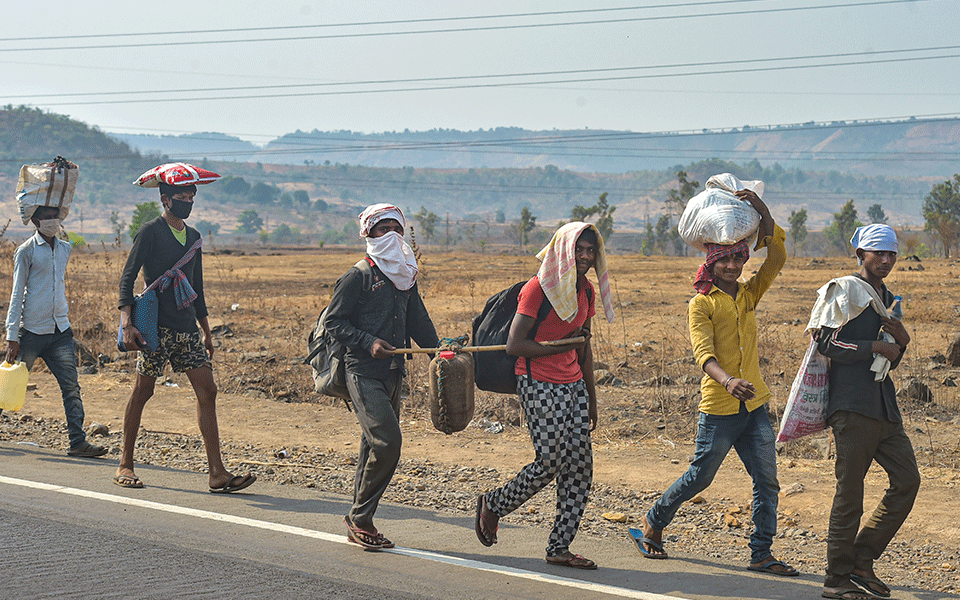
New Delhi: The Supreme Court Monday said the process of registration of migrant workers is very slow and it must be expedited so that benefit of various schemes can be extended to them amid the COVID-19 pandemic.
The apex court observed it is not happy with the efforts of the Centre as well as the states on the issue of registration of unorganised workers.
While stressing on the need to register migrant as well as unorganised workers, a bench of Justices Ashok Bhushan and M R Shah said the benefit of schemes meant for them can be extended after they are identified and registered by authorities.
The process of registration is very slow. We are not happy with the efforts undertaken by the Centre and states on registration of unorganised workers, the bench said.
The top court said the government must ensure that benefit of schemes reach the beneficiaries, including migrant workers, and the process must be monitored and supervised.
The apex court was hearing an application filed by three activists who have sought directions to the Centre and states to ensure food security, cash transfers, transport facilities and other welfare measures for migrant workers who are facing distress due to the curbs clamped in several parts of the country amid the pandemic.
The top court said it had last year passed directions regarding registration of migrant workers.
The bench said for extending the benefits of schemes, the authorities must complete the process of registration and the government should also reach to these workers to complete it expeditiously.
We want this process to the completed. We also want that all organised workers be registered, it said, adding, We will ask the government to speed up the process .
It is a difficult task but has to be achieved, the bench said, adding, Our main concern is that benefits meant for them must reach them .
During the hearing conducted through video-conferencing, the bench told the counsel appearing for Gujarat that if the contractors and employers are not cooperating in the process of registration of workers then the state government may consider cancelling their licences.
The top court said there must be supervision of these benefit schemes to ensure that it reaches the concerned beneficiaries.
On paper, we have everything which says that government has spent thousands of crores on this, but the issue is whether it is reaching to the concerned persons. You have to monitor and supervise it, the bench observed.
It is the anxiety of the court that the benefit of schemes must reach to the concerned person, the bench said, adding that it would pass order in the matter during the day.
The bench told Solicitor General Tushar Mehta, appearing for the Centre, that the apex court had in 2018 dealt with another matter in which the Ministry of Labour and Employment had said that it has started a national database of unorganised workers.
It asked Mehta to apprise the court about the present status of the national database of unorganised workers.
This registration should be completed and it should be on an all-India basis, the bench said. The benefit of all schemes can be extended only when they are registered .
The solicitor general said he would take instructions on this and would get back to the court.
At the outset, advocate Prashant Bhushan, appearing for the applicants, said he has gone through the affidavits filed by some of the states as directed by the court earlier.
One unfortunate fact emerges from the affidavits of states and also the Centre that they have not re-started the Atma Nirbhar Bharat Scheme' which they had started last year, he said, adding that dry ration must be provided to the migrant workers.
When Bhushan argued about cash transfer to migrant workers citing the hardships faced by them due the pandemic, the bench said it is a policy decision and the apex court had not passed any direction about it earlier.
The bench said it would ask the states to file better affidavits indicating all the steps taken by them, including on the issue of registration of workers.
On May 13, the top court had directed Delhi, Uttar Pradesh and Haryana to open community kitchens in the national capital region (NCR) for stranded migrant workers amid the current wave of COVID-19 pandemic and facilitate transportation for labourers who want to return home.
Passing a slew of interim directions, the apex court had also directed that dry ration be provided to them in NCR under Atma Nirbhar Bharat Scheme' or any other scheme by the Centre and governments of Delhi, Uttar Pradesh and Haryana.
In May last year, the top court had taken suo motu cognizance of problems and miseries of migrant labourers amid pandemic and had passed a slew of directions, including asking the states not to charge fare from migrant workers and provide them food for free till they board trains or buses.
Referring to resurgence of COVID-19 infections and consequent curbs, activists -- Anjali Bharadwaj, Harsh Mander and Jagdeep Chhokar -- have filed the fresh interim plea in the suo motu case seeking initiation of welfare measures.
Let the Truth be known. If you read VB and like VB, please be a VB Supporter and Help us deliver the Truth to one and all.
Sujit Nair raises concerns over speculation of DMK-AIADMK understanding to block TVK
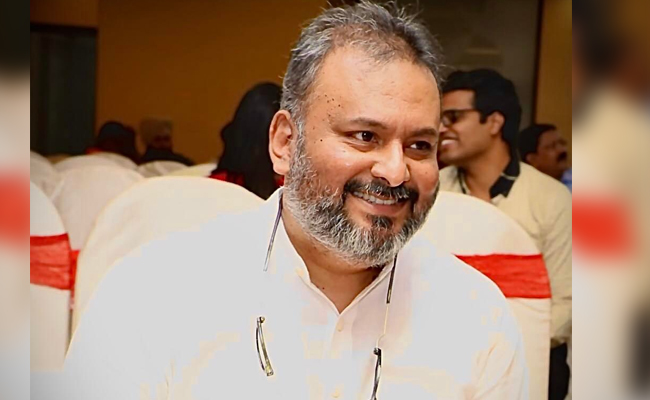
Chennai: Journalist and political commentator Sujit Nair has expressed concern over speculation that the Dravida Munnetra Kazhagam and the All India Anna Dravida Munnetra Kazhagam could explore a post-poll understanding to prevent Vijay-led Tamilaga Vettri Kazhagam from forming the government in Tamil Nadu.
In a social media post, Sujit Nair said the election verdict in Tamil Nadu reflected a clear public demand for political change and argued that the mandate should be respected irrespective of political preferences.
Referring to reports and political discussions surrounding a possible understanding between the DMK and AIADMK, he said he hoped such developments remained only speculative conversations and did not turn into reality.
Nair stated that if such an alliance were to take shape, it would raise serious questions about ideological politics in the country. He said TVK had emerged through a democratic electoral process and that the legitimacy to govern in a parliamentary democracy comes from the people’s verdict.
According to him, attempts to prevent an electoral winner from forming the government through unexpected political arrangements may be constitutionally valid, but many people could view them as politically opportunistic.
He further said that such a move could particularly affect the political image of the DMK, which has historically projected itself around ideology, social justice and opposition politics. Nair said that in ideological terms, the DMK appeared closer to TVK than to the AIADMK, and joining hands with its long-time political rival only to remain in power could weaken its broader political narrative.
He added that the same questions would apply to the AIADMK as well, as the party had spent decades positioning itself against the DMK and such an arrangement could create discomfort among its cadre and supporters.
Drawing a comparison with Maharashtra politics in 2019, Nair said he had expressed similar views when the Shiv Sena formed an alliance with the Indian National Congress and the Nationalist Congress Party after the Assembly elections.
He said post-poll alliances between long-standing political rivals often create a public perception that ideology and electoral mandates become secondary when political power equations come into play.
Nair also said such developments increase public cynicism towards politics and reinforce the belief among voters that ideology is often sidelined after elections.
He maintained that the Tamil Nadu verdict was emphatic and said respecting both the spirit and substance of the mandate was important for the credibility of democratic politics.