Migration from Kerala declined 11% in 5 years: Study

Thiruvananthapuram, Sep 17 : Factors like the declining population in the 19-25 age-group and stagnant wages in the Gulf countries could be responsible for migration from Kerala declining 11 per cent between 2013 and 2018, a new study says.
"Of the 2.1 million emigrants (from Kerala in the Gulf and elsewhere), 15.8 per cent are females. However, there is a reduction of 3 lakhs migrants, which is one-tenth of the number of migrants in 2013. In 2018, we reached a stage where migrants figures shown a negative growth of 11.6 per cent," S. Irudayarajan, who led the Kerala Migration Survey (KMS) 2018 told reporters here on Monday.
The survey is the eighth in a series of studies on migration undertaken by the Centre for Development Studies (CDS) since 1998. CDS is an internationally renowned, self-governing institution known for its cutting edge research in applied economics and topics germane to socio-economic development. It was established in 1971 by the late Professor K.N. Raj, considered the architect of India's First Five-Year Plan (1951-56), and a former Vice Chancellor of Delhi University, with whom he was associated for 18 years.
Explaining the reason for the decline Irudayarajan said it could be due to the cumulative effects of the demographic advances which have decreased the population in the migration-prone age-group (15-29 years) as Kerala attained replacement fertility level in around 1987.
"Wages in the Gulf economies have not improved after the global economic crisis. This has led to lower savings, de-motivating them to migrate. Another reason is wages in the domestic economy have increased compared to other states," said Irudayarajan.
Explaining further he said the price of oil, on which the Gulf economy is based has been declining since 2010.
"Although the last one year has seen a slight increase in oil price, the growth of the Gulf economy has suffered a major setback. Due to nationalisation policies such as Nitaqat and recently introduced family taxes in Saudi Arabia, the Gulf Cooperation Council (GCC) economies appear to be not that conducive for current and prospective migrants," Irudayarajan noted.
The study was conducted through a survey of 15,000 households from January 1-March 31 and was funded by the Kerala government's Department of Non-Resident Keralites' Affairs.
The study notes that 89.2 per cent of the total migrants from Kerala are in the Middle East countries.
In 2013 while there were 20.70 lakh migrants in the Middle East, the figure fell to 18.93 lakh in 2018. The remaining 10 per cent of the emigrants are concentrated in the other countries like the USA, the UK, and Australia.
In 2013 there were 8.9 lakh in the UAE while in 2018 it stands at 8.30 lakh, followed by 5.22 lakhs in Saudi Arabia and falling to 4.87 lakh in 2018.
In Qatar, there has been an increase from 1.06 lakhs in 2013 to 1.86 lakhs in 2018 but in Bahrain there has been a fall from 1.49 lakhs in 2013 to 0.81 lakhs in 2018.
The study found that one in every fifth household in Kerala has a migrant, while among religious groups, one in every third household is a Muslim, one in five household is a Christian and one in 10 households is a Hindu.
The estimated total annual remittances to Kerala have been placed at 85,092 crore.
"Of the total remittances at state level, Malappuram district receives 21 per cent, followed by Kollam (15 per cent), and Thrissur (11 per cent)," added Irudayarajan.
Concluding his findings, he said the long history of migration from Kerala to the Gulf is in its last phase.
"However, remittances to the state have increased. This is due to the fact that Keralites' in the Gulf have climbed the social ladder and are earning higher wages, allowing them to remit more. Thanks to the weakening rupee, families remit more. The KMS 2018, has also confirmed that the migration from Kerala is falling and return of migrants is on the rise," added Irudayarajan.
On the study of return migrants as estimated by KMS 2018, it is 1.29 million, which is about 60 per cent of the number of emigrants.
"The KMS 2018, would be an invaluable pointer for further policy formation in terms of international migration and also employment schemes of the government. The last 20 years of KMS proved that almost 40 per cent of total remittances to the state were used by emigrants in land, housing and its assets.
"With the recent devastating floods, and the massive loss of physical capital and land value, migration can be conjectured to increase at least in the short run. We expect the trend will change after the floods as migration will play major role as a livelihood option for the New Kerala, where we expect further migration and remittances. This requires another quick assessment by the Government of Kerala," said Irudayarajan.
Let the Truth be known. If you read VB and like VB, please be a VB Supporter and Help us deliver the Truth to one and all.
CM Siddaramaiah alleges ‘criminal conspiracy’ in Sringeri recount, vows legal action
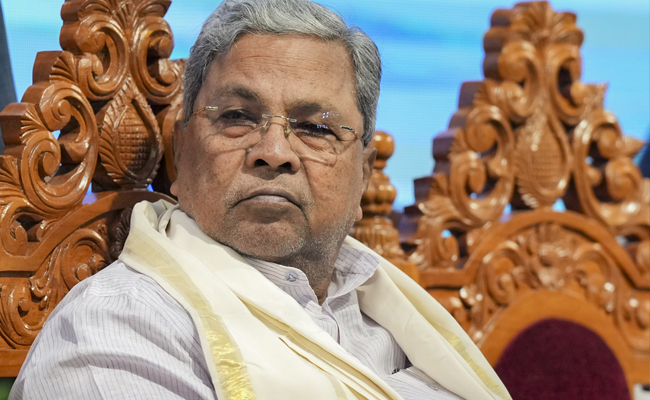
Bengaluru (PTI): Alleging a “criminal conspiracy” by BJP candidate D N Jeevaraj in the Sringeri Assembly poll recounting, Karnataka CM Siddaramaiah on Tuesday said the outcome was manipulated after valid postal ballot votes in favour of Congress leader T D Raje Gowda were tampered with during the recounting process.
Following a Karnataka High Court order on an election petition filed by Jeevaraj, challenging Raje Gowda’s election, the reverification and recounting were conducted on Saturday.
After the reverification and recount of postal ballots for the Sringeri Assembly constituency, votes polled in favour of Raje Gowda were reduced by 255, the returning officer said.
A report on the matter has been submitted to the Election Commission of India for further action, the officer added.
Congress leader Raje Gowda had won the 2023 Assembly polls from Sringeri by 201 votes, defeating his nearest rival Jeevaraj.
Addressing a press conference in Bengaluru, Siddaramaiah said the High Court had directed the recounting of postal ballots and that irregularities were noticed during the exercise conducted on May 2.
“This is a clear case of criminal conspiracy,” Siddaramaiah said, alleging that valid votes cast in favour of Raje Gowda were altered after being accepted by counting agents of all parties, including Congress, BJP, and JD(S).
He claimed that during the recounting of postal ballots, 255 votes were initially accepted as valid by all agents but were later tampered with by subordinate officials.
“There is a second mark on the votes polled in favour of Raje Gowda. They had accepted these as valid votes. Subsequently, another mark was made by officials. This is a clear case of criminal conspiracy,” he said.
When asked who was behind the alleged conspiracy, the CM replied, “It was hatched by Jeevaraj and others. It is planned.”
Siddaramaiah further alleged that the returning officer acted improperly by declaring the result despite the presence of an Election Commission observer during the recounting.
“Immediately after the counting, the returning officer announced the result. He should not have done so; this is against the law,” he said.
He pointed out that Raje Gowda had originally won by 201 votes, but after the recounting, the BJP candidate was declared the winner by 52 votes.
“The BJP has committed a criminal act of conspiracy. This is not vote chori but vote dacoity,” he alleged.
The CM said a police complaint had already been filed by Raje Gowda’s election agent, Sudhir Kumar, and emphasised the need for electoral integrity.
“We want transparency and free and fair elections. That is what our Constitution mandates,” he added.
Stating that the government would pursue legal remedies, Siddaramaiah said, “We are preparing an appeal challenging the returning officer’s announcement in a court of law.”
Responding to a separate query on elections in other states, the CM said there appeared to be an anti-incumbency factor in West Bengal, while results in Tamil Nadu were “surprising,” adding that Vijay’s party was emerging as the largest there.
Following the victory of party candidates in Bagalkote and Davanagere South, Siddaramaiah expressed confidence about future electoral prospects in Karnataka.
“Even in 2028, we will win the Assembly elections. We will come back,” the CM said.
Siddaramaiah added that he would order a forensic examination into the alleged tampering of postal ballots.