Minister H Nagesh withdraws remarks on door delivery of liquor in Karnataka
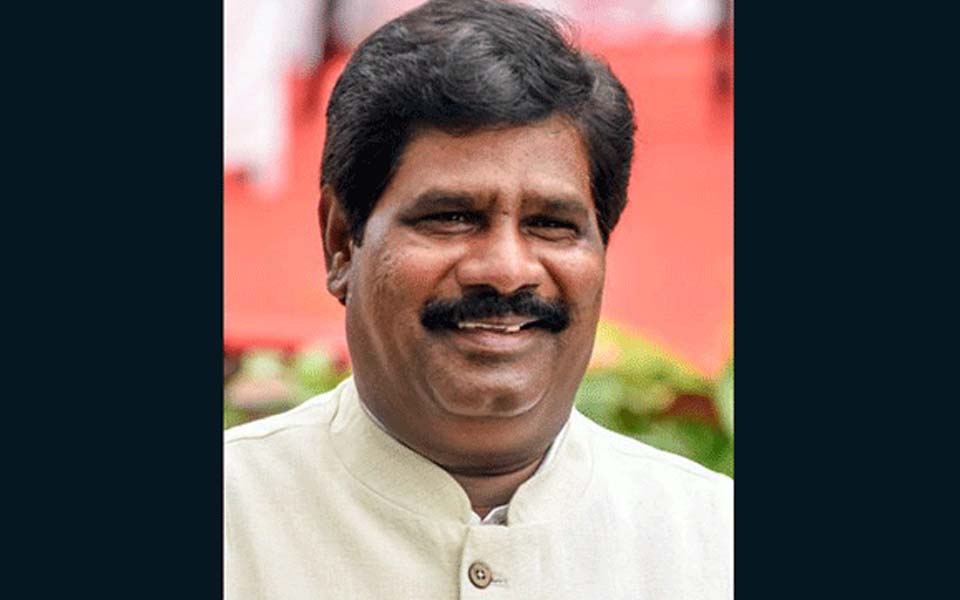
Bengaluru, Sep 5: Karnataka Excise Minister H Nagesh on Thursday retracted his statement favouring door delivery of liquor to individuals with required permits, after it drew flak from several women's organisations.
He further clarified that there was no such proposal before the state government.
".. I was asked (by a media person) about the online booking and supply of drinks I did not know about the system.. I was talking about the permit system in some states, where there is prohibition, as an example.
It has been wrongly interpreted as if we are looking to implement door delivery (of liquor)," Nagesh said.
Speaking to reporters here, he said, "There's no proposal before the government to do so... Because if done, it will affect families, and our women folk should not face any problem."
"... since liquor is available easily here, there's no need for that here," he added.
Nagesh had on Wednesday spoken in favour of door delivery of liquor to individuals who have required permits.
He, however said it has to be decided at the higher level and public opinion in this regard also needs to be considered.
The Minister had also said he proposed introduction of mobile liquor shops for those living in hamlets, who otherwise consume illicit liquor and fall ill.
However, the Minister on Thursday clarified that there was no proposal to start mobile shops, before the government.
Pointing out that in 'thandas' (hamlets) and other places bootlegging takes place, he said, officials have been asked to take action.
"Our officials are sensitising people, but there's little success. My wish is to tackle this - so a campaign will be launched," he added.
The Minister also denied reports that Chief Minister B S Yeddyurappa had sought an explanation from him following the backlash on his statement from women activists.
Responding to a query on the demand for prohibition, Nagesh said, "Whatever I say will be magnified and this isn't a question I can answer at my level. Any such proposal should be discussed at the highest levels, with the Chief Minister..."
Let the Truth be known. If you read VB and like VB, please be a VB Supporter and Help us deliver the Truth to one and all.
Man arrested with Rs 2.54-crore heroin in Mumbai
Mumbai (PTI): Police have arrested a man and seized over 500 grams of heroin worth Rs 2.54 crore in the illicit market from him in Mumbai, officials said on Friday.
The police's Anti-Narcotics Cell (ANC) made the drug seizure in Santacruz in the western suburbs. The operation was conducted by the Kandivali unit of the ANC on Thursday as part of a special crackdown against drug trafficking in the area, they said.
Acting on specific inputs, an ANC team conducted a raid in Santacruz (East) and intercepted a man. During a search, the team recovered 508 grams of high-grade heroin from his possession, an official said.
The seized contraband, a highly addictive, opioid drug derived from morphine, is estimated to be worth Rs 2.54 crore in the international market, he informed.
Following the seizure, a case was registered against the man under relevant sections of the Narcotic Drugs and Psychotropic Substances (NDPS) Act, 1985, and he was formally placed under arrest in the early hours of Friday.
The police are currently investigating the source of the drug and trying to identify the intended recipients of the consignment, he said.