'Miyas', not Assamese people, facing problem due to SR: Himanta
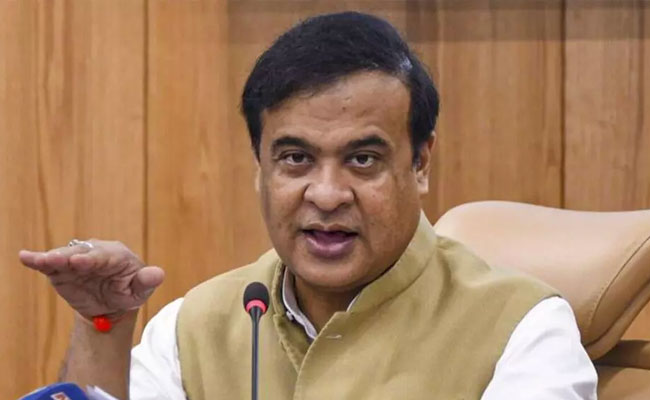
Guwahati (PTI): Assam Chief Minister Himanta Biswa Sarma on Tuesday claimed that no Assamese people are facing any problem due to the ongoing Special Revision (SR) of electoral rolls, and only the 'Miyas' (Bengali-speaking Muslims) who are finding the exercise difficult.
The ‘Miyas’ cannot be allowed to vote in the state, the CM said on the sidelines of a programme in Digboi.
Curtailing the names of 'Miya' voters from the electoral rolls was only a preliminary step, and when the Special Intensive Revision (SIR) is conducted in the state later, four to five lakh votes of Muslims from Bangladesh will be cancelled, Sarma claimed.
'Miya' is a derogatory term used for Bengali-speaking Muslims in Assam whose ancestors had roots in Bangladesh.
''Yes, we are trying to steal the votes of the Miyas. They should not vote in our country but in Bangladesh. We are making arrangements to ensure that they do not vote in Assam,'' Sarma said.
He asserted that there is no problem for Assamese people due to the SR, but the Miyas are facing hardship as they do not belong here.
''If Miyas are facing difficulties in this regard, why should we be concerned?” he asked.
This is the ''time for us to be cautious, and if we are not, then the Miyas will reach (places such as) Duliajan, Digboi and Tinsukia'', he alleged.
''Recently, I received a land sale list from Tinsukia. I found that more Hindus are selling off their lands and more Miya muslims are buying them. We have to be cautious and take steps now, or else they will reach all districts of Upper Assam,'' Sarma said.
The Congress can ''accuse me as much as they want, but my job is to trouble the Miyas so that they cannot vote in Assam'', he said.
Sarma had claimed earlier that only ‘Miyas’ are being served notices during the ongoing SR of electoral rolls to ‘keep them under pressure’.
He had asserted that there is no controversy surrounding the SR as no Hindu or Assamese Muslim had got notice, but only the 'Miyas'; ''else they will walk over our heads''.
The opposition parties in the state have alleged that the SR exercise is being used to harass genuine citizens, mostly religious minorities, by ‘BJP agents’, with Form 7 especially being used to complain against bona fide voters.
By using Form 7, one can request the deletion of one’s own name for any of three reasons: absent/permanently shifted, already enrolled or not an Indian citizen. Similarly, any voter of that constituency can apply for the deletion of names of others on the basis of two more reasons: death and underage.
The Election Commission had directed the conduct of SR in Assam to prepare an error-free electoral roll.
The Integrated Draft Roll was published on December 27, while the filing of claims and objections continued till January 22. The final electoral roll will be published on February 10.
The EC had ordered SR of electoral rolls in Assam as a Supreme Court-supervised exercise to verify citizenship, which is yet to be concluded. The state has separate provisions with regard to citizenship under the Citizenship Act.
Let the Truth be known. If you read VB and like VB, please be a VB Supporter and Help us deliver the Truth to one and all.
National Synodal Assembly 2026 begins in Bengaluru with over 220 delegates
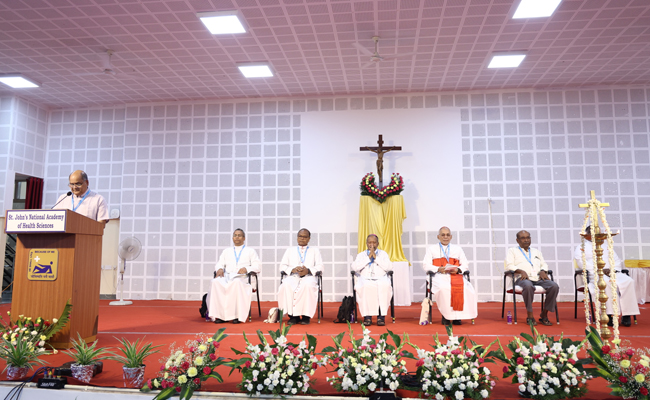
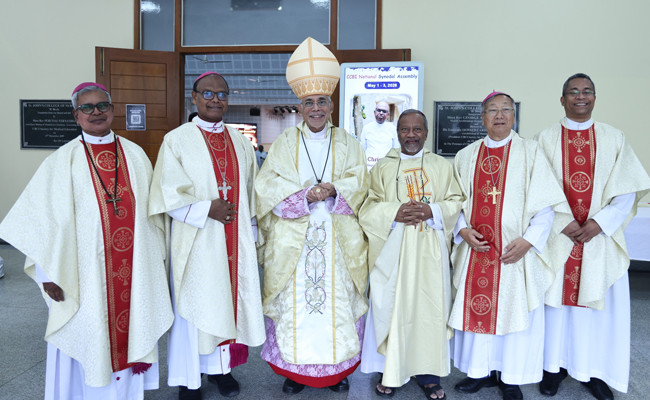
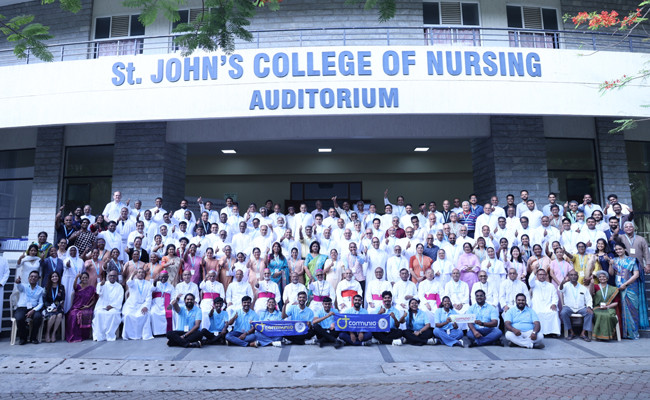
Bengaluru: The Conference of Catholic Bishops of India (CCBI) on May 1 inaugurated its National Synodal Assembly 2026 at St. John’s Medical College, bringing together more than 220 delegates from across the country under the theme Synodal Pilgrims of Hope.
The assembly is part of the global synodal process initiated in 2021 by Pope Francis, which calls for greater participation, dialogue and shared responsibility within the Church. In India, the process has involved consultations at diocesan, regional and national levels.
Participants at the assembly include two Cardinals, 25 Bishops, 65 priests, more than 20 women religious, and over 100 lay faithful, including youth and women leaders.
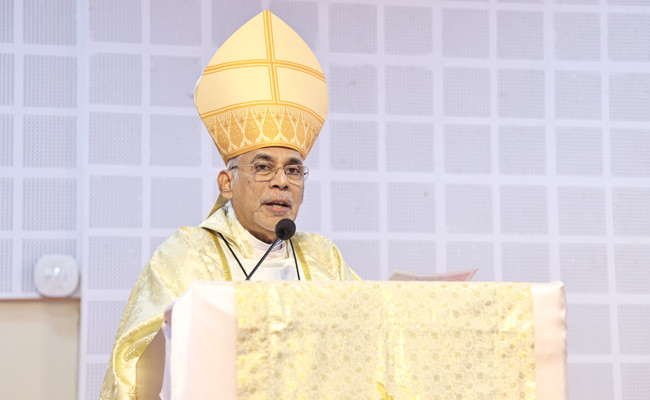
The gathering began with a Eucharistic celebration led by Filipe Neri Ferrão. In his homily, he described the assembly as a moment of grace and discernment and called on delegates to walk together in prayer, listening and missionary commitment.
He spoke about the importance of the Risen Christ in the mission of the Church and urged the faithful to be witnesses of the Gospel. Referring to the conversion of St Paul, he said every baptised person has a role in spreading the message of Christ. He also highlighted the example of St Joseph the Worker, stressing the dignity of labour and the call to holiness in everyday life.
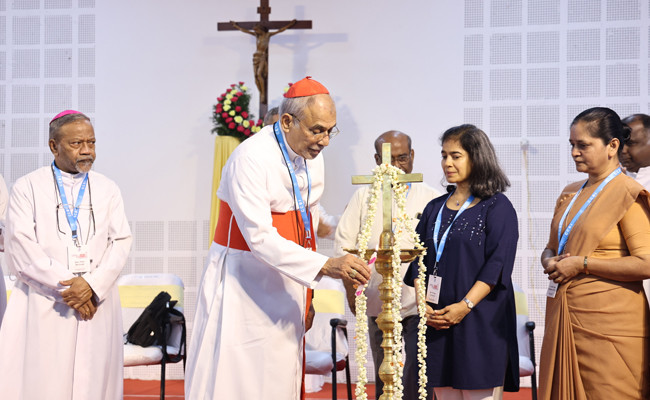
The formal inauguration included the invocation of the Holy Spirit through Veni Creator Spiritus and the lighting of the ceremonial lamp. Deputy Secretary General Fr. Stephen Alathara welcomed the delegates and described the gathering as a spiritual journey.
In his presidential address, Cardinal Ferrão referred to the CCBI pastoral plan titled Journeying Towards a Synodal Church: Mission 2033 and called on participants to build on the vision outlined at the 36th Plenary Assembly held in Bhubaneswar in 2025.
Delegates will reflect on four key themes identified from 16 pastoral priorities: interreligious dialogue and peacebuilding, inclusion of the excluded, poverty and integral ecology, and support for children and youth.
The discussions are being conducted through a method of spiritual conversation aimed at encouraging listening, dialogue and collective decision-making. The focus is on translating these discussions into practical actions within the Church.
The assembly also looks ahead to the Jubilee Year 2033, which will mark 2,000 years of the Redemption, and aims to strengthen the Church’s mission in the coming years.
Further consultations are scheduled for September 2026, with the process expected to conclude at the 38th Plenary Assembly of the CCBI in January 2027.
Organisers said the assembly seeks to strengthen unity within the Church and promote participation of all sections, including women and youth, in shaping its future direction.