Mobile Premier League to lay off 60% India staff after govt ban on paid games

Bengaluru: Mobile Premier League (MPL), one of India’s largest online gaming platforms, will lay off about 60% of its local workforce following the government’s decision to ban paid online games, a company source said.
According to a report published by The Hindu, the layoffs will affect around 300 of MPL’s 500 India employees across marketing, finance, operations, engineering and legal. The report says that this is the first major industry reaction to the new law by government, which banned online paid games this month, citing risk of financial losses and addiction among youth.
The move has shaken an industry that had been projected to grow to $3.6 billion by 2029 and has attracted investments from Tiger Global and Peak XV Partners. MPL and rival Dream11 gained popularity by offering fantasy cricket games with cash rewards.
In an internal email to staff on Sunday, MPL CEO Sai Srinivas said, “With a heavy heart we have decided that we will be downsizing our India team significantly.” While he did not mention the number of job cuts, he added that India contributed about 50% of MPL’s revenues, and that “this change would mean that we would no longer be making any revenue from India in the near future.”
MPL will now focus on free-to-play games in India while strengthening its presence in the U.S. market. The company was last valued at $2.3 billion in 2021, according to Pitchbook, and had an India revenue of around $100 million last year. It also operates free-to-play games in Europe and offers paid games in the U.S. and Brazil.
Meanwhile, rival Dream11, valued at $8 billion, has also shut down its fantasy cricket operations. Several other poker and rummy apps have suspended services. Last week, gaming firm A23 challenged the ban, though MPL and Dream11 have opted against legal action and MPL declined to comment on Reuters’ queries.
Let the Truth be known. If you read VB and like VB, please be a VB Supporter and Help us deliver the Truth to one and all.
Karnataka School Edu Dept prohibits children from being made to dance to obscene songs
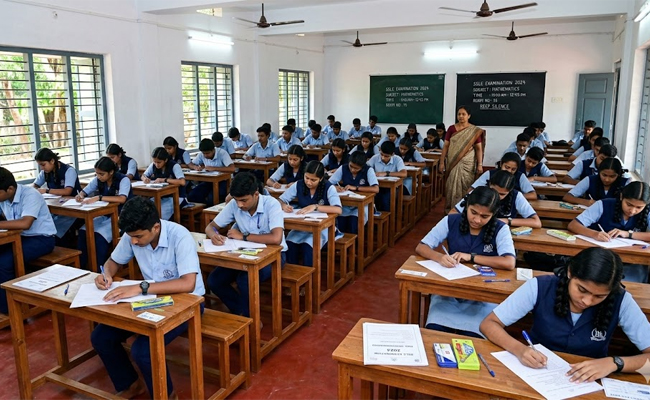
Bengaluru (PTI): The Karnataka School Education Department has issued a circular strictly prohibiting children from being made to dance to obscene songs in educational and cultural programmes.
It stated that such dances would negatively impact students' mental health and moral values. It will create indiscipline and harm the sanctity of education.
"All the Deputy Directors (Administration) of the state's School Education Department have been asked to take strict measures to prevent children or students from dancing to obscene songs in all government, aided and unaided schools in the state," the office of the commissioner of the School Education Department said in a recent circular.
"If it is found that children are being made to dance to obscene songs, appropriate action will be taken against the headmaster or management of such school," it added.
The department also listed certain measures in this regard, which include: strictly prohibiting children from being made to dance to obscene songs during educational and cultural programmes; selecting songs that are inspiring, positive, instilling national pride in children and reflecting the greatness, dignity, values, culture, and morality of the state.
Stating that the school headmaster and management are responsible for selecting songs and dances for cultural programmes, it said, they should also ensure that students wear decent clothes in dance or cultural programmes.